Sometimes things don’t turn out … And I’m talking about Pies

Tonight I worked my tail off to make two different pies for my church’s family night. I planned to blog about it and include several recipes – Buttermilk pie, Pumpkin Pie and Never Fail Pie Crust. The pies turned out great. However in my documentation process, I missed a few key steps in the photography … So I’ll have to go through the process again to fill in the gaps.

I hate it when this happens! I had a little imperfection, then I tried to fix it, but made it worse!

I had a few distractions:

My sweet little kid with his butter knife ready to slice open the pumpkins
  • A helper, who needs a lot of help
  • Burned-out light bulbs, making my photos look really off tonight, way more than usual
  • And a malfunctioning iPhone
  • Kid homework that ended up not getting done – thank God he is only in preschool.
  • Time change … just thought I’d throw that in too

The pie recipes will come later this week. Hopefully it will inspire you to make one of these pies for your family’s Thanksgiving.

Here’s the teaser:

Buttermilk Pie (with the Never-fail Pie Crust) Recipe to follow.
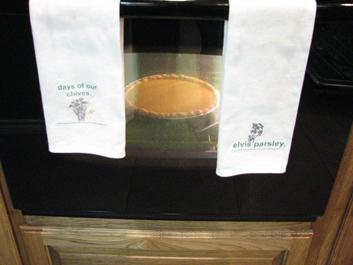
Days of our Chives and Elvis Parsley keeping watch over the pumpkin pie baking.

Aquarium Gone. Now What?

Aquarium, part deaux.

The aquarium in its glory days:

And the photo doesn't do it justice.

Over the weekend my husband started the process of taking down our 120 gallon saltwater aquarium. Three days later, and a whole lot of elbow grease, the tank and contents have been broken down and moved into the garage. The garage smells like Galveston, Texas. Amazing how smelly saltwater can get when it’s not moving.

It’s also quiet in the house – really quiet. There is no more pitter-pat of running water. No more whirl and hum of filters and pumps. No more fizzy bubble sounds.

Saltwater is seriously corrosive. It peeled the paint off the baseboard and discolored the the wall. We’ll be going to get a gallon of primer and matching paint so we can touch up [repaint] the wall. No wonder classic car enthusiasts don’t want cars from the coast or northern states where they use salt on the roads.

But now we have this huge, blank space in our main living room – a little more than 8 ft. of wall space. Everything is off balance. Before we had this nice balance – the fireplace on one end and aquarium on the opposite end.

Before/After

The initial set up
After the aquarium ... (the photo isn't great, but you can see the space).

I have a some ideas …

  1. Bookcases, you can never have enough
IKEA totally Rocks!

2. Kid space, with toys and games and stuff (all organized)

Yeah, right. Our crap never gets put back up and our kid is spoiled.


3. Art! (I’m not an art-y person but can appreciate a nice original, professional or amateur.)

Starry Night, Y'all.


4. A collage photo gallery — I take lots of photos of flowers. Maybe a good place for a collection of framed originals.

Zinnia blossom a few days before the "killer" frost.
Passion vine. Hearty vine that even the grasshoppers don't bother.
A Taos Mountain flower with a moth. Maybe a entomogy major can identify it.


5.  A wine rack (with wine, of course)

Williams Sonoma Rocks!


Nanny …  all I want for Christmas is a gift card to IKEA!

When Frost Happens

One and a half days ago the weather really changed when a powerful cold front move through. The temps dropped considerably in an 18 hour span. It went from being summer to fall in a few hours. There was nothing gradual about it. But then again this year has been anything but typical … 10 degrees in February then 100 degrees in April. Really!? Seriously!?

Yesterday… (OK, 1.5 days ago)

Today …

The first hard, killing frost happened close to dawn today – it was 25 degrees at 8:15 this morning. The frost twinkled brightly all over creation this morning.

At the stop sign near my kid’s school …

Sun on the left, frost on the right. Awesome display of the warmth of the sun.

I attempted to cover my garden and a nice stand of Siam basil in my front flower bed. I had beautiful zinnias in orange and pink. Zinnias are a favorite of mine because they bloom constantly and do well in the hateful August sun plus they are drought tolerant. And we had a hell of a hot, dry summer this year.

When Frost Happens, Things Die.

Yesterday …

Today ….


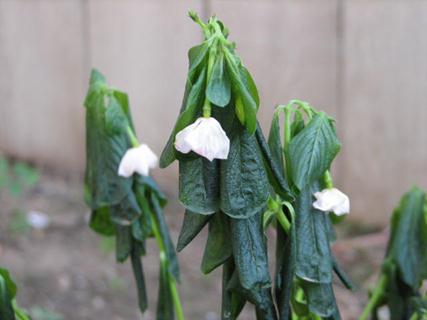
The frost happened, and made this a very sad flower (and a dead flower.)

Frost killed this future eggplant.

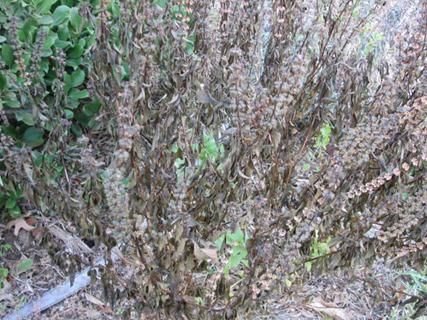
Dead basil.

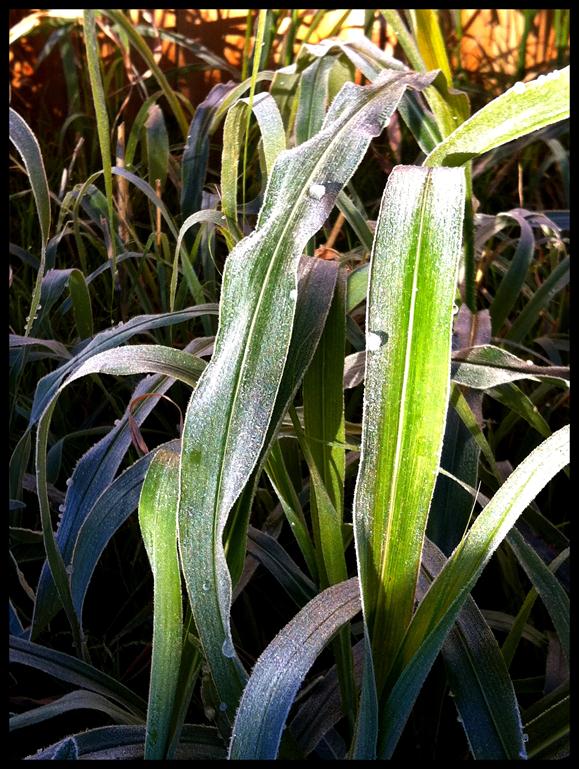
Although, the frost can bring about beauty of its own.

(How great is it to have a handy iPhone when you are driving down the alley and see something pretty?)

Welcome to the weekend, y’all!

Working for the Weekend

It’s almost Friday, and I’m Working for the Weekend. Some weeks are longer than others, and that’s when you need a good laugh.

The song is Solid Gold 80s and Loverboy’s contribution to the working man’s anthem. If you remember the 70s guitar rock and over-the-top 80s hair bands, then this music video will sing to your heart.

I can remember standing in the music section of the local Walmart ogling the album cover. It was so salacious for its time and so very 80s excess – red leather pants on a hot ass with crossed fingers behind your back, titled “Get Lucky.” That is 80s greatness.

My husband and I had been talking about a YouTube lip-synch video we saw a couple years ago featuring this song. Considering the 80s era, subject matter and music itself, there is a lot to work with here.

It is a clever lip-synch music video that looks like a well-thought out SNL skit, complete with stereotypical musician characters and a cowbell.

The original video upload was on a blog (back when we still called them weblogs) in 2005 by a guy named Shawn (Barrett) Barrester, now archived on YouTube. Watch closely–and this is the best part– it’s the same guy. Barrester plays every part, in character.

What might have started out as a party trick ends up being a true homage to Loverboy, not to mention it’s damn funny and impressive all at once.

After watching this a few times I can tell a few things about the star of the video:

  1. He has a witty sense of humor and isn’t afraid to use it.
  2. He’s a technophile because for 2005 the editing and production value are sophisticated.
  3. This guy is a really talented musician and can play any instrument he picks up. He has quality instruments and plays every lick. Replay the video a few times and watch when each instrument is featured. He is really hitting the guitar riffs and he knows how to play the drums. But the characters are what really bring the video to life. .
  4. He’s very fit and works out, probably with weights. He has impeccable rhythm and timing
  5. He has been singing in front of the mirror for a really long time. Go baby, go!

I’m working for the weekend!

Happy Friday, Y’all.

Killing Frost and Terrorist Black Flies

The first day of November was glorious—a bright blue sky, upper 70s, no wind, overnight low in the upper 50s. Totally kick-ass weather for growing a fall crop of tomatoes, eggplants and chili peppers.

This is North Texas …It can be 90 degrees one day and 30 the next; we can have 100-degree temperature swings within the same year.


(February 2011. It was 10 degrees. 113 degrees August 5, 2011 after 10 p.m. )

I knew something was up because the last two days have been filled with black flies acting crazy, terrorizing me – at home, the office, the coffee shop, everywhere.

Black flies are one of the most annoying critters on Plant Earth. I grew up on a ranch with lots of animals pooping nearby, let’s just say you can never have enough fly swats, fly paper or bug zappers. But when the flies swarm and act crazier than usual, you know the weather is about to change. After a sudden killing frost you can walk around and see thousands of fly exoskeletons on the ground.

As a gardener, I know the end is near for my tender annual vegetables—it’s November. I’m in USDA zone 7B with an average first frost date of November 14. But, I’m clinging to the hope that I can nurse my plants along, especially since they just started producing fruit after surviving a wretchedly hot, bone-dry summer. (No exaggeration, it’s on record as the driest, hottest summer since 1950).

So I pulled up my trusty weather app on my iPhone and sure enough … big cold front moving in—decidedly not good for the garden.

I put in an emergency call to handyman husband to get supplies at the hardware store and I made a mad 5 p.m. dash to the feed store to get plastic sheeting. An hour and a half later we have the garden covered. (I am not going back out there to take a picture, Ok I took a picture this morning.)

The temps went from 70 degrees to 45 in about two hours with winds gusting up to 40 mph. I made one last harvest, just in case.

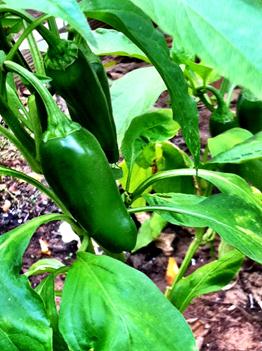
Jalapenos are beautiful, fruity and spicy-delicious right out of the garden.

Serrano peppers just off the vine.

Thanks for the help, sweet husband. Eggplant parmesan is in your future.

Hometown Halloween

Halloween is one of those holidays that, as a kid, you look forward to all year long. I remember moving to a neighborhood after college and looking forward to greeting trick-or-treaters, only to find that there weren’t many kids around. And they didn’t go to a stranger’s house, even if it was next door.

Halloween moved into the category of a reason “to party” as an adult. Then I left the big city and traded my zero-lot line home for a traditional neighborhood in a small town. Now married with a kid, I live on a street where I know everyone’s name, and their dogs’ names too.

Halloween has once again become something magical and full of whimsy. All the things I remember as a child growing up in a small town. My son, John, was adamant about being Mario this year. (I’m glad we had Fox News on … that always indicates that my dad is at my house.)

Here in my little town they do it up right. There are car loads and trucks pulling trailers full of kids, decorations and an abundance of children weaving through streets and yards.

My son is trick-or-treating at the across-the-street neighbor’s house – he got homemade sugar cookies. That doesn’t happen in the city. People will think you are trying to poison their kids, even if they live across the street. These neighbors are also retired teachers that taught science and algebra to me.

And it’s on! We trick-or-treat on something I call the “miracle mile” also known as Rodgers Drive. We can walk up our alley, cut through a neighbor’s yard and walk a one-mile loop and get all the good loot.

It’s a gaggle of girls plotting their next Halloween maneuver.  How much you want to bet that this basic scene will occur many times in the years to come? I’m glad I have a boy.

There are multiple generations waiting on the door step to give out candy because there are so many kids …

Not the greatest photo, but you get the idea… there are quite literally thousands of kids that stream through this cool  neighborhood. (We actually don’t live in this neighborhood, but we’re in walking distance!)

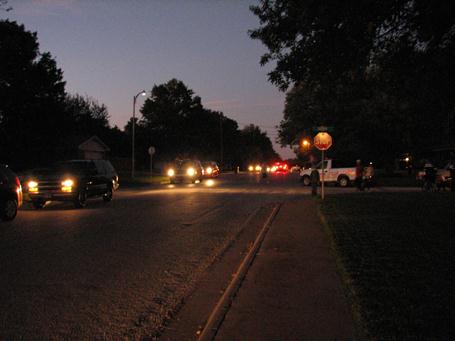
The intersection at Randy and Rodgers Drive … I wasn’t kidding when I said cars, trucks and trailers full of kids.

After our loop we end up back at our house and answer our own front door for the second wave of kids. Halloween is something of a marvel in our town. It really is something that looks like it was staged for a movie. By the way, we live in a place where we leave our kids outside to play in the street, which seems crazy in any place other than Arcadia.

Shiner Bocker Beans

You know what I like? Beans. You know what else? Shiner Bock. You know what’s REEEEEEL good together? Beans and Shiner Bock. Your life as a bean-eater is about to change. For the better. Bocker better.

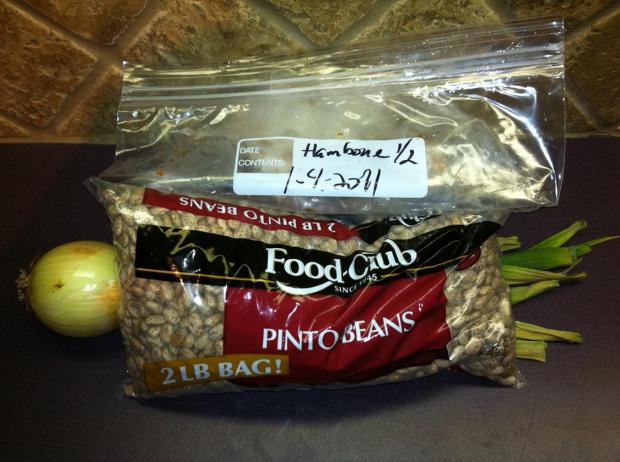
A quick glance at the ingredients:

-2lbs of dry pintos

-a medium yellow onion (I’m using a fresh one here with the greens still attached, right out of the garden)

-a tomato or two, homegrown if possible

-a juicy ripe jalepeno, homegrown if possible

-pork (I had a hambone from NYD that I needed to get out of the deepfreeze)

-SHINER THUMS UP BOCK
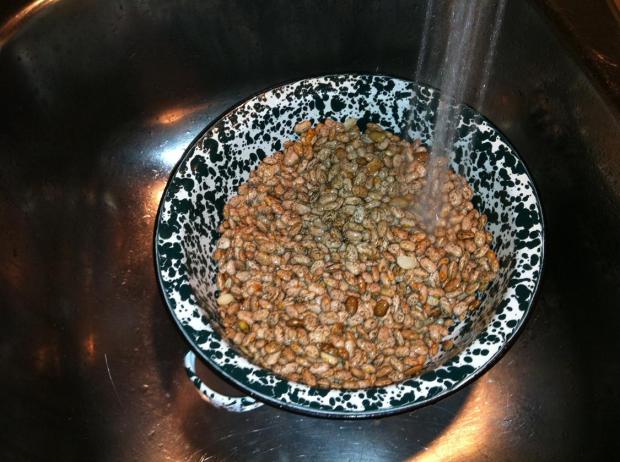
Pour the dried beans into a colander and rinse them off really good under cool water.
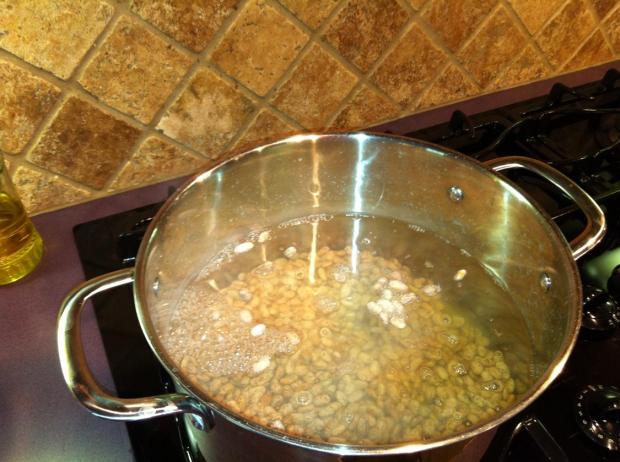
Get your best stock pot out and put a few cups of water in, just enough to cover the beans. A thick bottom on your pot will keep the beans from scorching. It makes a difference because we are going to be cooking for a LONG time. Add some salt when you turn the heat on. The salt will soften the water and flavor the beans.

Pour in the beans and bring the water to a boil. After the water boils, let it go for 10 minutes and then cut the heat off and cover the pot. It will need to sit for an hour in the hot water.
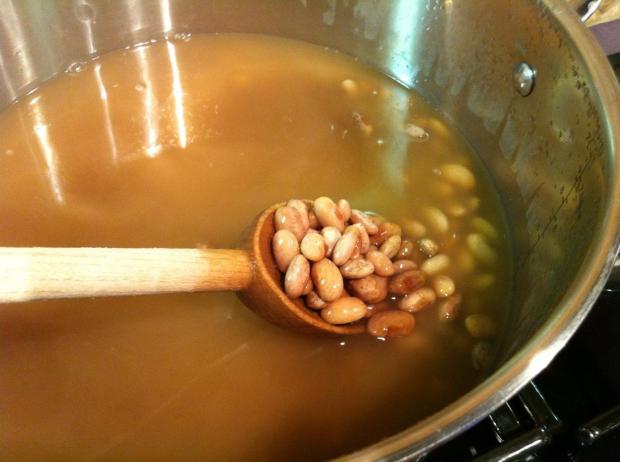
After an hour, strain the water off the beans back into your colander. Don’t rinse the beans…just pour the water off.

Add enough water back to the pot to cover the beans plus another inch and then add the beans back in. Throw the heat back to the beans and bring them back to a boil. Add a little bit of salt, but not too much if any at all. We’ll add our seasoning later on.
Now…before we go any farther, let’s discuss pork and beans. Pork is good, too. Pork is real good. I save all my bacon drippings in an Illy Coffee can. It’s perfect for storing bacon grease so I can use it for cooking. Nothing other than bacon drippings goes into this can. No vegetable oil or olive oil or butter…just pork fat. I’d drink this in a pinch if I had to. Add a couple of good scoops of fat to the pot.

I mentioned my New Year’s hambone. I make a ham every NYD to go along with my blackeyed peas and cabbage. That’s also my birthday, so I get a pineapple upside-down cake, too. When I’m on death row, that might be my last meal. Anyway…(tense)…back to the pork. If you don’t have a spare hambone laying around your freezer, get some hamhocks from the grocery store. They are a close 2nd place on the pork scale for me when it comes to beans. Hambone is the way you want to go if possible, though.
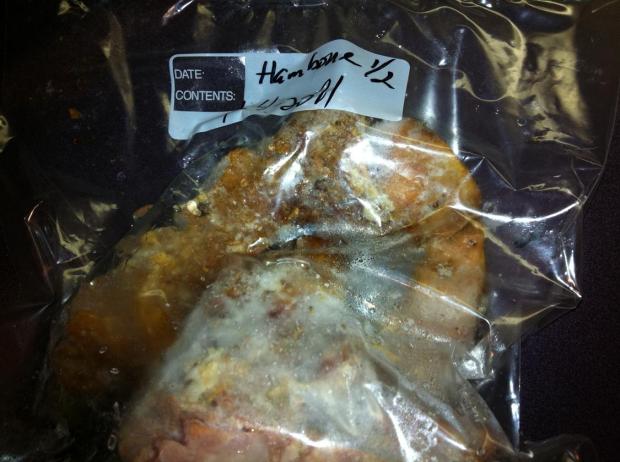
I like to leave a bunch of meat on the ham when I carve it just for the reason that I know that at some point in the next few months I’m going to make beans, and the ham in the beans will send it over the top. If for some reason you don’t have a hambone and have to use hamhocks, it’s ok to get a couple of slices of country ham from the meat counter at your grocery store.  Don’t use deli sandwich slices…the ham you add needs to be thick cuts.  If you are using a hambone, make sure you take off all the cloves and you’ll want to separate the joint, but other than that just pitch all that pork into the pot.

Heat. Cover. Go.

After it comes to a boil, set it to simmer and uncover. It’s going to slow simmer ALL DAMN DAY. 5 hours at least. After it starts to simmer, let’s start putting in some flavor. Take an onion and quarter it. If you are lucky enough to have a whole fresh onion, go ahead and rough chop the greens, too.

While you are at it, throw in 5-6 cloves of garlic, peeled but whole. The simmer: (note the delicious fat on top)

The vege mise en place:

In they go:

Stir it in well, and let it simmer again. For an hour. Uncovered. UNCOVERED!!!! WHOOOOOP!!!

After an hour or so, cover it back up but make sure you lower the heat so you don’t burn it. The onion and garlic will break down and leave you with a nice full body of flavor. Plus, the starch will start leaking out of the beans and the fat and connective tissue will start melting from the pork. It all leaves you with a delicious brown color and a thick gravy.

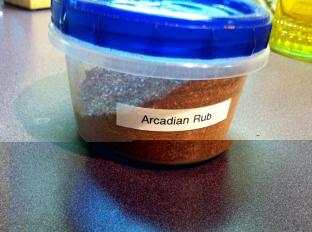
Now we are going to start adding flavor. Remember the Arcadian Rub? Let’s sprinkle in 2tblspns.
Now we are starting to resemble real live beans. Make sure every 15 minutes or so, you give them a good fold. Try not to stir too hard and break up the beans…just a gentle fold.

You should be to the point where you can see the line along the side of the pan where the liquid started. We’ve lost a lot of liquid so far from the beans soaking it up and the constant simmer evaporating the water out. If you ever get to the point where you are running low on liquid, you need to add some back in. And that’s where the Shiner comes in.

I set a bottle out at room temp so I’m not adding cold beer to the beans and ceasing the simmer. Pour it in slowly…it will foam up as the carbonation fizzes out.

The foam will subside pretty quickly, but be careful so that it doesn’t overflow onto your cooking surface.

While you are here, go ahead and throw in a quartered tomato or two. If you like it spicy, pitch in a whole jalepeno. Don’t pierce it or cut it up. Just throw it in whole. Any real Texan will tell you that the Jalepeno not only packs a solid wallop, but it also has a delicious fruity flavor. Let it boil for a while…if you don’t want it too spicy, take it out after 30 minutes, bifurcate the pepper and remove the seeds and inner membrane with a spoon. That’s what makes it spicy. You can then throw the pepper back it so it can continue its purpose in life.  If you like onion or think that it needs a bit more of the onion flavor, you can throw in another quartered onion.

All along the way, you should be tasting this to see how it is coming. I like a lot of cowboy in my beans, so after an hour with the tomato and the jalepeno I’ll add Arcadian rub every 5-10 minutes and taste. If the spice/flavor is there, but you want it a bit more salty go ahead and add some fine grain salt like table salt. Pull the beans from the heat and let them rest for a few minutes, covered. Then you are ready to serve ’em right out of the pot.

The essence of Texas ranch-style beans. Serve straight up or with some of momma’s cornbread like a good boy/girl. Congrats to you; you are the proud new eater of the Shiner Bocker Beans.


Tomato Tutorial: Determinate v. Indeterminate

Tomato Tutorial: Determinate v. Indeterminate

Determinate or indeterminate, who knew?


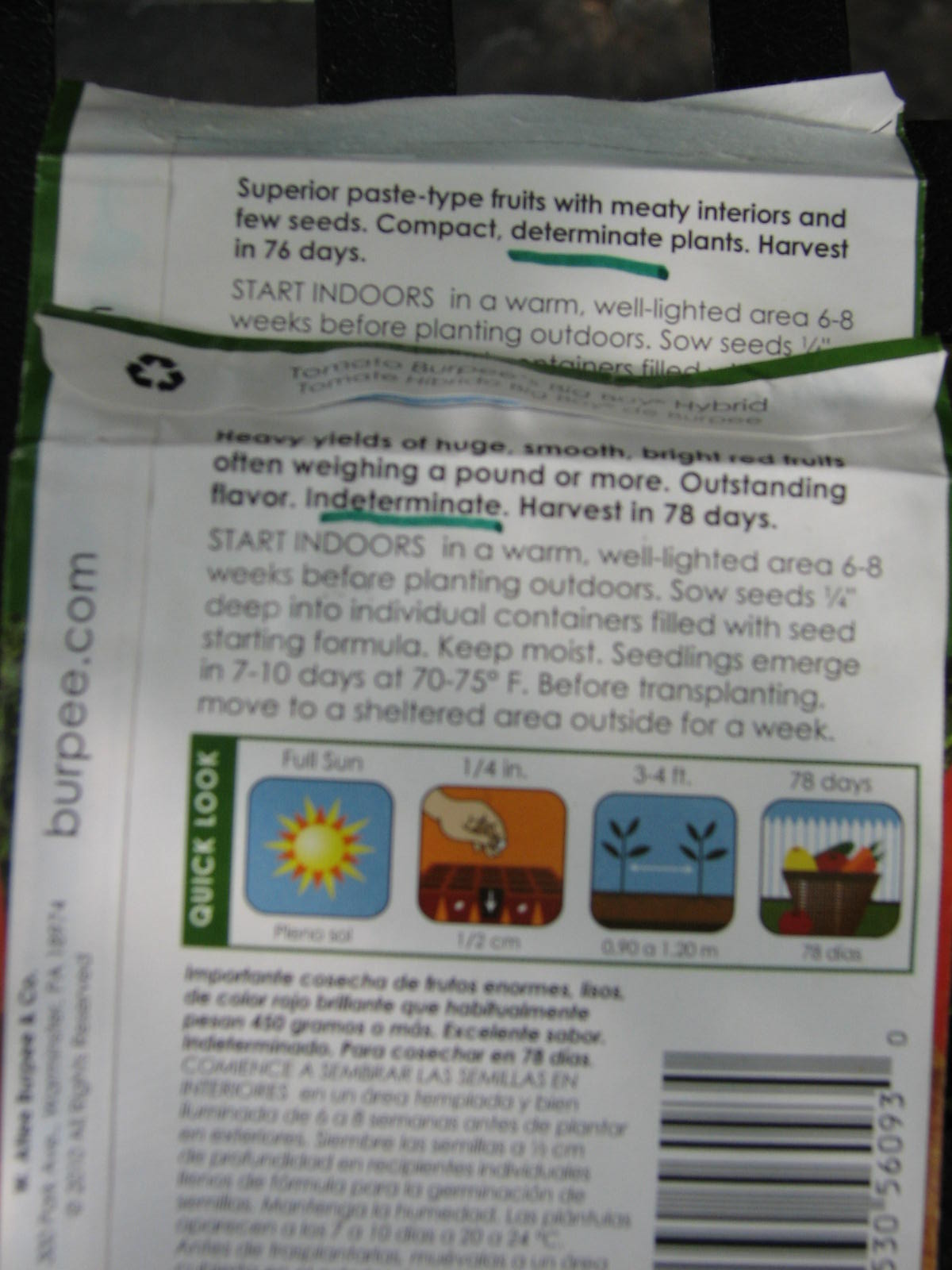
If you start paying attention to the info on the back of seed packages or catalogue descriptions you will start to notice one of two words showing up. Determinate or Indeterminate.

Until recently, I would just shrug not understanding what that was all about. Occasionally you will see semi-determinate, which is usually an heirloom cultivar. However the classification is similar to pole beans or bush beans.


What’s the difference?

Determinate= a bush-type plant, meaning that the plant has a “determinate” height. It will grow to a point then will stop growing up. All new growth will then take place from side-shoots off the main stem. And the plant will be bushy. These plants usually set fruit and ripen in a concentrated span of time, making this a great type if you want to can tomatoes.

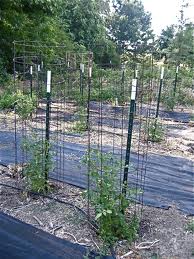
Growing determinate plants: use a tomato cage, a good sturdy one, it might be helpful to also put a stake near the main stem and tie the stem to it. It will keep the plant from toppling over when its heavy with fruit.

Sturdy tomato cage.

Indeterminate= vine-type plant. This is a tomato that will continue to grow and has an “indeterminate” height. These can be unruly, if not staked and caged well. For those of you in Texas you know what I mean. In August the tomato vines will be heavy and 10 feet tall and still growing. And you will be looking at this profuse vine thinking “what am I supposed to do with this?” These types set fruit and ripen continuously, so you have an ongoing supply of tomatoes from the vine.

Growing indeterminate plants: use a very tall stake or tomato ladder so the vines can grow up. This helps to keep the fruit off the ground which leads to a whole other set of problems.

I’ve also been known to drive in a T-post and use in conjunction with a cage. When the vines get too heavy for the cage to support it, the T-post will prop the cage up. T-posts are in abundance on the ranch because we use them to build barbed-wire fences.

An example of using a T-post with a cage (this is not my garden, BTW)

One type is not better than the other, but it’s helpful to know what kind you are growing when planning your garden. You can select specific types depending on what you want to accomplish or the planting space you have available. Personally I like a variety of both in my garden. I have a small raised-bed garden at my house and a large plot in our family garden out at the ranch. In my small home garden I’ve planted a variety of both indeterminate and determinate tomatoes.

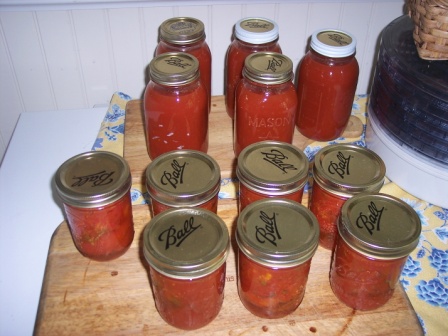
The determinate types will suit my purposes better at home because they are compact plants and will ripen in a concentrated period of time. I can harvest my main tomato crop, then move on to my next crop and get the most out of my small garden. I’m also hoping to have enough come off at one time to can (aka put up) my crop.

Canned tomatoes

At our ranch plot, I’ve got more indeterminate varieties because we have much more space and can provide plenty of room for the plants to spread out. I’m hoping the indeterminates can provide a just-in-time regular delivery of homegrown tomatoes to eat throughout the season.

One last note about growing tomatoes in Texas: think of growing tomatoes in 2 shorter growing seasons, instead of one long season. Tomatoes will take a hiatus from mid-July to late August when it’s too hot. In fact, most tomatoes will not set fruit when overnight temps reach 80-85 degrees.

My plan is to grow an early crop, pull up spent plants, then replant in late August for a fall harvest.

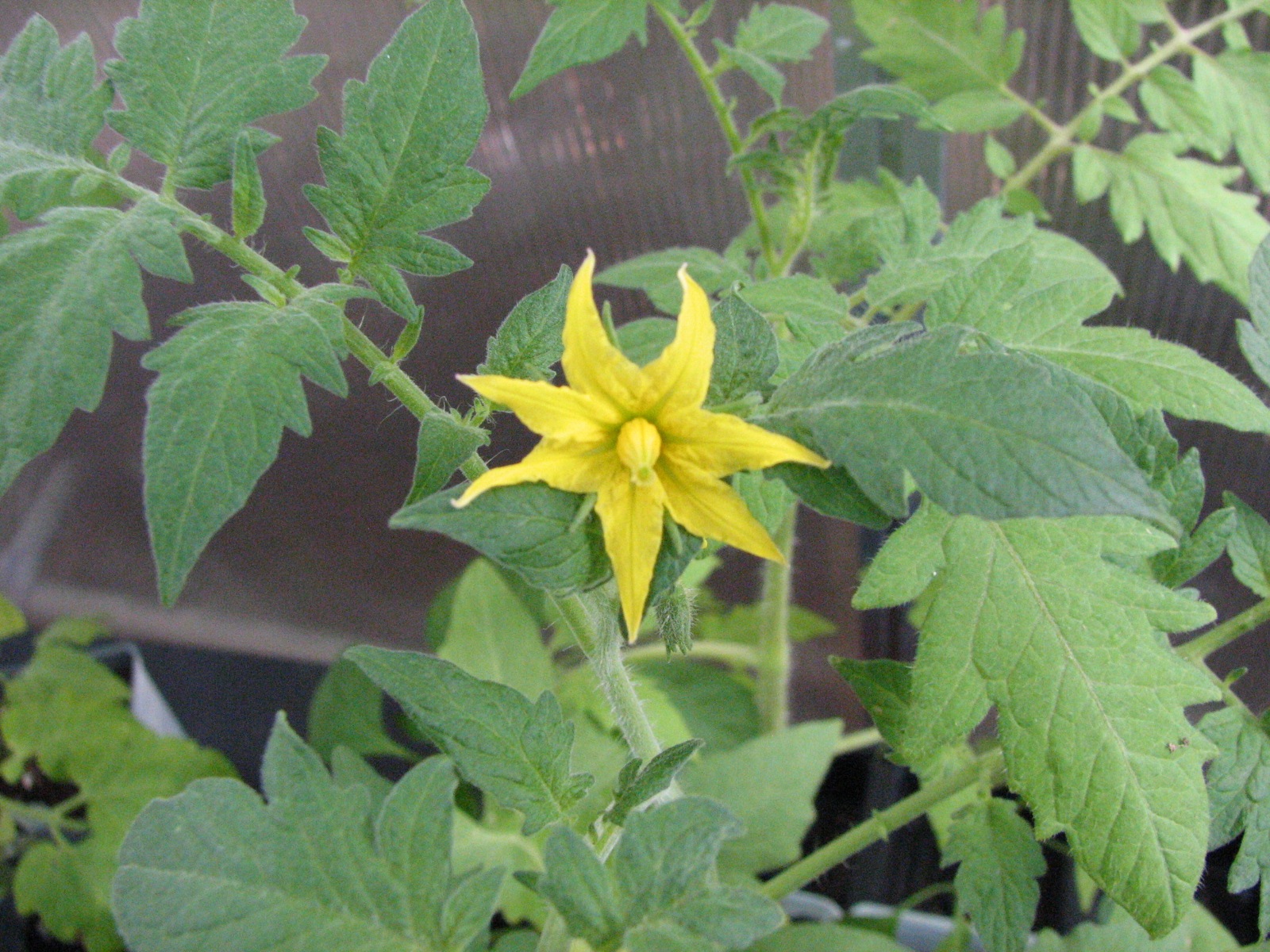
Flowers on the tomato vine now hopefully mean juicy tomatoes later.

Fingers crossed. Happy Gardening 🙂

Garden Calamities, Bad Kids and More Bad Dogs

Garden Calamities, Bad Kids and More Bad Dogs

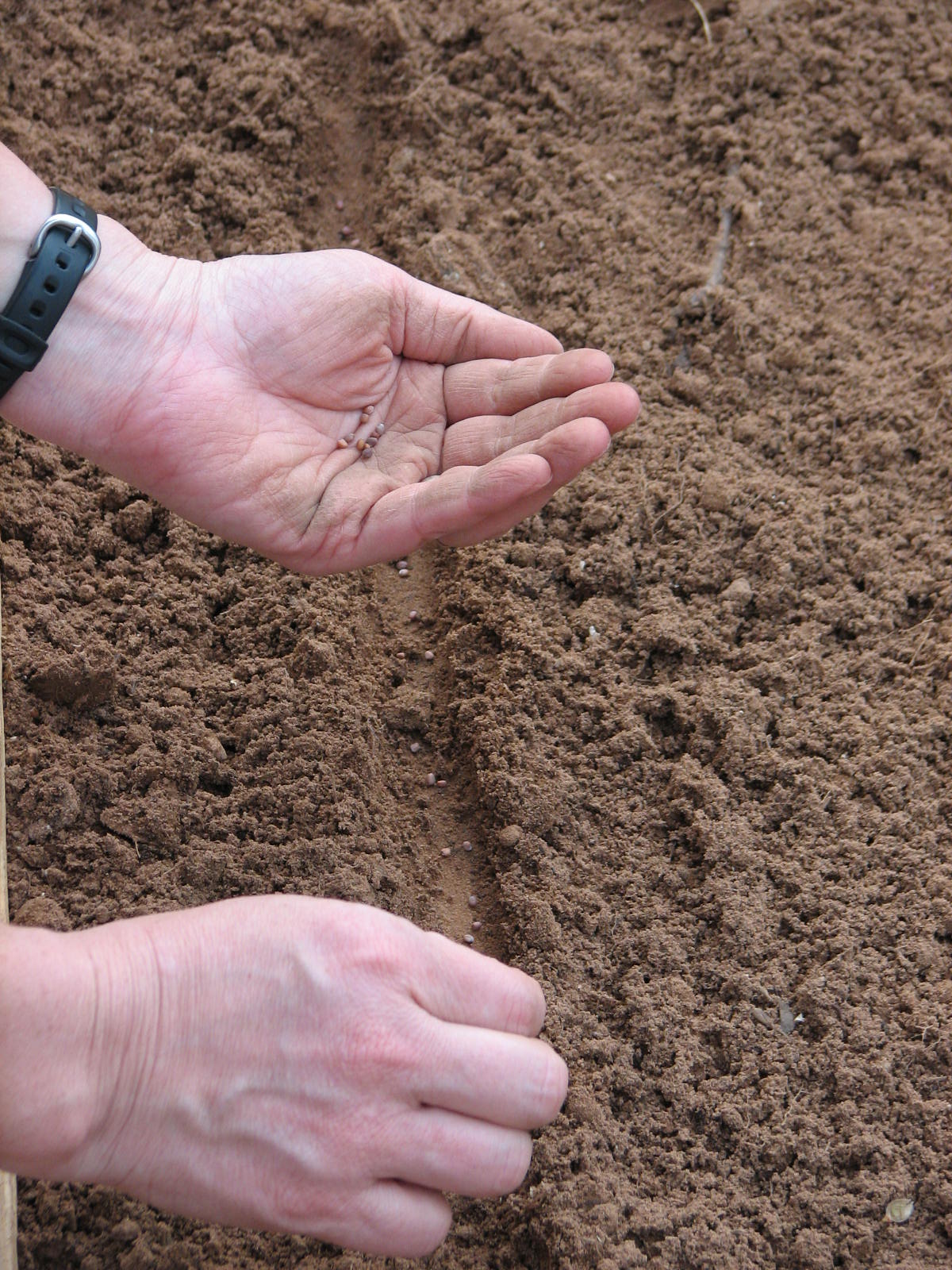
7 to 10 days ago I planted a few rows of spring plants that are space-savers—ideal for my intensive gardening plan. These are also the plants that give you quick pay-off in terms of gardening—radishes, mesclun, rocket (aka arugula), spinach and carrots. All sprout quickly and can be harvested between 25-45 days.  A super-speedy turnaround considering our beloved tomatoes can take up to 90 days to mature.

Planting a sorta-early spring garden...

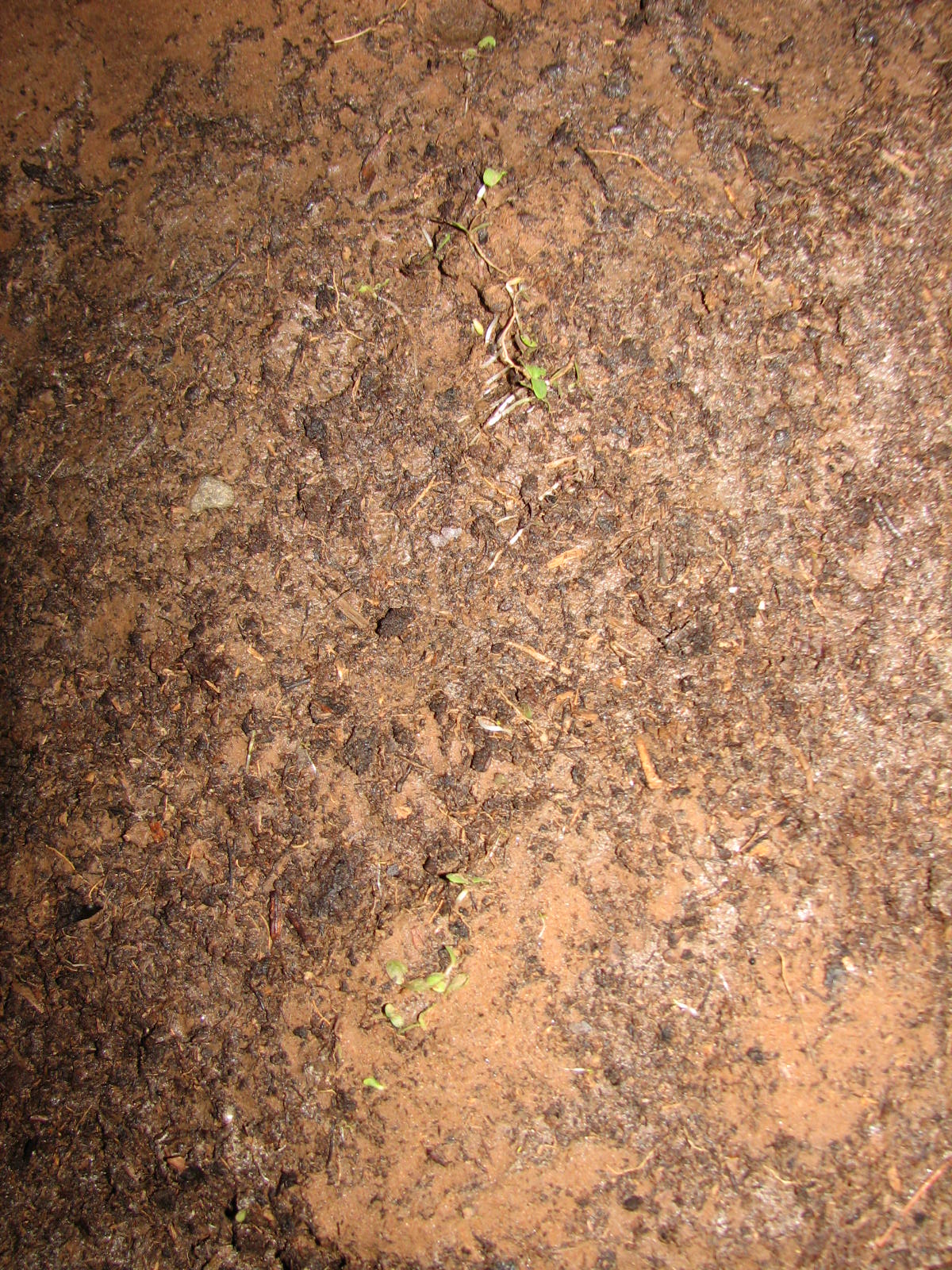
These quick-return crops have already started to show signs of life … this photo was taken on Monday, 7 days after they were planted.  

Showing signs of life.

See the little sprouts coming up … I have no idea what this is because I didn’t properly label my rows – oh well. I will be able to identify them once they get past the initial phase of sprouting.  

Then Tuesday, I started writing this piece and decided to take photos showing progress.  I went out to the garden to take photos, but there was evidence of a minor Garden Calamity.

Evidence of a very bad dog.

A big dog print in my raised bed …  I only planted half of one raised bed and that is the only place the dog tromped thru. Of course it’s right in the middle of a planted row.

 I still didn’t get the story finished, so after work on Wednesday, I went to take another progress photo.

Then another Garden Calamity struck … usually when that happens it has to do with a bad dog. Yesterday it had to do with a kid … my 4-yr old son came into the house and declared: “I water momma’s flowlers. I help jew, mom.” I didn’t think a lot of it, but then walked out to see what he was talking about.

Seedlings almost washed away by a 4-yr old.

Holy Garden Calamity, Batman! I don’t’ think 4-yr olds understand that you can’t put the sprinkler wand/spray head thingy right up next to the seedlings. And this story has changed drastically since the initial draft, due to Garden Calamities.

Bad kid, good kid? Definitly a cute kid!

More to come on tomatoes and spring gardening in North Texas… I’m dying to plant my tomatoes, but the old farmers say, “thunder in February, frost in April.” And we had thunder in February along with a frozen foot of snow and ice that cancelled school for a week. I’m going to wait a few more days on planting my tomatoes. Hopefully I can avoid future Garden Calamities.

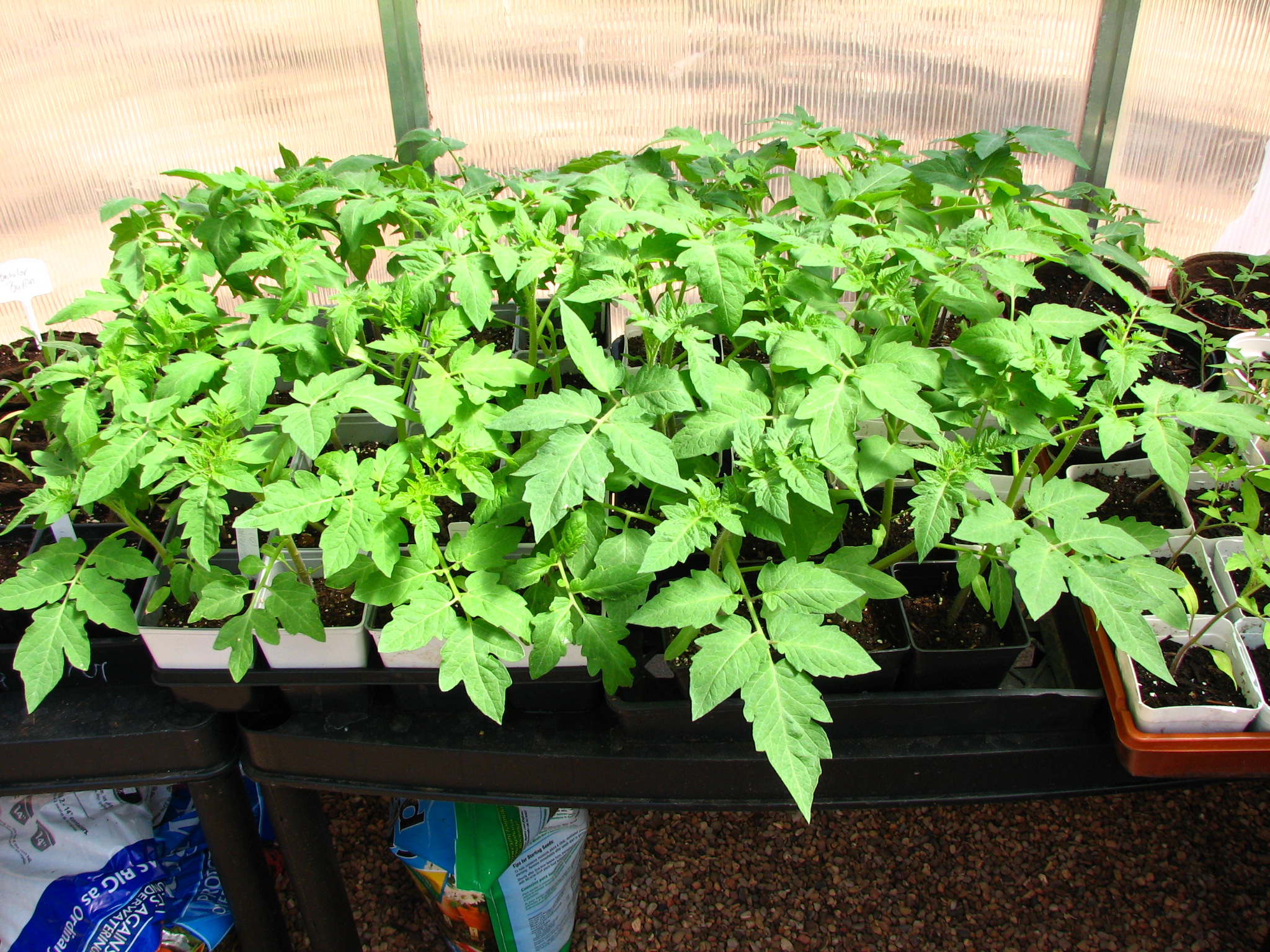
96 tomato plants ... almost ready for a North Texas garden home!

Perennial Favorites and Bad Dogs

Perennial Favorites and Bad Dogs
I was just writing about spring and how I love to watch things grow … and it’s even cooler to see perennials emerging from their winter slumber. 
 
Half the time I forget I’ve planted them, then I will start to see this little bit of green peeking out.  After an investigation, I realize it’s not a weed, but a perennial. 
This is a lilly -- not sure which kind yet.

Love perennials … they are more expensive than annuals, but if you select the right varieties for your area, you will be able to enjoy them year after year. 

I personally try to have a good mix of perennials and annuals.  One of my most favorite annuals of all time is the pansy. 

Happy Pansy Face

Look at this pretty, happy pansy face!  Fortunately where I live, I can plant pansies in the fall and they will usually overwinter then grow all spring until the end of April.  Then I rip them out and replace them with something more heat tolerant.

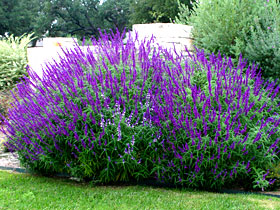
 This is Mexican sage, a hearty perennial.

Mexican Sage waking up from a long winter's Siesta

Sometimes I find this in the garden… bad dog … if you can’t tell by the photo,  my dog Ruby, dug in the flower bed and dislodged this beautiful specimen of Mexican Sage. 

Bad dogs dig in the flower beds

I love Mexican sage for my particular area, because it’s hardy and blooms continuously, it can withstand the hot Texas sun and summer, and requires very little watering.

Mexican sage in full bloom -- pretty!

This is a variegated sedum, another hearty perennial that can grow just about anywhere in the U.S.

Variegated sedum, aka striped sedum
Verigated sedum in its full bloom, in the late summer or early fall.

 What’s the difference?

Annuals complete their lifecycle in one growing season, meaning that an annual plant can grow from seed to maturation (seed reproduction) in one season—snap dragons, petunias and pansies. Generally most garden vegetables are annuals.

Perennials have an ongoing lifecycle, meaning they come back every year after a period of dormancy. Trees and shrubs are good examples, but other flowers are salvia, daisies, sedums and chrysanthemums. Some perennials are grown as annuals in northern climates because they are not cold-hardy.  A good example of this is dusty miller. It’s a perennial where I live, but in Kansas and north, it’s not hardy enough to overwinter.     

BTW … for those of you North Texas gardeners out there, we are coming up on our last average killing-frost dates this week and next.  For more info contact your local Texas county extension agent– they know all the scoop for your county’s growing particulars. (PS– if you live in a different state they have extension offices too).

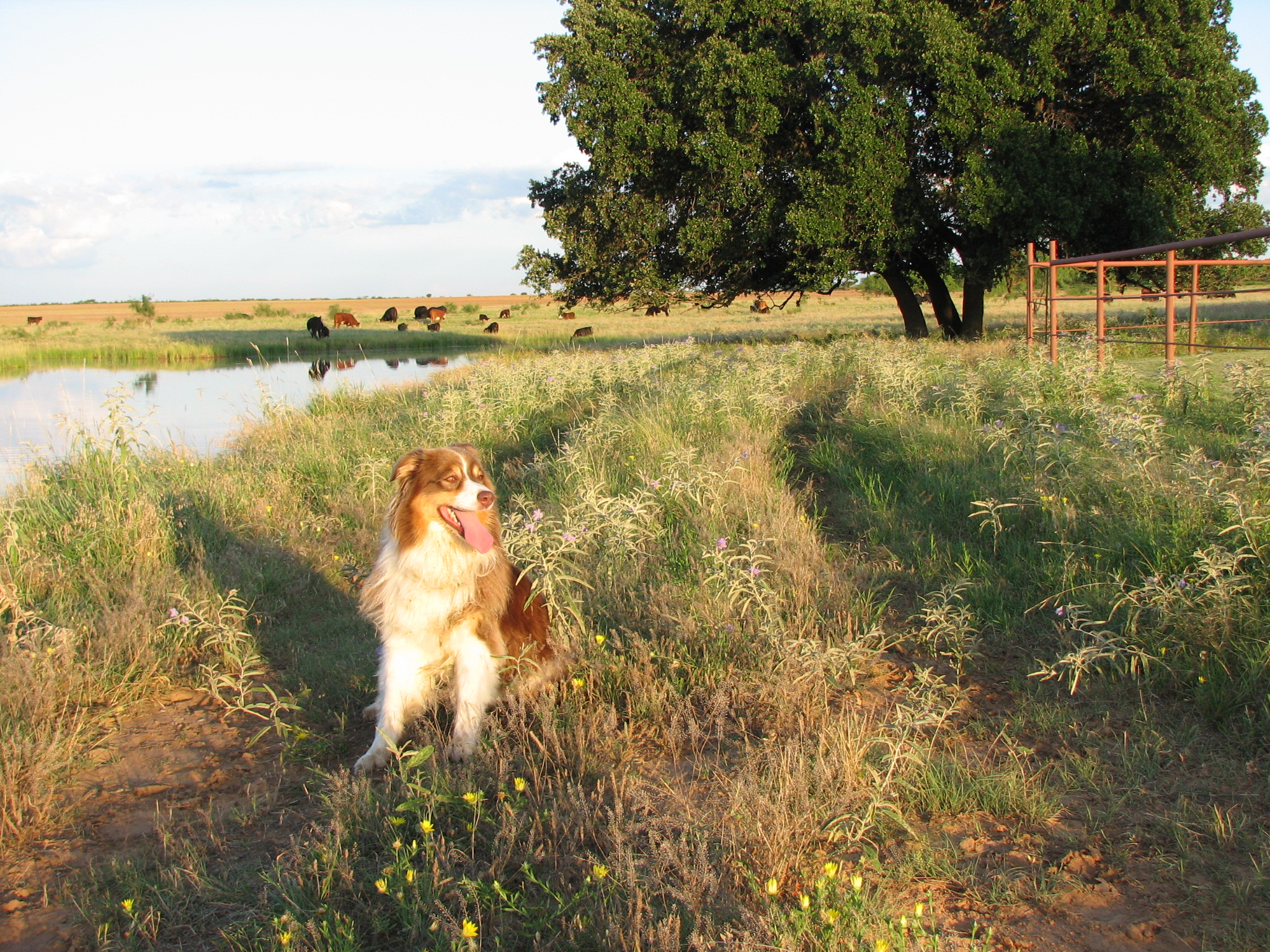
The bad dog ... Looking very pretty on a spring day at the "Goat Ranch." (there aren't any goats, btw).