Remembering Aggie Bonfire

I met Tim and Janice Kerlee this spring.  They were the guest speakers at our annual Aggie Muster. Their presentation is remarkable…they explain the Bonfire Memorial in great detail with pictures and describe the meaning of the each of the symbols throughout the entire structure, which are quite numerous.

Losing Bonfire happened just a few weeks before I graduated, and hardly a week goes by without me thinking about that day in some way. It helps that my office is adorned predominantly in Aggie stuff, including a picture of the last Aggie Bonfire in 1998. In my sitting area I have a copy of the Texas Monthly issue about Aggie Bonfire. Nonetheless, it’s still something I keep fresh in my memory because from time to time something will trigger a memory of that day. I don’t remember eating or where I parked or any of the normal details of my day-to-day life.  Just the invisible mourning shared between my fellow Ags and the confusion that weighed heavily in all of our hearts.  We all waited patiently and rather quietly outside the perimeter fence watching rescue workers try to save my fellow Ags. RC Slocum’s football team assembled and were among the folks who were toting logs off the stack.

It was the first and last time I’d been a part of a national news item, much less one that was so near and dear to my heart. I don’t know that I even realized if was even a single camera at the Polo Fields when we were out there.  Obviously, there were.  There were helicopters in the sky and news vans everywhere, but I didn’t even think to notice them. I didn’t have a mobile phone back then so I was out of touch for most of the day. My mother was miserable, I’m sure, but she worries a lot.

Part of the Kerlees’ presentation was the picture that the Dallas Morning News ran on their front page of Tim’s decimated body. His hips were crushed, his legs were detached from his body and his arm was broken. He was in shock and wasn’t in pain, although very uncomfortable from having his body broken the way it was. People in the rescue crews said that he told them to go help the others before they helped him. His parents got to see him before he died in the hospital.

Tim Kerlee, Jr was Janice and Tim Sr’s only child, and they lost him twelve years ago today. It makes me think about my son quite a bit when I remember her talking about Tim Jr, and I wonder how I would respond if my only child died doing something he was so passionate about. I wonder how many Aggies still think about that picture of Tim Jr in the newspaper and get angry that the DMN ran it in the first place. I wonder if the next generation of Aggies or the leadership in place on campus can ever get close to comprehending the dedication and spirit that Aggies such as the twelve who died that early morning had, as well as the others who were there and injured or had to help dig their brothers and sisters out of fallen stack. We hear about Tim so much because he was the last one to fall, but there are 11 other Aggies that rarely get mentioned.

I can’t do anything other than wonder, but I still do and I do it regularly. I hope you do as well.

Here X 12. Fightin’ Texas Aggie Bonfire.

Miranda Adams, ’02
Christopher Breen, ’96
Michael Ebanks, ’03
Jeremy Frampton, FTA Class of ’99
Jamie Hand, ’03
Christopher Heard, ’03
Tim Kerlee, Jr, ’03
Lucas Kimmel, ’03
Bryan McClain, ’02
Chad Powell, ’03
Jerry Don Self, ’01
Scott West, ’02

French Onion Soup

I remember the first time I had French Onion Soup. Actually, I don’t, but if you allow me to totally make up a story, it goes like this: I was hitchhiking across provincial France one summer when I was in college. After stopping in a small town for some bread and cheese, I noticed a wafting smell emanating from a cottage close to the marketplace area of the town. It was heavenly. It smelled like perfume…the perfect blend of peasantry and precision in food that carried me through the air like a Bugs Bunny cartoon where he gets the perfumed inner thigh smell of a carrot in his nostrils, which renders him helpless and catatonic as he slowly drifts thru the air towards the source of the smell.

I approached the cottage, knocked on the door, and was greeted by the most beautiful French woman you could imagine. She was fetching in the most humble ways…naturally beautiful, however she was reticent in seeing a stranger at her door who was sniffing the air like a bloodhound. In my broken French asked, “Qu’est-ce que c’est?”

Looking perplexed and glancing down at her feet, she said, “Ils sont mes chaussures.”

Actually, I think the first time I had French Onion Soup was at a Jason’s Deli or a La Madeleine or something like that. Either way, it left an impression on me.

Since I can’t recreate pastoral France nor is there a deli anywhere around me, I have to create my own FOS if I want some. Fortunately for me, my FOS is world’s beyond what you can normally find in a chain restaurant. Every young onion dreams of someday being the main ingredient in this powerhouse soup. So, without further adieu…he we goes.

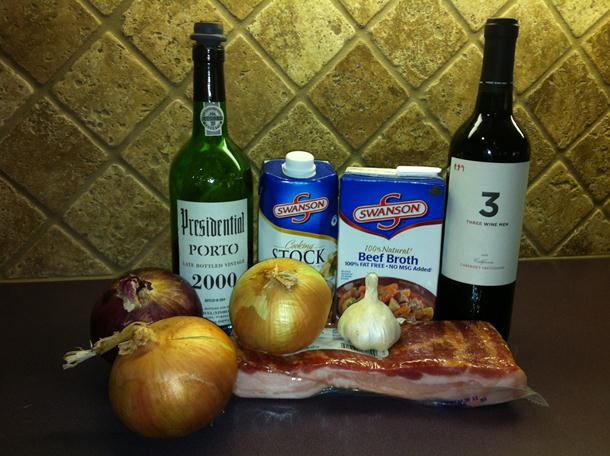
Mise en place:

-two large yellow onion

-one large red onion

-one large white onion

-3/4c of cabernet sauvignon

-1/4c of port

-6 strips of bacon

-4-5 cloves of garlic

-carton of beef broth

-carton of beef stock

-provolone cheese

-a nice french loaf

Boil some water in a large pot and add a bit of salt to soften the water.

Add the onions:

Blanche them for 2-3 minutes.

Then dump into an ice bath to stop the cooking.

This will make the skins easier to remove. You want to remove the outside layers that are papery. They’ll be quite toothsome in the soup, and you don’t want that.

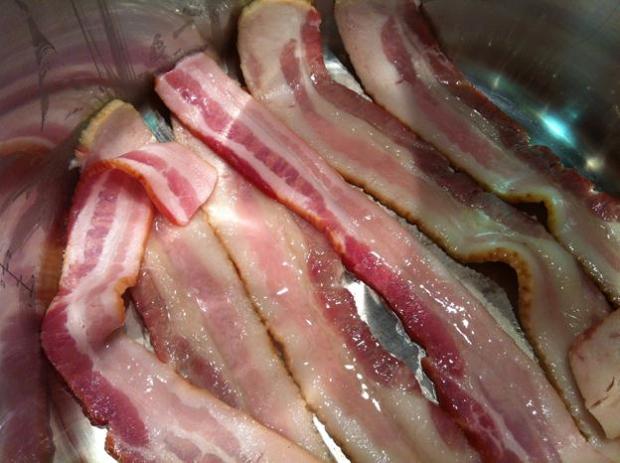
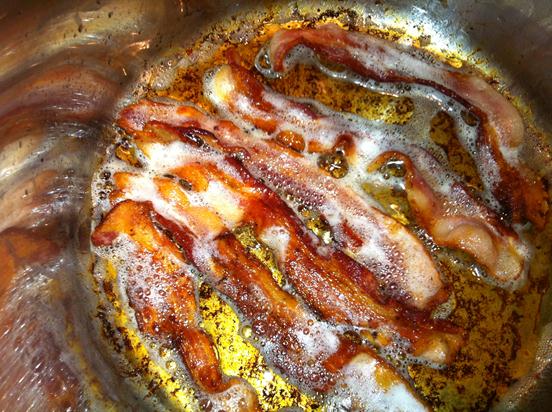
While they are cooling off, get your big stock pot out and render 6 strips of good bacon. Don’t cook on high…you need to be able to crisp the bacon up but not burn.

Remove the skins of the cooled onions.

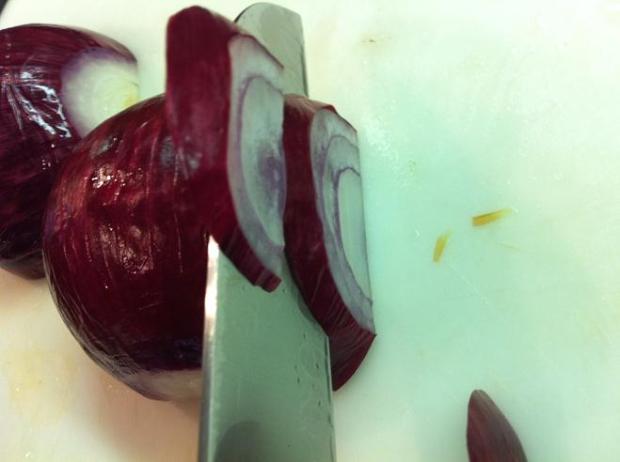
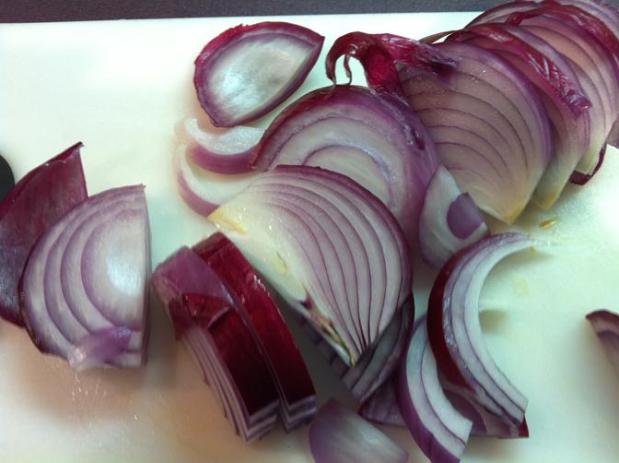
Half the onions, then julienne into strips. You want nice bite-sized strips. If you cut them too thin, they’ll disappear in the cooking. Make them too big, and they aren’t very fun to eat.

Do this will all the onions.

The red onions make a beautiful addition to the soup. They’ll leach that red color out into the soup.

Once the bacon is crispy and the fat is all cooked out, remove the bacon. Save it for a BLT or something. Don’t throw away good bacon.

Add all of the onion to the bacon fat.

Stir them so they are good and coated with the fat. Add some salt to make them start to cook down to translucent.

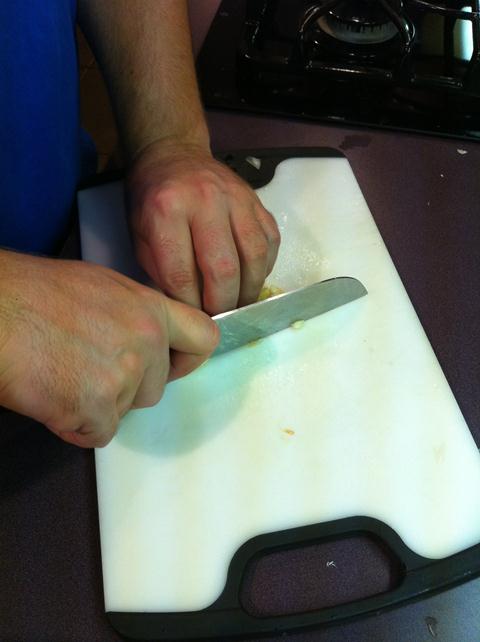
Five cloves of garlic, smashed and diced. I like to leave the garlic in small chunks so it has some texture to it in the soup.

Curl your fingers in and let the blade of the knife hit your knuckles. That way, you don’t get cut.

Add the garlic. More salt if you need.

Fresh ground pepper.

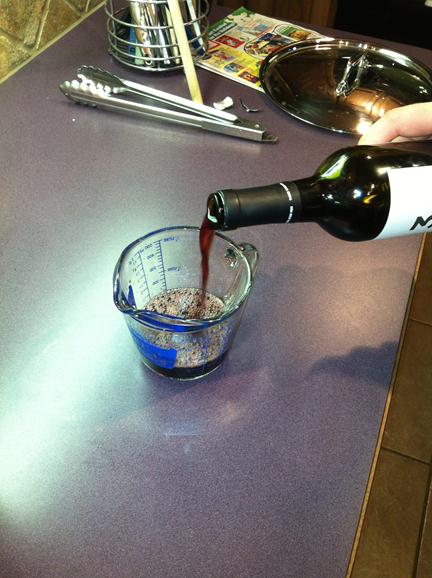
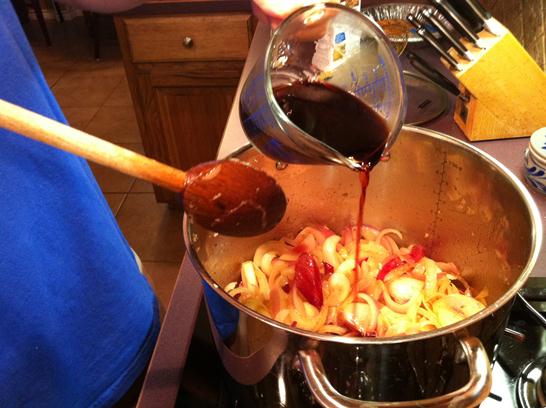
While the onions and garlic are cooking, measure out ¾c of red wine. I like using a tasty table wine that is good enough to drink along with the meal. The combo of the wine plus the soup is a great complement.

Plus 1/4c of your favorite port. I had an open bottle of vintage in my bar and needed to use it.

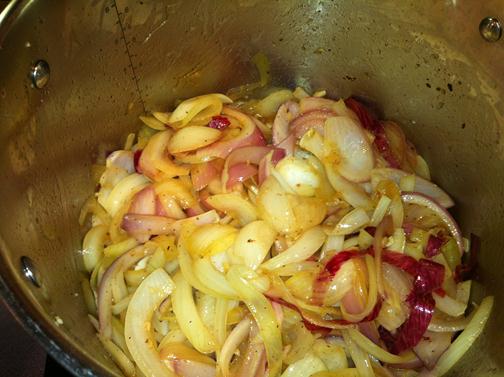
After a few minutes, the onion will start to become translucent so that you can see thru the edges.

Gorgeous.

Add the wines to the onions. The wine will immediately lose its deep ruby color and turn kinda brown. We need it to mellow a bit before we add the stock/broth.

And a bit more salt. Taste this along the way. The salt helps drive the moisture out of the onion and make them soft.

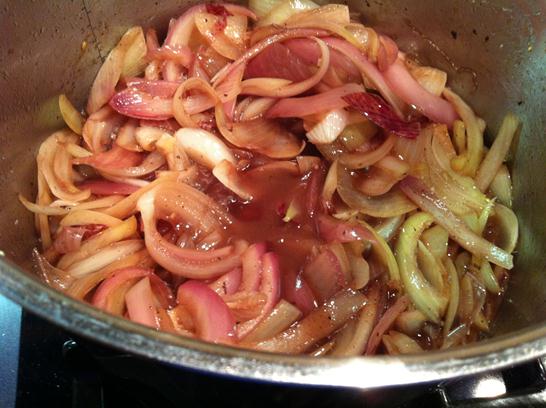
After a bit, the wine will mix with the moisture rendered from the onion and turn all of the onion a nice pink color.

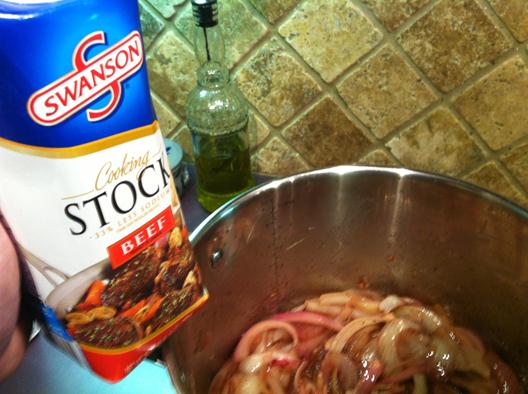
Now, since we are going to be serving red wine with this meal, I like to mix in beef stock and beef broth. Beef stock will have fat where the broth should be just about fat free. When you drink a red wine with big tannins, serve it with a fatty dish. The fat will coat the mouth and calm the tannins so that you can experience the fruit w/o drawing your mouth up.

Stock. In.

Broth. In.

Bring it up to a simmer, then cover and reduce the heat to a low simmer.

That needs to simmer on low for an hour and a half. At this point, salt and pepper to taste, but be careful. Over the next hour, the flavor is going to change drastically as all the flavors meld together. Now, notice that all we’ve added so far is salt and pepper for flavor. No herbs, no spices. That’s by design. The beef stock should be prepared with a bouquet garni for flavor. The natural flavor of the wine, the bacon, and the onion/garlic is going to be complex enough for us.

Taste it along the way. You’ll use more salt than you’d think, but be careful not to oversalt it. It’s best to get it to the point where you think it still needs just a bit more, then after the rest you’ll find that it’s perfect.

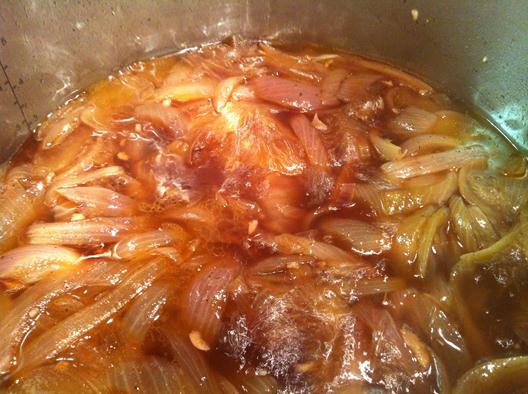
After an hour (notice the fat glistening on top):

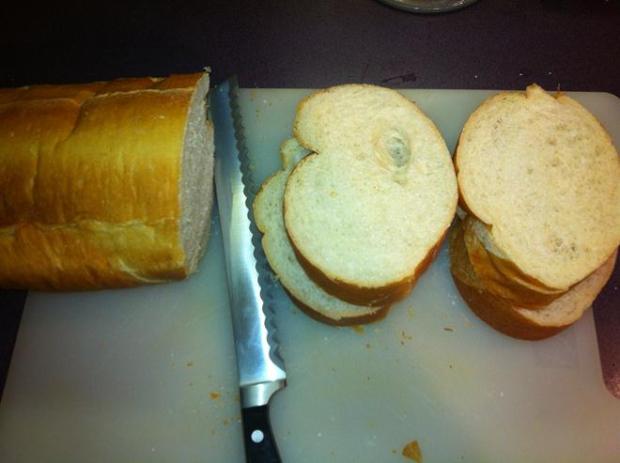
After the hour and a half long simmer, turn off the heat and let it rest uncovered. While it’s resting, cut a french loaf into 1″ slices.

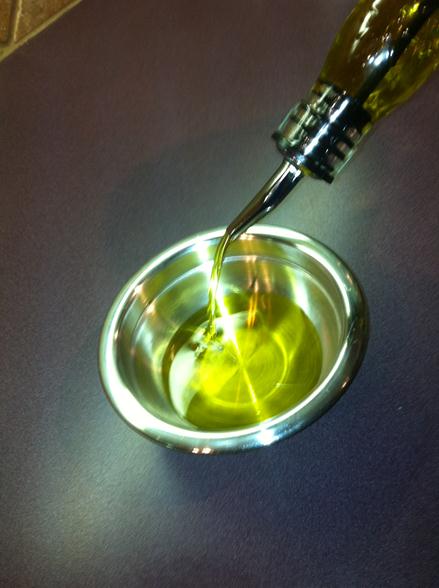
Olive oil.

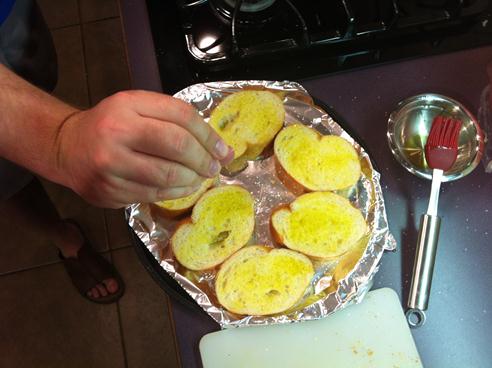
Brush the olive oil onto both sides of each slice of bread, then salt and pepper for each side.

Into a 425deg oven until nice and brown.

The crispy bread is integral to a FOS.

When the soup is finished, ladle portions into a high-sided bowl or a crock.

Put a crouton right in the middle of the bowl just on top of the soup. Don’t push it down…just float it right on top.

Take a slice or two of provolone cheese and lay it over the crouton.

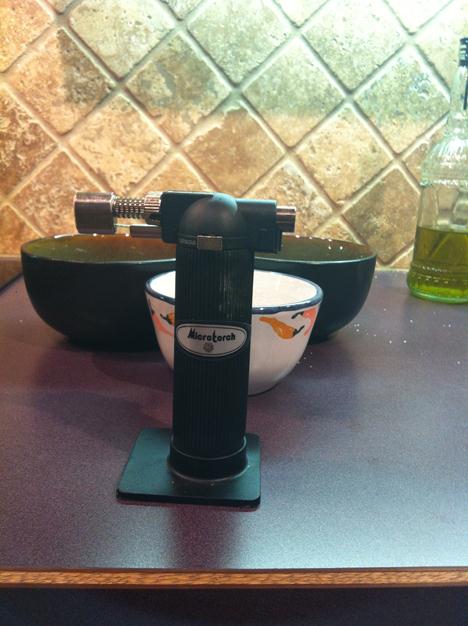
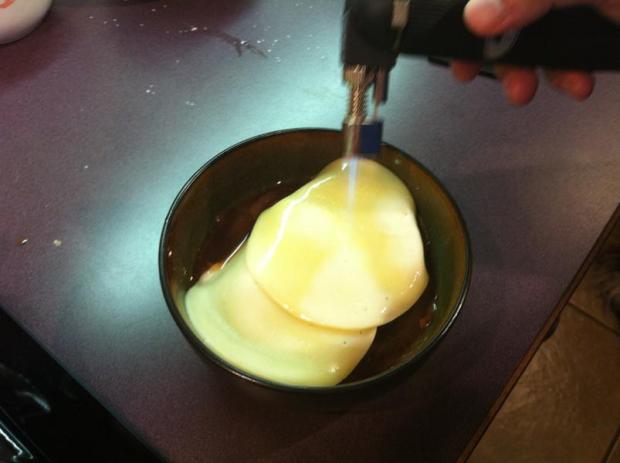
Now, some people like to turn their broiler on, slide the crock into the oven, and melt the cheese under the searing heat of the broiler. That’s a great way to do it. However, I like to use my kitchen torch to do it. I can be a bit more precise and get the cheese cooked to the perfect sear up close.

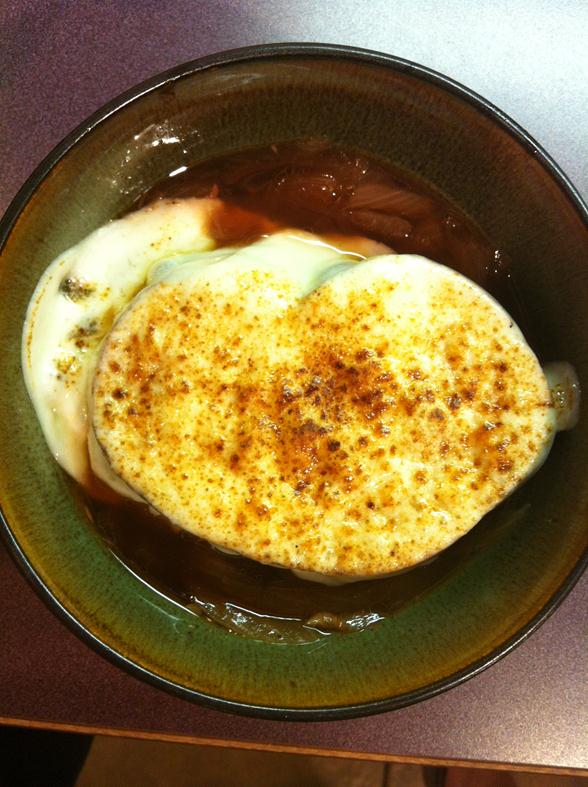
Seared:

Served with a bit of that tasty wine, and you’ve got yourself a delicious meal.

Here it is in its full glory. Bust thru the crouton that’s been soaking up that soup and spoon up the cheese with those onions.

And there you have it. French Onion Soup that will change your life.

Hometown Halloween

Halloween is one of those holidays that, as a kid, you look forward to all year long. I remember moving to a neighborhood after college and looking forward to greeting trick-or-treaters, only to find that there weren’t many kids around. And they didn’t go to a stranger’s house, even if it was next door.

Halloween moved into the category of a reason “to party” as an adult. Then I left the big city and traded my zero-lot line home for a traditional neighborhood in a small town. Now married with a kid, I live on a street where I know everyone’s name, and their dogs’ names too.

Halloween has once again become something magical and full of whimsy. All the things I remember as a child growing up in a small town. My son, John, was adamant about being Mario this year. (I’m glad we had Fox News on … that always indicates that my dad is at my house.)

Here in my little town they do it up right. There are car loads and trucks pulling trailers full of kids, decorations and an abundance of children weaving through streets and yards.

My son is trick-or-treating at the across-the-street neighbor’s house – he got homemade sugar cookies. That doesn’t happen in the city. People will think you are trying to poison their kids, even if they live across the street. These neighbors are also retired teachers that taught science and algebra to me.

And it’s on! We trick-or-treat on something I call the “miracle mile” also known as Rodgers Drive. We can walk up our alley, cut through a neighbor’s yard and walk a one-mile loop and get all the good loot.

It’s a gaggle of girls plotting their next Halloween maneuver.  How much you want to bet that this basic scene will occur many times in the years to come? I’m glad I have a boy.

There are multiple generations waiting on the door step to give out candy because there are so many kids …

Not the greatest photo, but you get the idea… there are quite literally thousands of kids that stream through this cool  neighborhood. (We actually don’t live in this neighborhood, but we’re in walking distance!)

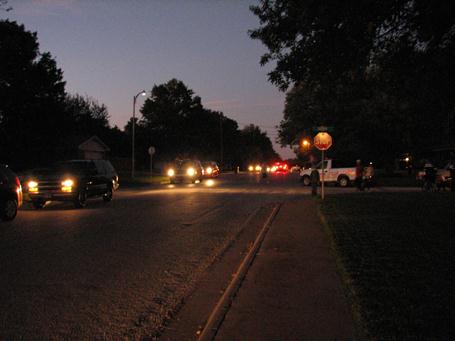
The intersection at Randy and Rodgers Drive … I wasn’t kidding when I said cars, trucks and trailers full of kids.

After our loop we end up back at our house and answer our own front door for the second wave of kids. Halloween is something of a marvel in our town. It really is something that looks like it was staged for a movie. By the way, we live in a place where we leave our kids outside to play in the street, which seems crazy in any place other than Arcadia.

Dad’s Mustard Brisket

Of all the things I cook, the most requested recipe is brisket. As a Texan, it should be required in order to graduate high school to know how to properly cook a brisket. It doesn’t have to be smoked, but right before they hand you a diploma, if you can’t answer “slow and long” to the question of how a brisket should be cooked, they should send you back to class.

My brisket is a world-stopper. You’ve never had BBQ quite like this, and the key is yellow mustard. Not fancy brown or Dijon mustard, but plain ol’ French’s mustard. Here’s my secret, though: This isn’t my recipe. It’s my dad’s. When he first told me how he was doing his brisket, I just about squeezed my eyeballs out of my head squinting at him. Sure enough, though, he was right. He’s right about a lot of things that I challenge him on, but none moreso than mustard brisket. Here’s to you, dad.

I’ve never officially gone thru this procedure before because of one major component, and we might as well tackle it head-on right out of the chute. To properly cook a brisket, you’ve got to dedicate an entire day to doing it. Not a “day” as in “when the sun is up”, rather a full 24 hours. An entire rotation of the friggin Earth. If you aren’t willing to put in the time, sacrifice some sleep, and do this right then don’t bother with it. Go get yourself a nice margarita and rent Brokeback Mountain. When you get started on this, take notes of time and do it right. Don’t come bitching to me if you pull this thing after the sun goes down and it tastes like shit. Not my problem. You’ve been warned.

Your timeline is:

Day 1: Brine for 4-6 hours, up to overnight

Day 2: Marinate overnight

Day 3: Smoking

4-6 hours unwrapped

12-14 hours wrapped

4-7 hours in the cooler

Example:

1) Put the brisket on at noon unwrapped

2) Wrap it at 6pm

3) Put it in the cooler at 7am

4) Serve at noon.

24 hours.

Good so far?  Good.

Now that we have the unpleasantness of the requirements out of the way, let’s get to the basics of Texas BBQ beef. The brisket was just a trash piece of meat until just a few decades ago because no one knew how to cook it right. For reference, picture a delicious bovine:

The brisket is the cut just above the front legs. Think of it as your chest if you were to get down on all fours. Because of where it is, more than half of the entire body weight of the animal sits on this piece of meat. Therefore, it has to be strong, long meat fibers that are filled with fat and connective tissue. In addition, there are three different muscles that come in, and therefore three different meat fiber directions. This makes things really difficult to manage, especially when it comes to cutting the finished roast.

Ranchers would just toss this thing because it was so hard to cook. There’s an entire cap of fat on one side, and all three muscles are separated by  layers of fat and membranes that are really deep and hard to get to before it’s cooked. Even then, you can easily mess up the presentation by cutting it wrong. The direction of the cut is almost as important as how it’s cooked. About 50 years ago, though, ranchers started noticing that their Mexican hands were taking the briskets and making incredible dishes with them. They figured out that what they were doing was cooking it over low heat for a long time in a braise. They took the braised meat and cooked it over dry heat, and the modern Texas BBQ was born.

Now that I’ve officially scared hell out of you for cooking this thing, let’s get things prepped. We’ll need:

-an untrimmed brisket. UNTRIMMED by the butcher, that is. Don’t get a trimmed brisket.

-Bottle of Allegro marinade

-French’s yellow mustard (generic will do; I’m using French’s here so you see it’s not anything special)

-An oven bag

-Your favorite BBQ rub

That’s it. Not a whole bunch to this thing. Your brisket needs to be untrimmed. Competition BBQueers will try to tell you to trim a brisket, but that’s just because they are trying to skip on time. Keep it untrimmed…we are going to need as much fat as we can get. What size?  Hell, I don’t know.  About this big will do:

Doesn’t really matter. When you go to pick it out, what you are going to be looking for is a solid cap of fat on the backside of the brisket (they always put the label on the opposite side because it’s prettier). I had someone tell me one time that they went to Central Market and bought a “prime” brisket. I’m not sure that it even exists. This is meant for trashy cuts of beef, so the sinewy-est, fatty, marbled up slab of brisket you can find is perfect. If you spend more than $2.50/lbs for your brisket, you got taken. Look for it on sale, and buy it when it’s around $1/lbs and freeze it.

Take your brisket out of the plastic and rinse it under water to get off all the extra blood. Let’s examine:

You see the long meat fibers here? They lie just under that membrane on top of the meat. Don’t peel it off…I just want to point out how the meat runs for later. We are going to cut AGAINST the grain when we serve.

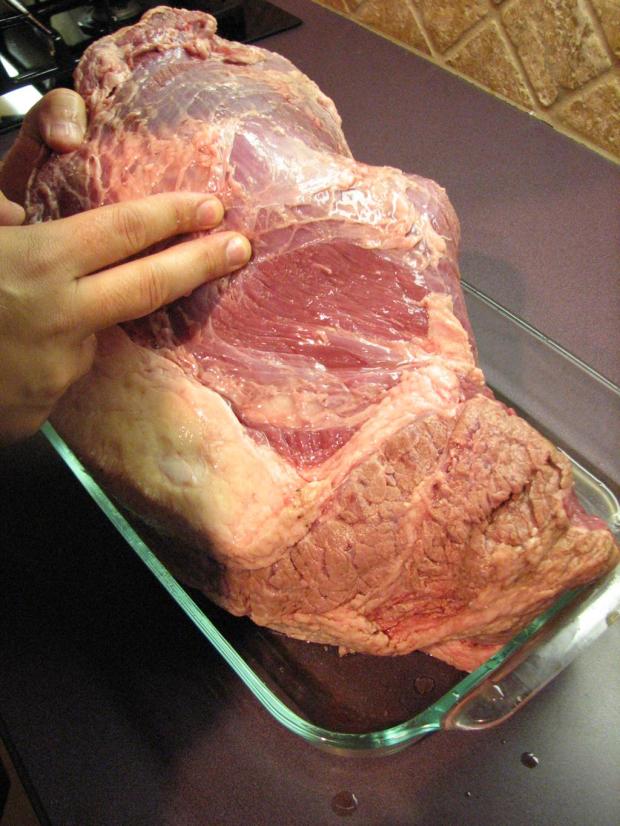
I pulled back that membrane a little bit to get a good shot. See how the direction of the fibers curves away? When we start cutting, we’ll need to look for that, and stop when we get to the point where we aren’t cutting against those grains.

The fat cap:

One of my favorite tools is the Reynolds turkey bag. They are just plastic bags that you can marinate/brine your meat in. Take one out, and put your brisket in, with the fat cap side DOWN.
I like to put it into a pan in case there’s a leak in the bag, and there’s always a leak in the bag.

Now, take that Allegro marinade and pour in enough so that it comes up about halfway up the brisket.

Make sure that it’s the fat cap side that’s down, and not the meat fibers. What we are trying to do is use that salt and acid that’s in the Allegro to break down the fat and the muscle fibers around the fat. If you brine this with the meat side down, you are going to turn the meat into mush, and we don’t want that. Seal up the back and put into the fridge for 4-6 hours, up to overnight.
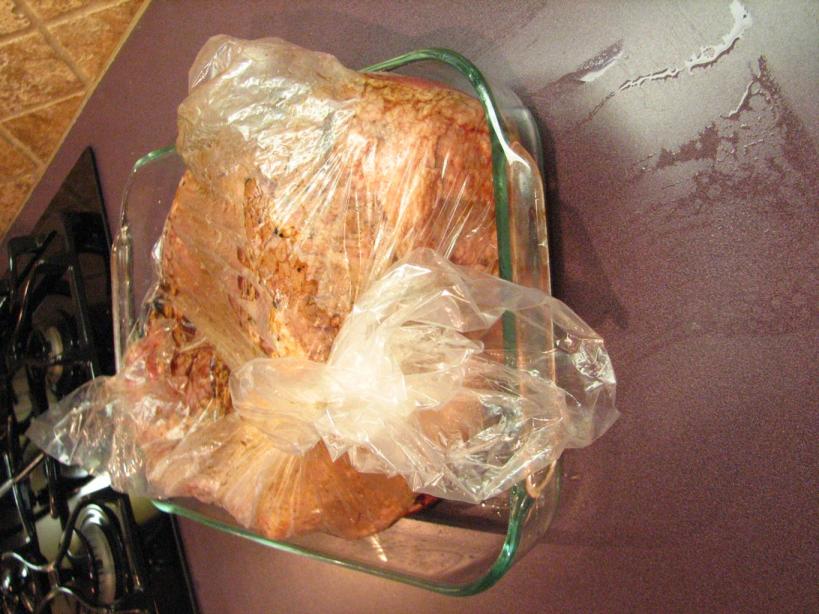
When you are finished, pull it out and lay it into a pan big enough to hold the whole thing. This is key…you are going to be flipping it in just a bit. Start with the fat cap side DOWN.

Get your yellow mustard out and squeeze LIBERALLY all over this thing, and then smear it with your hands so that it’s thick all the way around. Go ahead and rub it in kinda hard into the cracks and crevices where you can get your fingers. I always start mine out right:
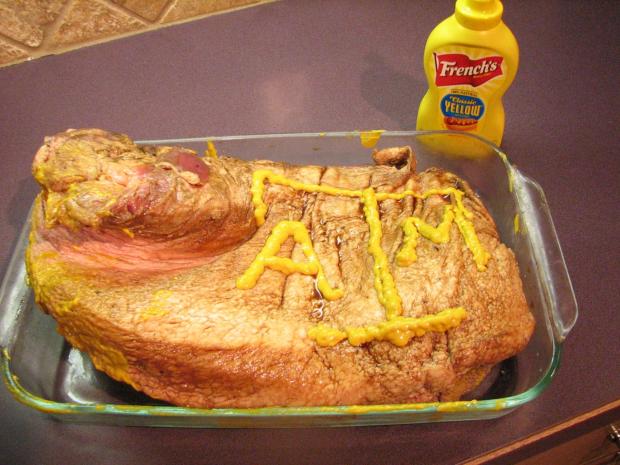
Coated:
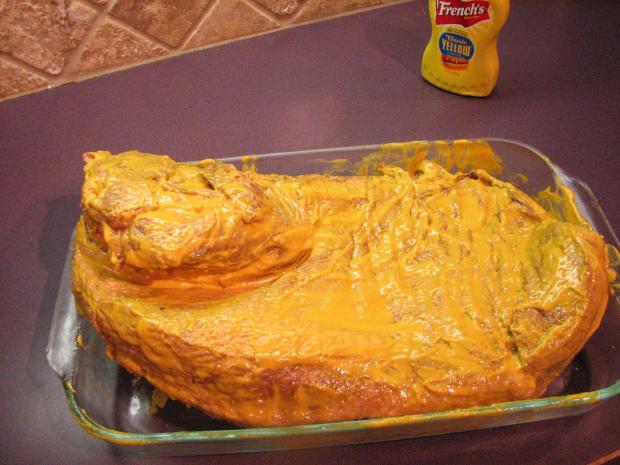
When you get a good thick layer on it, grab your favorite bbq rub and sprinkle it LIBERALLY all over. You don’t have to use the Arcadian Rub, but you want to make sure you use one with some brown sugar, salt, and spicy cayenne. You know what? Just use the damn Arcadian Rub.

Flip it over and get the other side as well (fat cap back down). DON’T RUB IT. Just sprinkle on top of the mustard. If you’ve disturbed the mustard coating, make sure it’s even and then re-sprinkle to cover.
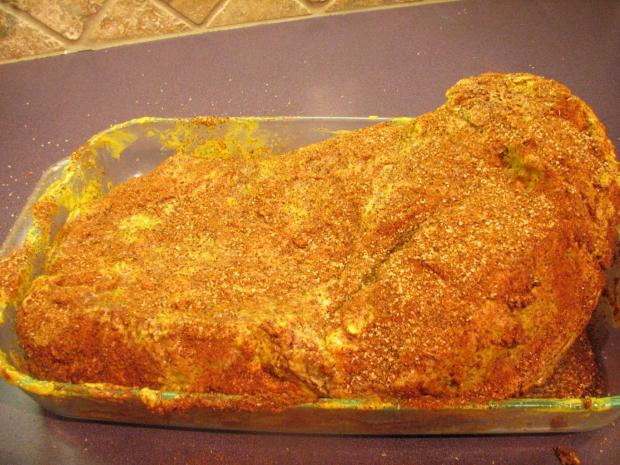
A close-up:

Now, we need to put this back into the fridge overnight. Don’t skimp. Needs to be overnight. If you put it in unwrapped, though, your fridge is going to smell like this for weeks, so grab a new trashbag (unscented) and put the whole thing in, pan and all. Seal it up and let it sit in the cold.
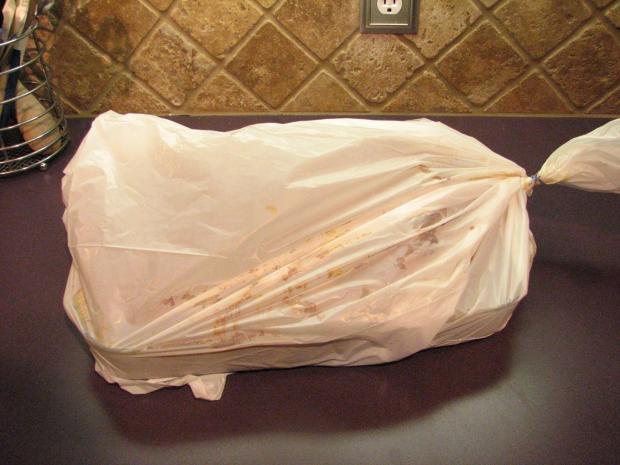
After a night in the fridge, poke that bad boy’s head out and take a look. The rub has gotten wet with the mustard and has made an incredible coat around the meat. That will be important for the next few hours as we slow smoke this

Close-up:

When you take it to your smoker, make sure you’ve let your smoker go enough so you are regulated to about 225deg constantly. Don’t try to singe this or sear it at first. It’s totally unnecessary, despite what you may hear from BBQ “experts” on tv. Just make sure you have a hard rolling smoke going, and your temp is around 225deg. 250deg at the highest.

I’m using mesquite.  Not pecan and especially not oak, which is good for firewood and that’s about it.  Use mesquite wood on your beef.  I could almost accept someone mixing in some pecan, but it’s not needed.  Just use mesquite.  Stop asking questions.  Use mesquite.

Put it into the grill with the fat cap UP. UP.

There are differing opinions on whether or not you should smoke fat side down or up. The folks who say “down” say that it helps keep the meat from charring. However, it you run your smoker right, it should never char since we aren’t getting above 250deg. Also, if the cap of fat is up, then it will melt down inthru the meat fibers, coating them with the delicious fat and Allegro brine. Does it matter? In the long run, probably not. However, this is how I do it and I know it works. Try it this way and see if it’s not good. If not, do it however you want to do it. This is America, baby.

After 4 hours:
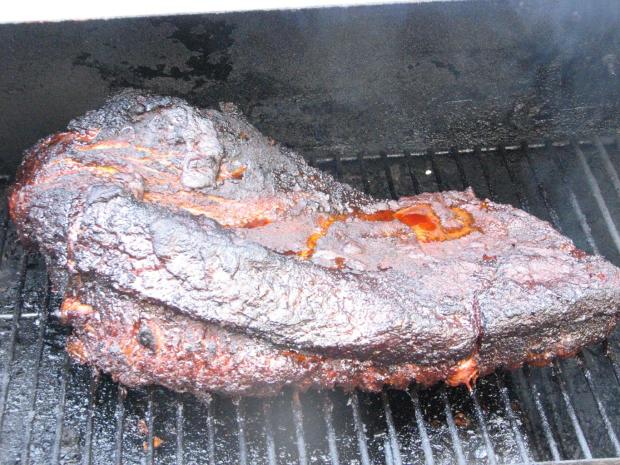
After six hours (with a couple of sweet potatoes thrown on to smoke for dinner):

You notice how black it is? That’s GOOD. We call that “bark” in the BBQ world. It’s the blackened layer right around the outside that has all the seasoning flavor from the mustard mixed with our rub. After six hours, we need to wrap this. You can go a little longer if you like, but I think six hours is plenty.

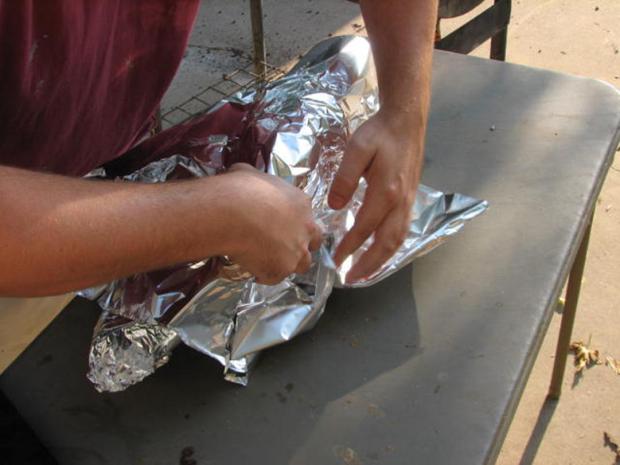
Get your handy prep table out, and lay two layers of heavy duty foil (the long package). Lift your brisket right out of the grill and onto the foil.

Fold the first layer of foil around the briskets. Fold it TIGHT and do it so that all corners are covered. I start at the bottom, fold across like you are putting a diaper on a baby (old style diaper on a baby, that is).

Do both ends, tucking in each loose piece, pinching them together, and making sure they are sealed up TIGHT.

When you get it all sealed up, a nice fold or pinch will keep it together. Just like a good marriage.

You might have some spots left exposed after the first wrap. No worries..we’ve got three more layers to go. Second layer from the bottom:

After both bottom layers go on, take another large piece of foil and wrap all the way around the top, covering that hole at the top, tuck under, but make sure you fold corners so that it fits like it should. Do that twice. You should have used four sheets of foil so far.
Then you’ve got your tight wrapped brisket, ready to go on for the long burn. Again, make sure you are watching your fire constantly and keeping it between 225-250deg.
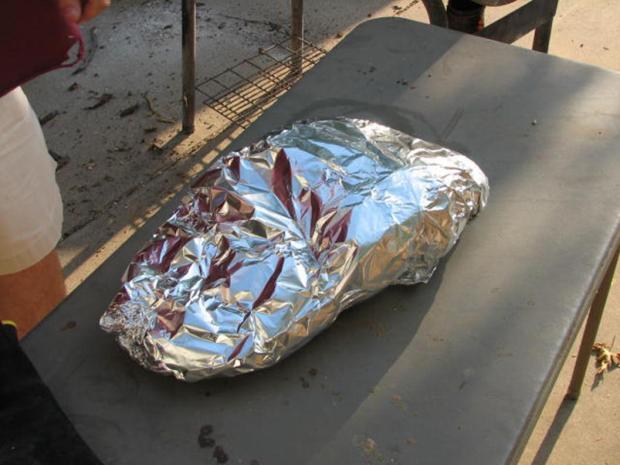
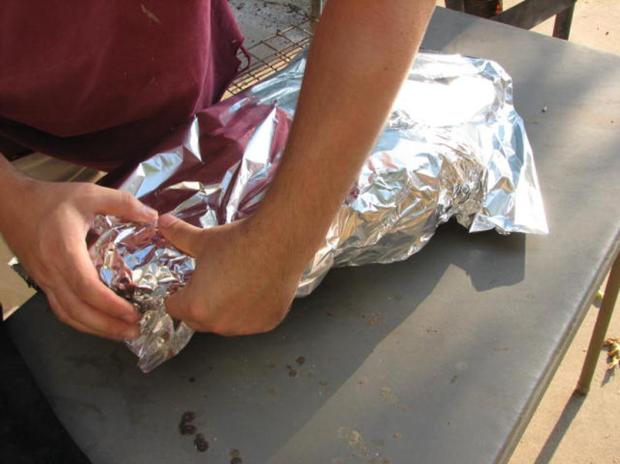
Back on it goes. Let’s add up the time so far:

-Allegro brine (4-6 hours, potentially overnight)

-Mustard and rub down (overnight)

-4-6 hours on the smoker at 225-250deg.

Up next, this needs to go for 12-14 hours wrapped at the same temps. Crazy, right? Yeah, just trust me on this.

After the smoker has done it’s work, the pretty foil will go from a nice golden yellow to a dark brown.

After 12-14 hours, take the entire brisket and place it in to your BBQ Cooler and let it rest for up to seven hours.

Do NOT open the cooler or disturb the foil until you are ready to cut.  That’s important.  Let it rest, and the rest is just as important as the other steps.  Don’t skip on this…let it rest.  Up to 7 hours max, no less than 4 hours.

When you are ready to carve, here’s a little trick.  You’ve got the fat side up still, so reach into the cooler and either rip the foil with your fingers or take a knife and cut the foil open.  You should be able to pick it up from underneath and flip it out onto your carving board.  However, get a pan so you can collect the drippings before you flip it out.  I use the same pan that I used to marinate the brisket.  Just tip it so the drippings run out, flip your brisket out onto your board, and then collect as much of the drippings as possible.  If you have some drippings that come out onto the board, go ahead and try to rake those into your pan also.  It will make the carving so much less messy.

Big ol’ slab of beef.

From the bird’s eye view:

When you start to cut, keep in mind how the meat fibers run.  Again, we are going to cut against the grain.  There’s a little secret to make sure you do this correctly.

a) start at the “skinny” end of the brisket

b) start on one corner, where you think you need to start

c) cut off the top of the corner on a bias (or on an angle) to make sure you are starting right.  If you chose the wrong corner, you can easily go to the other corner w/o too much of a do-over.

How do you know if you’ve cut it against the grain?  The part you cut should fall apart, with the meat fibers being really short.

I like to use an electric knife.  Honed steel is good, but don’t foresake the precision of an electric knife here.  Start making about 1/4″-1/2″ slices along that same line that you started on just a bit of a bias.

Excuse the blurriness, but you get the idea.

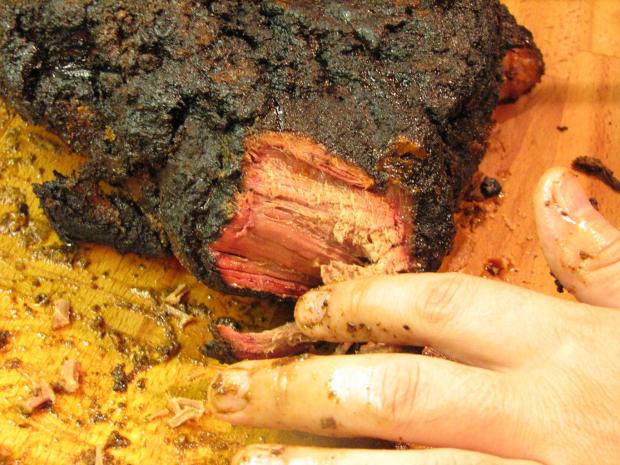
This is what I’m talking about being “against the grain”.  See the short meat fibers now that seem to fall apart?  That’s what you want.  This will be so tender that the meat will literally fall apart when you try to pick it up.

Here’s your brisket slice, about as whole as you can get it.  It’s ok if it falls apart.  It’s going to be so good and tender, it doesn’t matter if it stays in long slices.
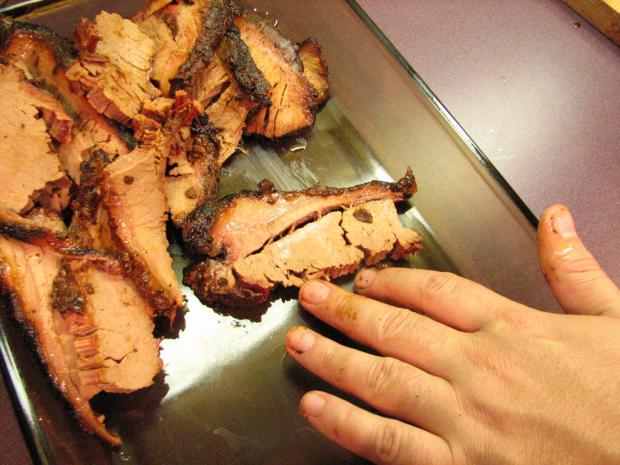
Continue on until you get to the point where the meat fibers begin to turn.  You’ll know you are there when you get to the big thick part of the brisket, and your slices look like they are slanted.  Then, turn the brisket 90degrees and start cutting right across the top, which will now be against the grain.  You’ve got two different muscles in here, but they’ll both be going the same way.

A close-up of the muscle, with a thin membrane separating.

Here are the long meat fibers.  Cut against then so your knife is perpendicular to the muscles.
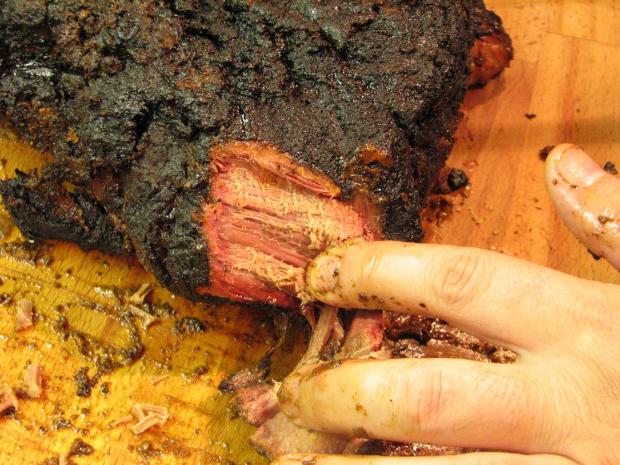
Close-up, of the slices.
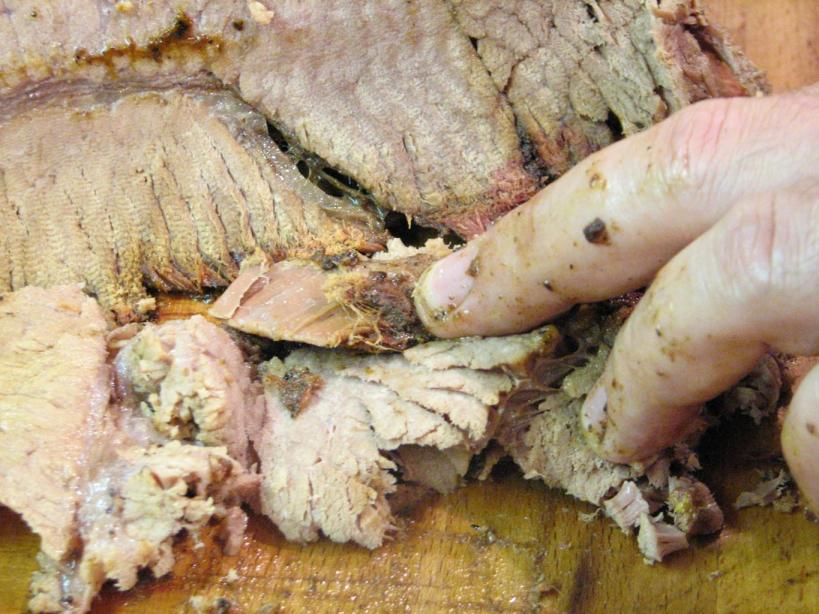
When it’s all sliced up, you have should be able to peel some of the extra fat off and keep it in a pile up at the top.  Plus, you have tons of extras left over.

There’s all the brisket cut up.

That fat still has tons of potential to it.  Let’s not throw it away.

If you take your fat trimmings and put them into a skillet, you can start to render some of the extra fat off.  Brown on both sides for a bit…
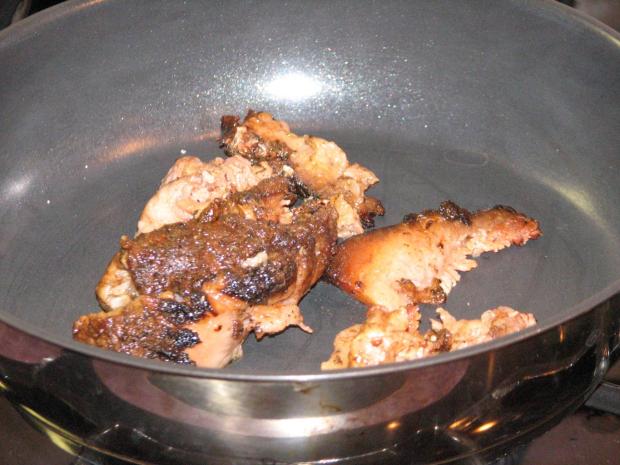
Then add a little beef broth or some of the drippings back to the pan and let it suck as much of the fat out as possible.

Then take that hot grease and drippings and pour it right back over the sliced brisket.  Cover it with foil, put it into the oven at 170deg for a few minutes just to keep warm until it’s time to serve.

Presentation on the plate:
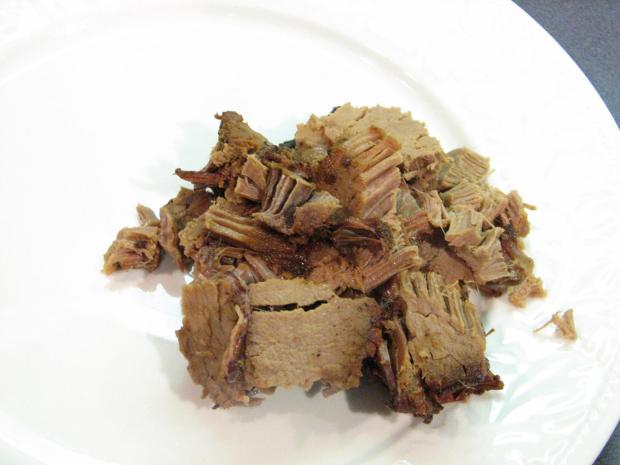
In the pan, you’ll have this deliciousness:

I’m not opposed to putting sauce on this, but if you are going to use sauce, let’s use the WGD brisket sauce and not just some sugary sweet crap off the shelf.

That’s it.  My dad’s mustard brisket, cooked for a full 24 hours and about as perfect as Texas BBQ can be.

Shiner Bocker Beans

You know what I like? Beans. You know what else? Shiner Bock. You know what’s REEEEEEL good together? Beans and Shiner Bock. Your life as a bean-eater is about to change. For the better. Bocker better.
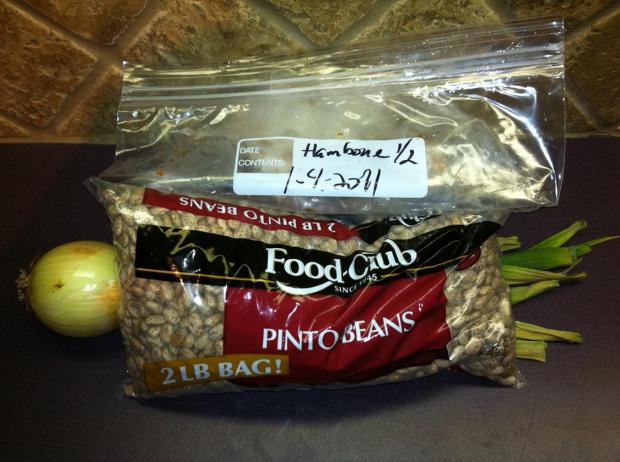
A quick glance at the ingredients:

-2lbs of dry pintos

-a medium yellow onion (I’m using a fresh one here with the greens still attached, right out of the garden)

-a tomato or two, homegrown if possible

-a juicy ripe jalepeno, homegrown if possible

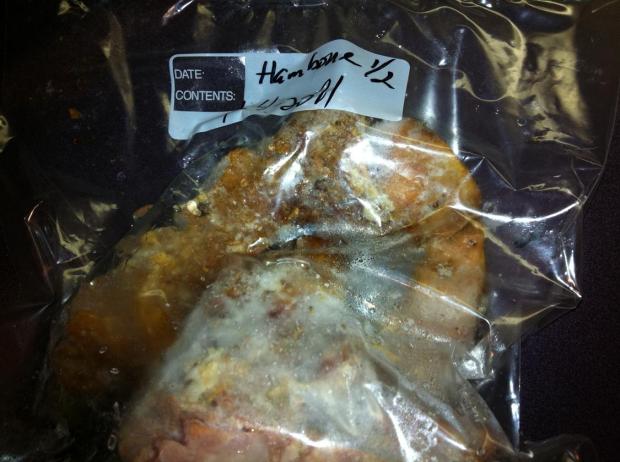
-pork (I had a hambone from NYD that I needed to get out of the deepfreeze)

-SHINER THUMS UP BOCK

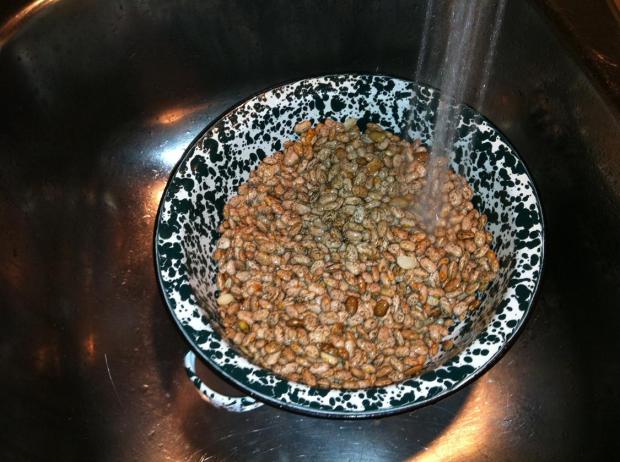
Pour the dried beans into a colander and rinse them off really good under cool water.

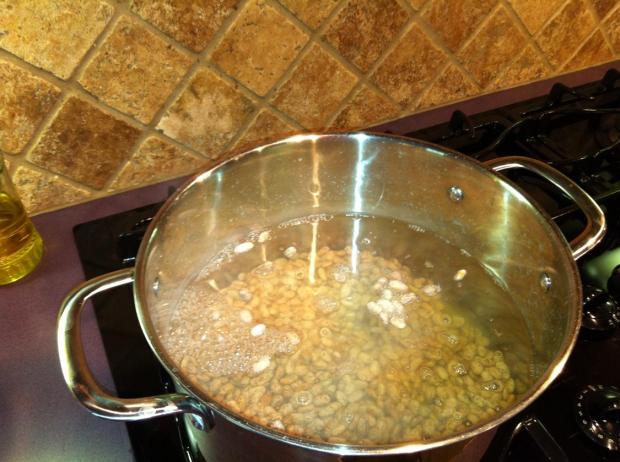
Get your best stock pot out and put a few cups of water in, just enough to cover the beans. A thick bottom on your pot will keep the beans from scorching. It makes a difference because we are going to be cooking for a LONG time. Add some salt when you turn the heat on. The salt will soften the water and flavor the beans.
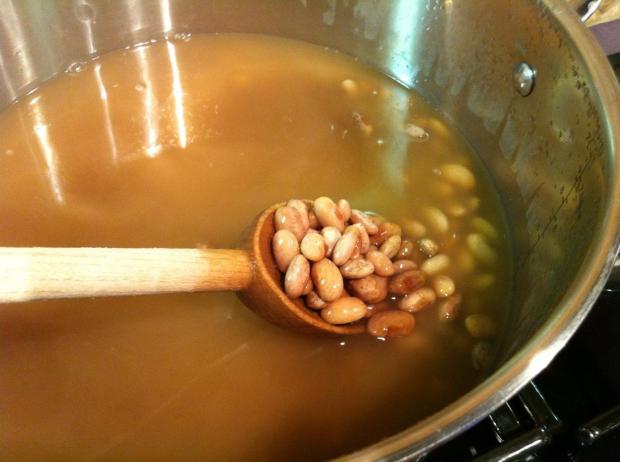
Pour in the beans and bring the water to a boil. After the water boils, let it go for 10 minutes and then cut the heat off and cover the pot. It will need to sit for an hour in the hot water.

After an hour, strain the water off the beans back into your colander. Don’t rinse the beans…just pour the water off.

Add enough water back to the pot to cover the beans plus another inch and then add the beans back in. Throw the heat back to the beans and bring them back to a boil. Add a little bit of salt, but not too much if any at all. We’ll add our seasoning later on.

Now…before we go any farther, let’s discuss pork and beans. Pork is good, too. Pork is real good. I save all my bacon drippings in an Illy Coffee can. It’s perfect for storing bacon grease so I can use it for cooking. Nothing other than bacon drippings goes into this can. No vegetable oil or olive oil or butter…just pork fat. I’d drink this in a pinch if I had to. Add a couple of good scoops of fat to the pot.

I mentioned my New Year’s hambone. I make a ham every NYD to go along with my blackeyed peas and cabbage. That’s also my birthday, so I get a pineapple upside-down cake, too. When I’m on death row, that might be my last meal. Anyway…(tense)…back to the pork. If you don’t have a spare hambone laying around your freezer, get some hamhocks from the grocery store. They are a close 2nd place on the pork scale for me when it comes to beans. Hambone is the way you want to go if possible, though.

I like to leave a bunch of meat on the ham when I carve it just for the reason that I know that at some point in the next few months I’m going to make beans, and the ham in the beans will send it over the top. If for some reason you don’t have a hambone and have to use hamhocks, it’s ok to get a couple of slices of country ham from the meat counter at your grocery store.  Don’t use deli sandwich slices…the ham you add needs to be thick cuts.  If you are using a hambone, make sure you take off all the cloves and you’ll want to separate the joint, but other than that just pitch all that pork into the pot.

Heat. Cover. Go.

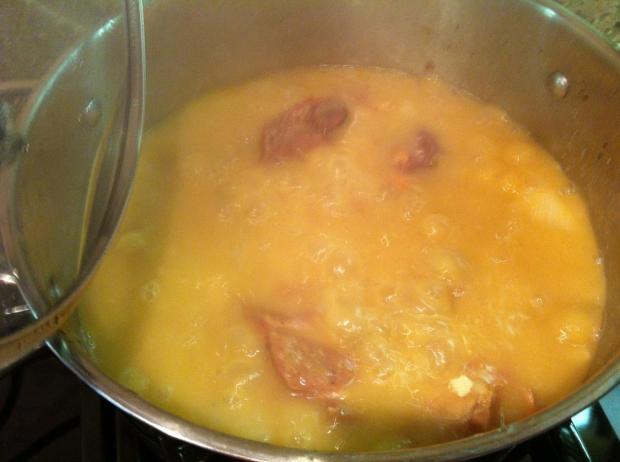
After it comes to a boil, set it to simmer and uncover. It’s going to slow simmer ALL DAMN DAY. 5 hours at least. After it starts to simmer, let’s start putting in some flavor. Take an onion and quarter it. If you are lucky enough to have a whole fresh onion, go ahead and rough chop the greens, too.

While you are at it, throw in 5-6 cloves of garlic, peeled but whole. The simmer: (note the delicious fat on top)

The vege mise en place:

In they go:

Stir it in well, and let it simmer again. For an hour. Uncovered. UNCOVERED!!!! WHOOOOOP!!!

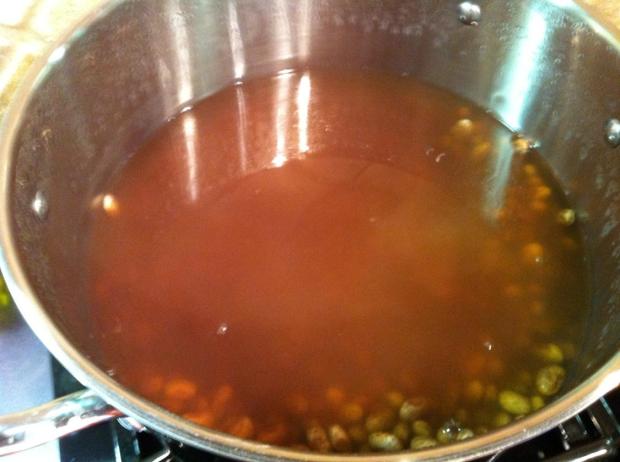
After an hour or so, cover it back up but make sure you lower the heat so you don’t burn it. The onion and garlic will break down and leave you with a nice full body of flavor. Plus, the starch will start leaking out of the beans and the fat and connective tissue will start melting from the pork. It all leaves you with a delicious brown color and a thick gravy.

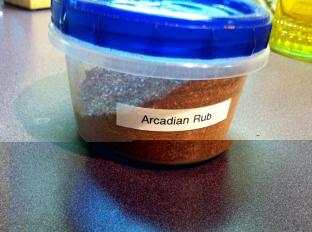
Now we are going to start adding flavor. Remember the Arcadian Rub? Let’s sprinkle in 2tblspns.

Now we are starting to resemble real live beans. Make sure every 15 minutes or so, you give them a good fold. Try not to stir too hard and break up the beans…just a gentle fold.

You should be to the point where you can see the line along the side of the pan where the liquid started. We’ve lost a lot of liquid so far from the beans soaking it up and the constant simmer evaporating the water out. If you ever get to the point where you are running low on liquid, you need to add some back in. And that’s where the Shiner comes in.

I set a bottle out at room temp so I’m not adding cold beer to the beans and ceasing the simmer. Pour it in slowly…it will foam up as the carbonation fizzes out.

The foam will subside pretty quickly, but be careful so that it doesn’t overflow onto your cooking surface.

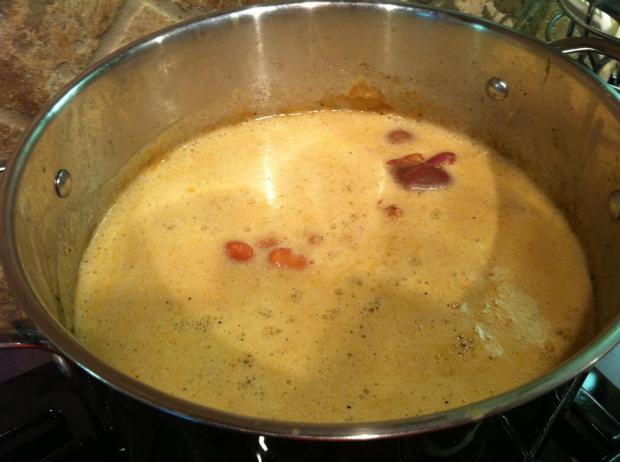
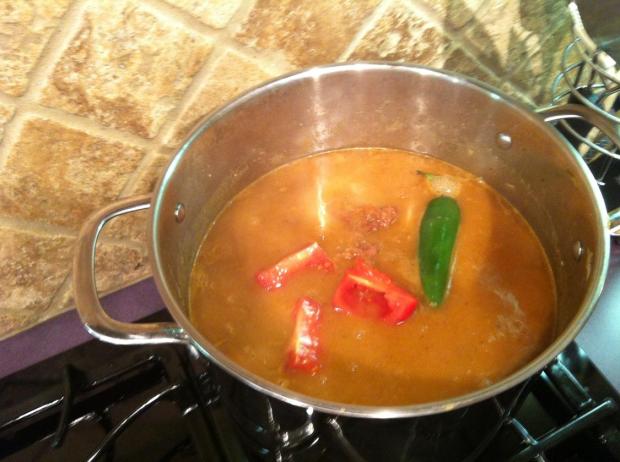
While you are here, go ahead and throw in a quartered tomato or two. If you like it spicy, pitch in a whole jalepeno. Don’t pierce it or cut it up. Just throw it in whole. Any real Texan will tell you that the Jalepeno not only packs a solid wallop, but it also has a delicious fruity flavor. Let it boil for a while…if you don’t want it too spicy, take it out after 30 minutes, bifurcate the pepper and remove the seeds and inner membrane with a spoon. That’s what makes it spicy. You can then throw the pepper back it so it can continue its purpose in life.  If you like onion or think that it needs a bit more of the onion flavor, you can throw in another quartered onion.

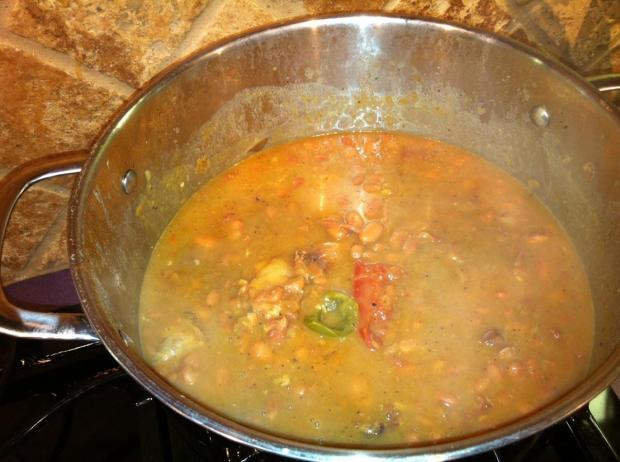
All along the way, you should be tasting this to see how it is coming. I like a lot of cowboy in my beans, so after an hour with the tomato and the jalepeno I’ll add Arcadian rub every 5-10 minutes and taste. If the spice/flavor is there, but you want it a bit more salty go ahead and add some fine grain salt like table salt. Pull the beans from the heat and let them rest for a few minutes, covered. Then you are ready to serve ’em right out of the pot.

The essence of Texas ranch-style beans. Serve straight up or with some of momma’s cornbread like a good boy/girl. Congrats to you; you are the proud new eater of the Shiner Bocker Beans.

The Victual Files: Casa Mañana

Across the high plains of north Texas sits dusty Wichita Falls. You may know the city from the giant tornado that hit it in the early 80’s or because the Dallas Cowboys held training camp there or the world renowned Hotter ‘N Hell 100 bike race that takes place in the hottest part of August every year. You may not know the city at all…there are only about 100k people that live there at one time, however the city is home to Sheppard Air Force base so there are quite a few of our brave servicemen and women who have spent some time there at some point over the last 60 years.

Either by bike or plane, a trip to Wichita Falls can be a bit underwhelming. At one time the city was a bustling boom town, and was the “big city” destination in The Last Picture Show that was set in Archer City, Texas. However, now it can seem like a city that is hanging on by a thread to past glory. Depending on when you go, the downtown can seem almost like a ghost town. There are gorgeous buildings down there, but the style harkens back to a time when people around the country thought all Texans looked and acted like the characters on the tv show Dallas.

With that long-winded intro, let me say that love to go to downtown Wichita Falls. There’s a great kitchen supply store there, and you can usually catch some pretty unique events at the Kay Yeager Coliseum/Multi-Purpose Event Center (MPEC). As well, one of the better steaks in all of north Texas resides at McBride’s Land and Cattle right at the corner of 6th and Scott. However, the greatest joy in Wichita Falls comes from a visit to Casa Mañana, the “Home of the Red Taco”.

Confused? Yeah…just hang on. This is a good ‘un.

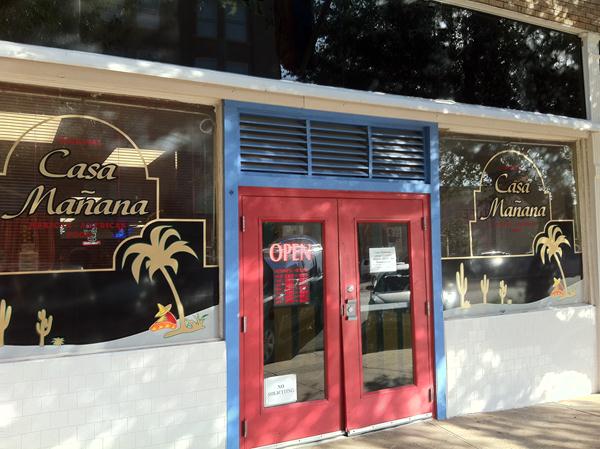
If you don’t know what you are looking for, you will miss it. It’s on a street next to a shoeshine place that I’m not sure is still open, and that’s next to a store that I’m pretty sure is closed also. Look for the red door. On the inside, it looks like a simple Mexican food joint you can find in any strip mall. If you are looking for authentic Mexican food, then you are going to be disappointed. I’m not really sure exactly how you’d describe this food other than being authentic Wichita Falls. It’s definitely TexMex but it’s unique.

The menu is about what you’d expect from any other Mexican food place, complete with the stereotypical sleepy Mexican picture and random bullfighting image.

However, right on the inside cover at the bottom, you notice something very telling: Home of the Original “Red Taco”. Red taco? Oh, hell yeah. Red Taco.

Ask anyone from the area about the Red Taco and you’ll see their eyes light up. I’ll get there in a sec. First…

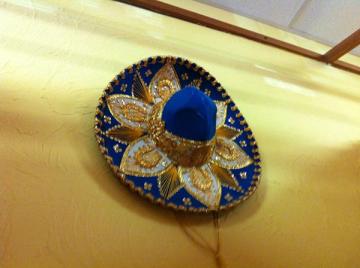
Oh, yeah…there’s a sombrero…

…and the vexing young Alicia, our server for the evening. Ask for her.

They start you out with a nice cold beverage and a bowl of chips. These chips are as thick as sheet metal and are extremely crisp and tasty. Along with…

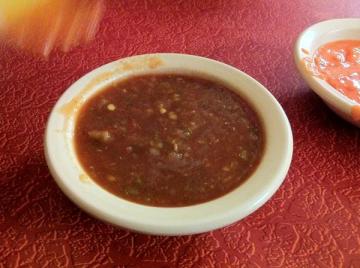
…some really tasty salsa, it’s a great way to start this meal. The chips are really good, but that’s only the beginning of this unique experience. Every table gets a bowl of queso. Check this stuff out:

Yeah, it’s kinda orange. The first time I ate at Casa Mañana I made a funny face when they brought this stuff out. Don’t be scared, though. The queso is thick and it is good.

It hangs on those chips. The next unique item comes in a plastic bottle.

You might have to ask for a bottle, but it’s worth it. They call it “red wine sauce”. I have no idea what it is…it might just be catalina dressing, but it’s sweet and tangy with the slightest bit of spice. You squirt it out like ketchup right on the chips, and the locals tear into it like lions.

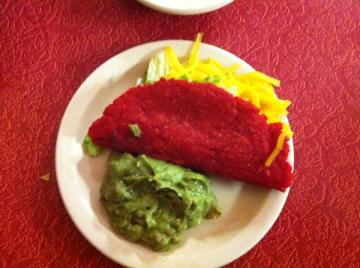
Weird, huh? Weird but delicious. Now then…let’s talk about those Red Tacos. You can get the Taco Plate, which is just two red tacos.

No rice, no beans. Just tacos. And onion rings (what?).  What’s so special about them, though? Well, first of all they are red. That’s easy to do with food coloring. However, the texture is soft yet crispy.

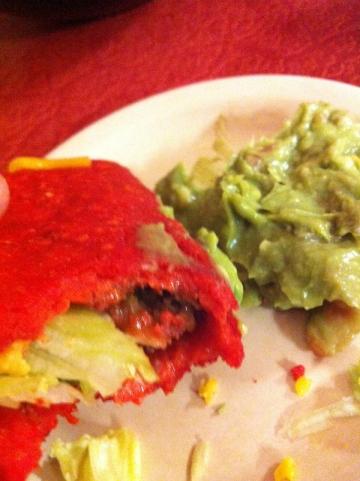
Now, the tacos are what these guys are known for, but I’m here for the star of the menu: the Casa Relleños, a plate full of chile relleños. It just so happens that the Casa Rellenos comes with a Red Taco to start along with a big ol’ dollop of guacamole. So, let’s talk about these tacos to start off.

The flavor is hardcore corn, but there’s some toothiness to it.

They are stuffed with meat, cheese, and lettuce. And folded over perfectly.

They are chewy, but when you bite into them you get a snap. I’ve postulated that they make these with extra lard in the masa but I have no earthly idea how they do this. However they do it, it’s something that you’ll crave after you have it the first time.

The first few bites of the experience is something you want to savor (claw and antlers to RC Slocum). Get crazy and squeeze a little of that Red Wine sauce.

Great warm-up to the main event:

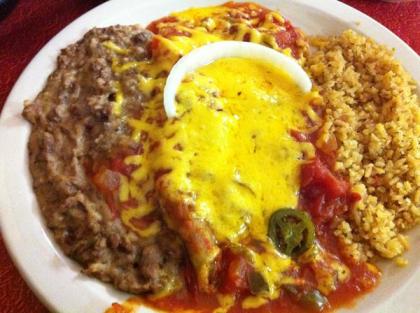
The chile relleños. Two peppers stuffed with creamy cheese and topped with tomato ranchero sauce and tons of cheddar. No fancy garnish…just a slice of onion and jalepeño. Let the food speak for itself.

The rice is perfect, with a taste of spice but still fluffy and al dente. Same goes for the beans:

Perfect consistency, with a starchy texture but not creamed to the point where it feels like bean dip on your tongue. The plates are served in the traditional Tex-Mex style of being so hot that it will burn the bones in your fingers if you touch it when it’s first served. Somehow, the waitresses can hold them without a towel, though. Never have been able to figure out how they get used to it.

Cutting into the peppers yields melted cheese that you’ll have to wrap around the fork using your knife. The breading is light and crisp, even under the tomatoey ranchero sauce. At home, I’d try to replicate this with an egg white base, but this is done so well. They don’t try to overcomplicate the stuffing…just cheese, but that’s all you need.

You come to Beef Country, you expect a good steak. I can find you a good steak in a few places. However, if you want a meal that is unique and will be like nothing you can find anywhere else, head up north to Casa Mañana in Wichita Falls.

The Victual Files: Marlene’s @ The Big Chill

One of my favorite things in life to do is to go to a small town and check out the local eatin’ joints. Restaurants in small towns define the character of the town itself in so many ways. How many towns to do you know of only because there’s a restaurant there that serves good BBQ or chicken fried steak or even a great hamburger? Out here in Arcadia, it’s commonplace for us to take trips SPECIFICALLY based on eating something we’ve heard about.

So, we decided to put together a side project for the Arcadian Experience…we took a map and drew a 100m circle on it, and decided that we are going to covertly go into restaurants within that circle in north Texas and post our thoughts about the dishes and overall experience.  We call this new project:  The Victual Files, prounouced “vittle files”.  We are Victualphiles working on the Victual Files.  Catchy, campy, and all ours.

This isn’t a chance to slam restaurants or to give harsh criticism for their food. Rather, it’s a chance for us to share a little piece of life in those towns and the love and care they put into their food. Disclaimer: even though we will focus on the 100m radius, we will probably do this for any other restaurant we might venture into anywhere we go. It’s our site, our project, our rules.  Another disclaimer: I seriously need to update my iPhone to a new version.  The camera on this thing sucks to high holy hell.  Sorry in advance for the blurry pictures.

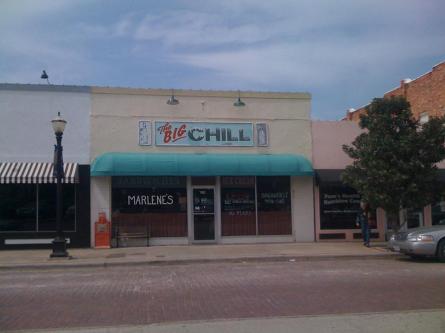
I’m going to start with one of my favorite places to eat: Marlene’s @ The Big Chill. Owners Marlene and Ben Horst started this restaurant in 1999 and both still work there daily. When you walk in, the first thing you notice is that you’ve stepped back in time…an anachronism to a “simpler” life when sodas came from jerks and green was a much softer hue. From the outside, you see the sign and the awning that immediately give you an idea what to expect on the inside.

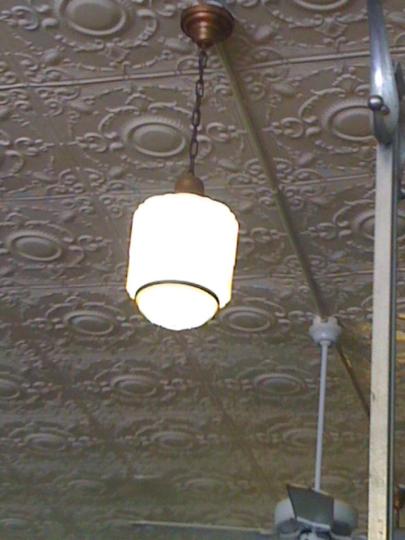
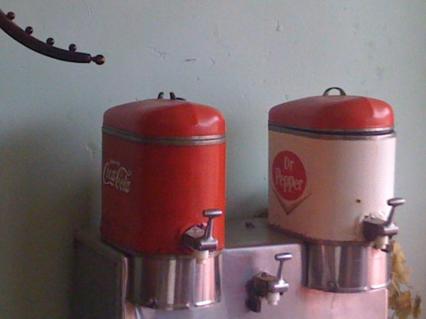
When you step in, TBC doesn’t disappoint. From the floors to the lights to the tables, this is as authentic as you get in a small town. One of Ben’s trophies even hangs on the wall right next to the old Dr. Pepper machine (although, the modern stereo on top of the Dr. Pepper machine might not be all that authentic).

Above the service area, Marlene writes her daily specials on a large white board. One of my favorites, the crawfish etouffee, is running today for the last time this season. It happens that her son and daughter-in-law live down in Lafayette, LA, so she’s got a little Cajun tint to her. From time to time, Marlene and Ben will have a crawfish boil dinner. I love crawfish anyway, but they make it BYOB so you can bring your cooler in and have some tasty mudbug that they cook in the alley behind the store.

The quaintness of TBC is striking. From the colors on the walls to the ceiling tiles and light fixtures…

…this place makes you want to sit down and have a nice lunch in the middle of the day. Oh, but wait…my favorite part of the entire place…

It’s this bar. I’ve been literally BEGGING Marlene and Ben to rebuild the foot bar that goes underneath the stools so I can eat up there. I tried it one day, but the stools are just long enough that you can’t get enough leverage w/o sliding off. If there’s any critique I have of TBC is that I can’t sit at the bar and eat lunch.

Above the bar:

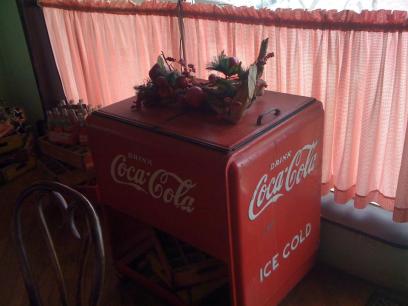
If Tom’s peanut bar doesn’t scream “old timey”, I don’t know what does. What’s that you say? Old Dr. Pepper and Coke stuff say “old timey”? Well, ok, they’ve got that, too.

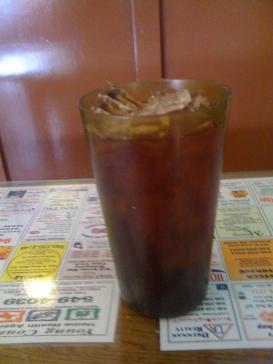
I love sitting in the booths along the mirrored wall across from the bar. They bring out the tea, and keep it flowing. A big cup of Texas sweet tea is a great way to start out lunch.

When I go to TBC, I don’t even have to order. They know that I’m there for the French Dip. I love a French Dip in the first place, but the FD at TBC is my favorite. It’s not too stuffy and not all that complicated. Just a nice hoagie roll, some melty cheese, and tasty beef consommé to dip the sandwich in. Marlene’s hoagie bun is this delicious chewy bread that holds together so well when you dip it. A lot of FD’s will have a yeasty bread, but falls apart. This doesn’t do that…it stays nice and gummy, with lots of yummy gluten to hold it together.  Sorry to my celiac-suffering friends.

There are lots of other things on the TBC menu that are good as well. They have other sandwiches, special hot lunches (again, the etouffee is remarkable; the Cajun catfish is our minister’s favorite. We call him “Rev. Awesome”). Sometimes I’ll throw them a curve and order something different, but if I’m treating myself it’s the French Dip all the way.

If you order a sandwich at TBC you get choices, mainly what sort of chip you want and if you want a pickle. Nothing overly complicated…it’s either Sun Chips or Ruffles, and the pickle is just a clean, crisp deli pickle.

Let’s talk about pickles for a second. I love pickles, and not just pickled cucumbers. Pickled okra, pickled green beans, pickled eggs (Pedigree White Trash)…I love pickles. Zingerman’s Deli in Ann Arbor offers you two types of pickles with your sandwich: old pickle or new pickle. The difference is how long they’ve been in a jar. (For the record…Zingerman’s is the best deli I’ve ever been in.  The reuben there might be the best sandwich alive.)  I’d love to see some homemade pickles make their way to a menu near me here in Arcadia, but that’s a big order and a lot of work. “Who has time to make pickles?” one might say. Not me, which is why I want someone else to make some pickles. I digress…

My order: French Dip, Ruffles, pickle. Sweet tea. That’s all I need in this world.

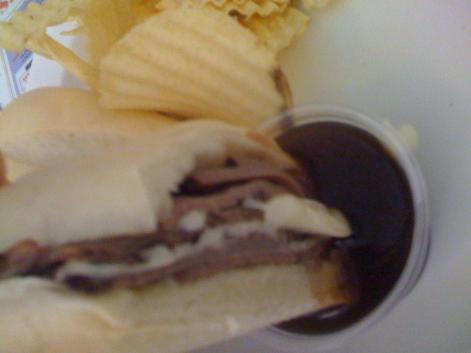
Look at that cheese melting out of the sandwich. You get a healthy stack of roast beef, a decent ramekin of dip, and a good handful of chips. Luckily for me, Ben has big hands. And now I feel kinda awkward…

A closer look at that cheese oozing out…

Take that little monster and hold her head underwater for a bit…

Then let her up for a breath before you devour her…

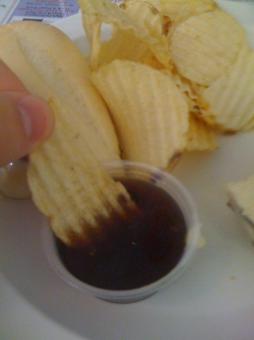
And that’s a helluva lunch. I’ll slowly walk thru this sandwich…if I don’t have a good 20min to eat once I get my plate, I won’t go in the first place. No need to rush, and no need to rush the experience. As a matter of fact, I’ll take those plain ol’ chips and dunk them in the dip, too.

As a creature of habit, I have places I go eat for specific things, and at some point I’ll cover some of them in the Victual Files digest. I can’t think of a better place to start, though, than at Marlene’s.

Marlene’s @ The Big Chill in Graham, Texas…open M-Sat for breakfast and lunch.  Breakfast at Marlene’s is suberb as well.  Do yourself a favor and go give Marlene and Ben a try.

Garden Calamities, Bad Kids and More Bad Dogs

Garden Calamities, Bad Kids and More Bad Dogs

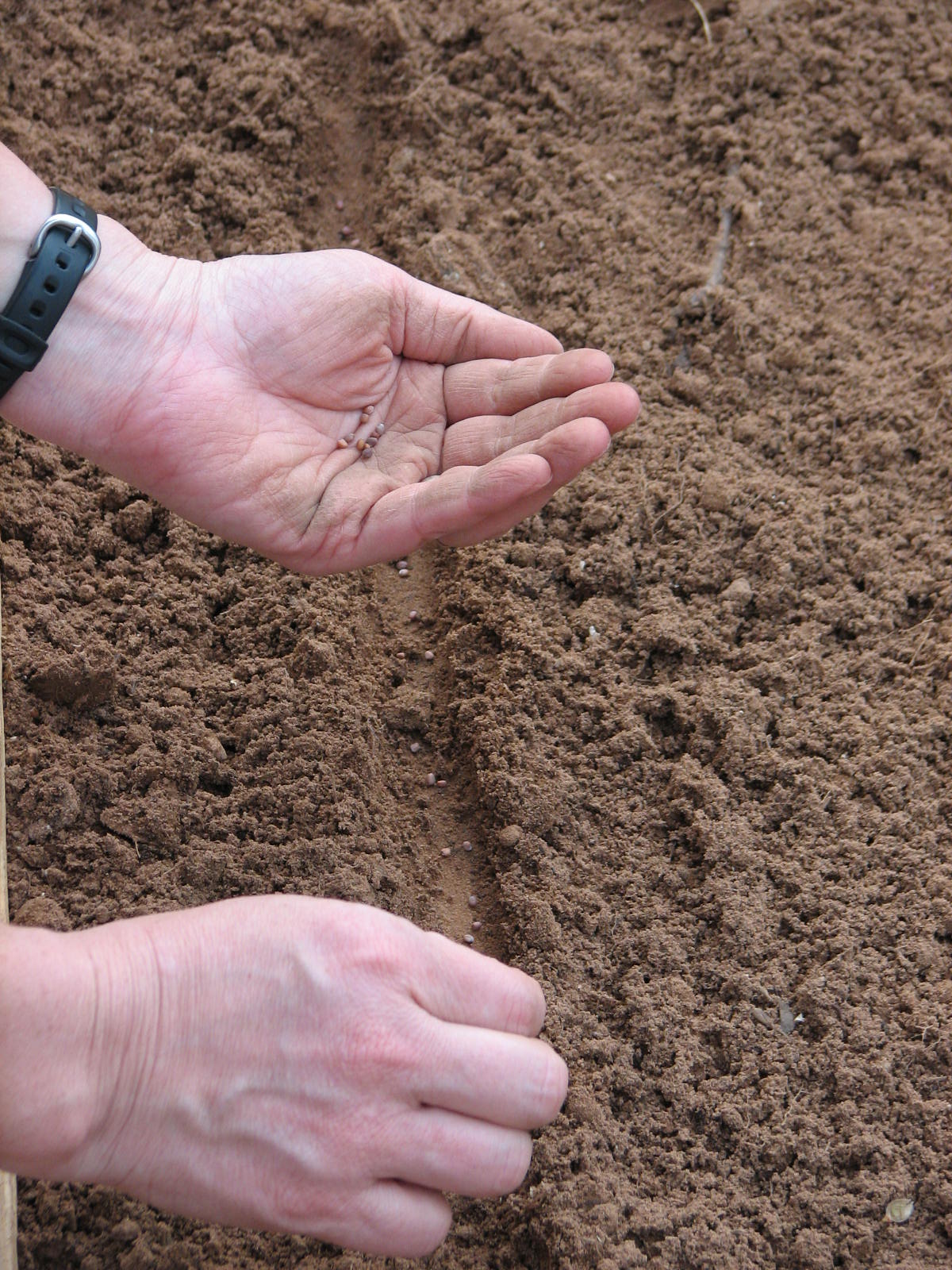
7 to 10 days ago I planted a few rows of spring plants that are space-savers—ideal for my intensive gardening plan. These are also the plants that give you quick pay-off in terms of gardening—radishes, mesclun, rocket (aka arugula), spinach and carrots. All sprout quickly and can be harvested between 25-45 days.  A super-speedy turnaround considering our beloved tomatoes can take up to 90 days to mature.

Planting a sorta-early spring garden...

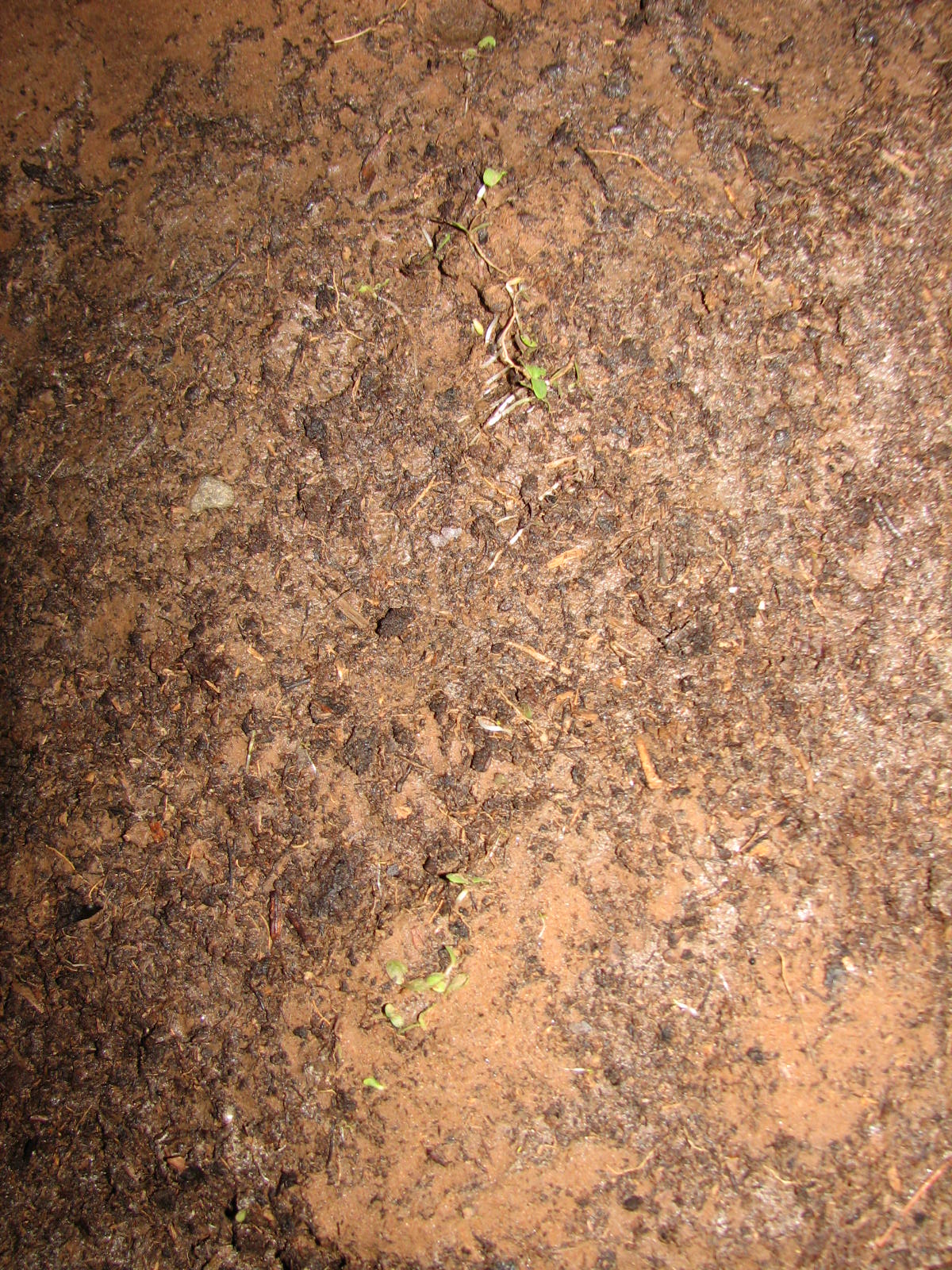
These quick-return crops have already started to show signs of life … this photo was taken on Monday, 7 days after they were planted.  

Showing signs of life.

See the little sprouts coming up … I have no idea what this is because I didn’t properly label my rows – oh well. I will be able to identify them once they get past the initial phase of sprouting.  

Then Tuesday, I started writing this piece and decided to take photos showing progress.  I went out to the garden to take photos, but there was evidence of a minor Garden Calamity.

Evidence of a very bad dog.

A big dog print in my raised bed …  I only planted half of one raised bed and that is the only place the dog tromped thru. Of course it’s right in the middle of a planted row.

 I still didn’t get the story finished, so after work on Wednesday, I went to take another progress photo.

Then another Garden Calamity struck … usually when that happens it has to do with a bad dog. Yesterday it had to do with a kid … my 4-yr old son came into the house and declared: “I water momma’s flowlers. I help jew, mom.” I didn’t think a lot of it, but then walked out to see what he was talking about.

Seedlings almost washed away by a 4-yr old.

Holy Garden Calamity, Batman! I don’t’ think 4-yr olds understand that you can’t put the sprinkler wand/spray head thingy right up next to the seedlings. And this story has changed drastically since the initial draft, due to Garden Calamities.

Bad kid, good kid? Definitly a cute kid!

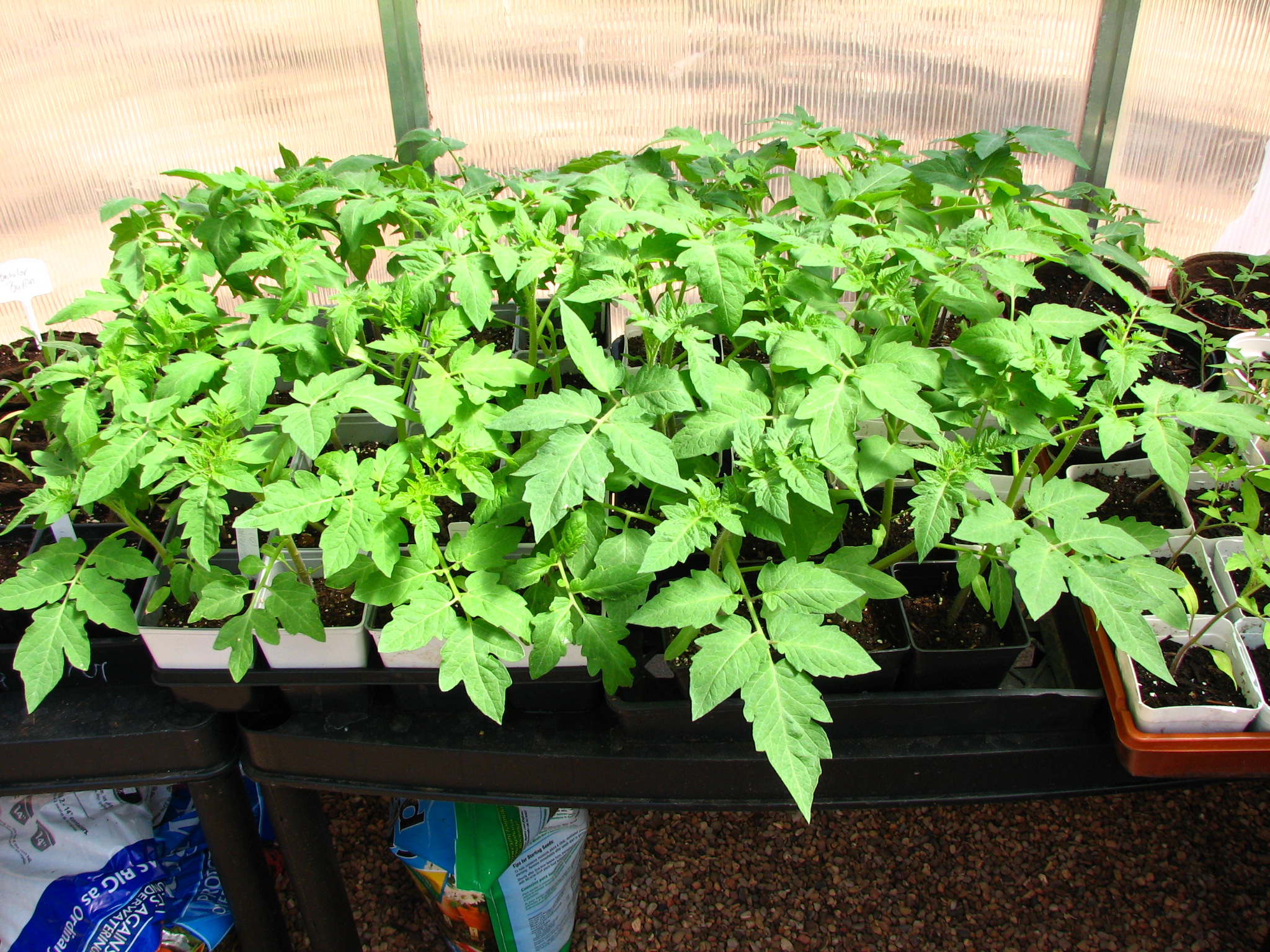
More to come on tomatoes and spring gardening in North Texas… I’m dying to plant my tomatoes, but the old farmers say, “thunder in February, frost in April.” And we had thunder in February along with a frozen foot of snow and ice that cancelled school for a week. I’m going to wait a few more days on planting my tomatoes. Hopefully I can avoid future Garden Calamities.

96 tomato plants ... almost ready for a North Texas garden home!

Spring’s Fling: Chocolate Covered Strawberries

Spring’s Fling: Chocolate Covered Strawberries

Strawberries and Chocolate ... Simple Goodness.

Spring is the season for strawberries.  I love berries of all kinds.  And now is the strawberry’s time to shine.  When you are making things with 3 to 5 ingredients, it’s really important to get the best available ingredients possible. This means using fresh produce. If you can get locally-grown produce, even better.

For me one of life’s simple pleasures is chocolate-covered strawberries. I’m a chocoholic and a lover of all berries. But this is simple and delicious.  There are three ingredients: strawberries, cream and chocolate.

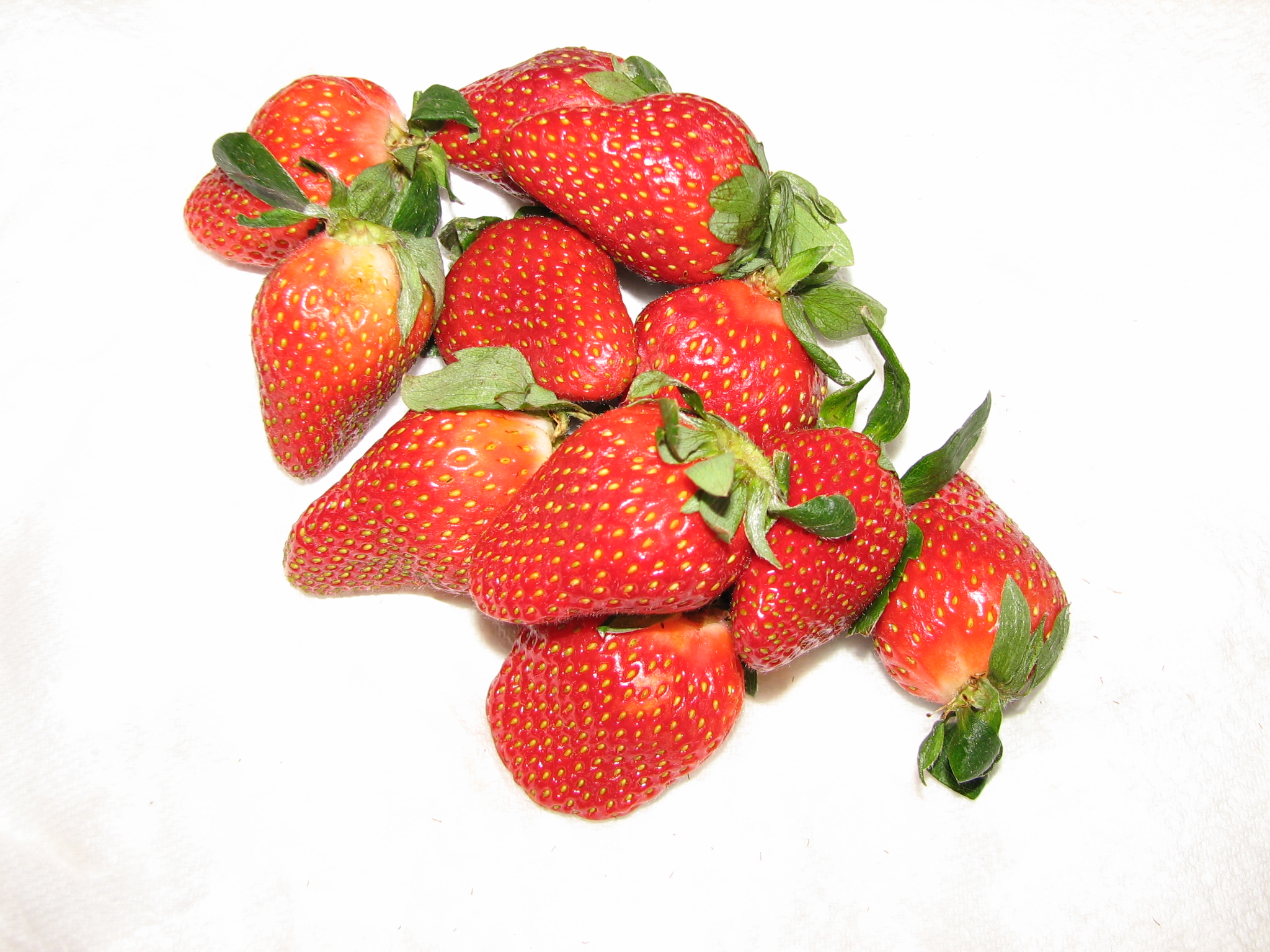
Wash a package of fresh strawberries and pat dry.  I used a one-pound package for this recipe. Set them aside to continue drying.  You want them to be as dry as possible to dip into the chocolate.

Strawberries! These came from United Supermarkets!

Next, use a high-quality semi-sweet chocolate.  Scharffen Berger is my favorite … it’s happiness in a wrapper.

Happiness in a wrapper!

If you can’t find it in your local grocery store, Ghirardelli makes a good-quality chocolate and is readily available in most stores.  If you prefer, you can use a darker chocolate, which has a higher percentage of cacao. Kitchen Tip: sometimes you can find a good chocolate bar for melting and baking in the candy section instead of the baking section.

Put 3-4 ounces (one bar) of chocolate in a microwave-safe bowl.

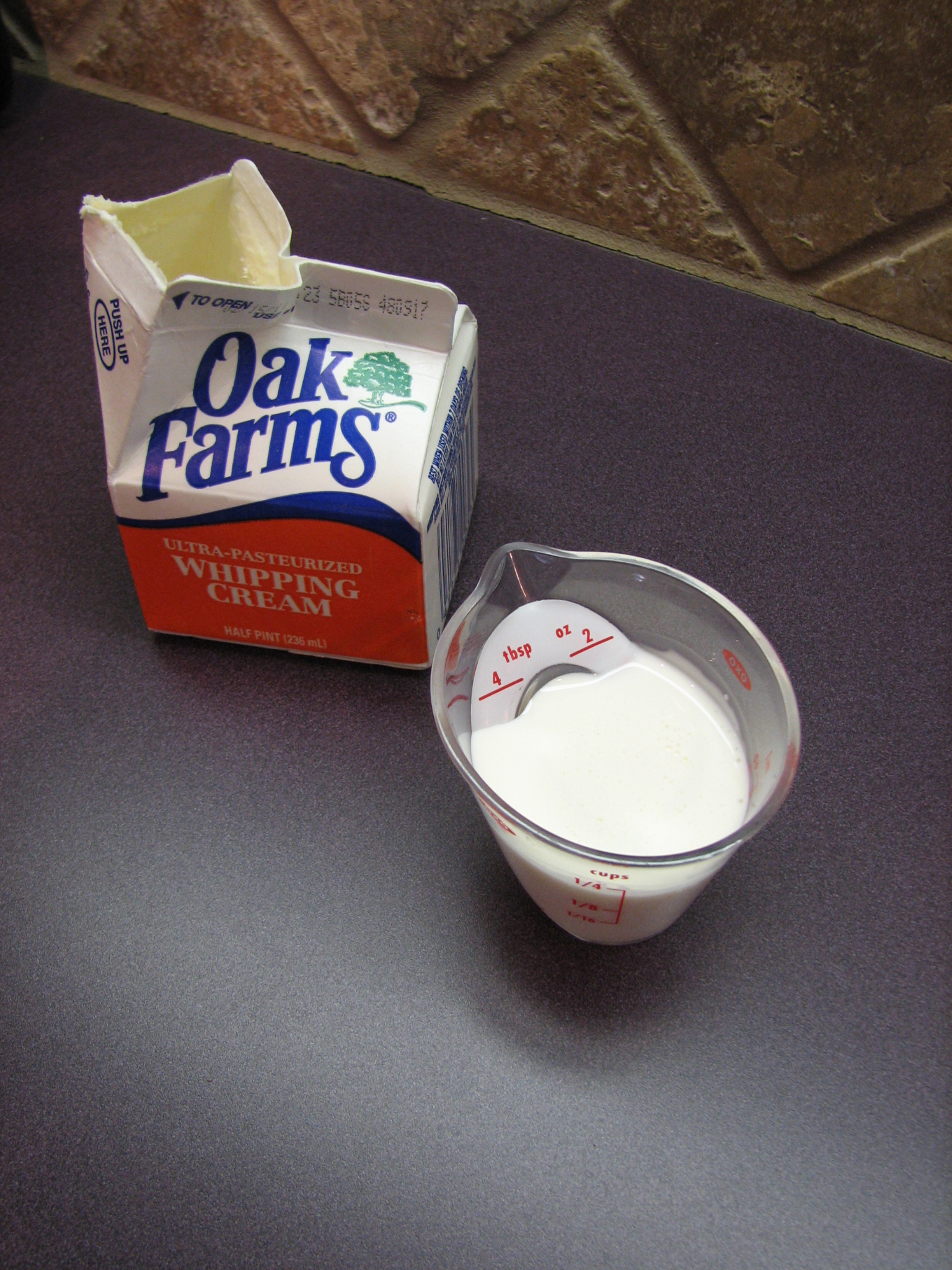
Add 1/4 cup of heavy cream. (technically this is chocolate ganache, which is just the fancy way of saying: chocolate with cream.)

I love cream.
Cream makes everything better-- that and butter!

Microwave for 30 seconds at a time, stirring in between, until the chocolate and cream have melted together.

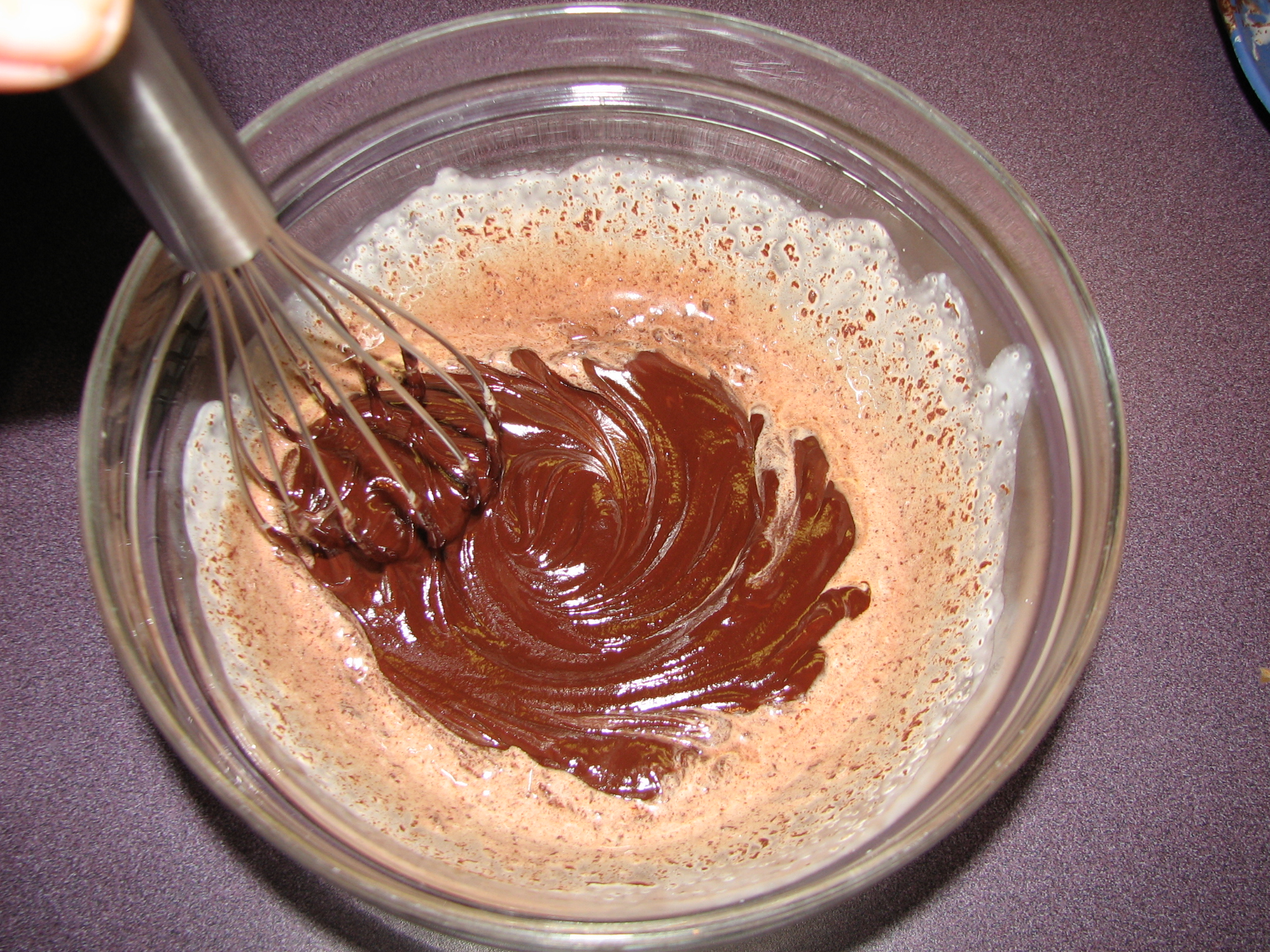
Mix well!

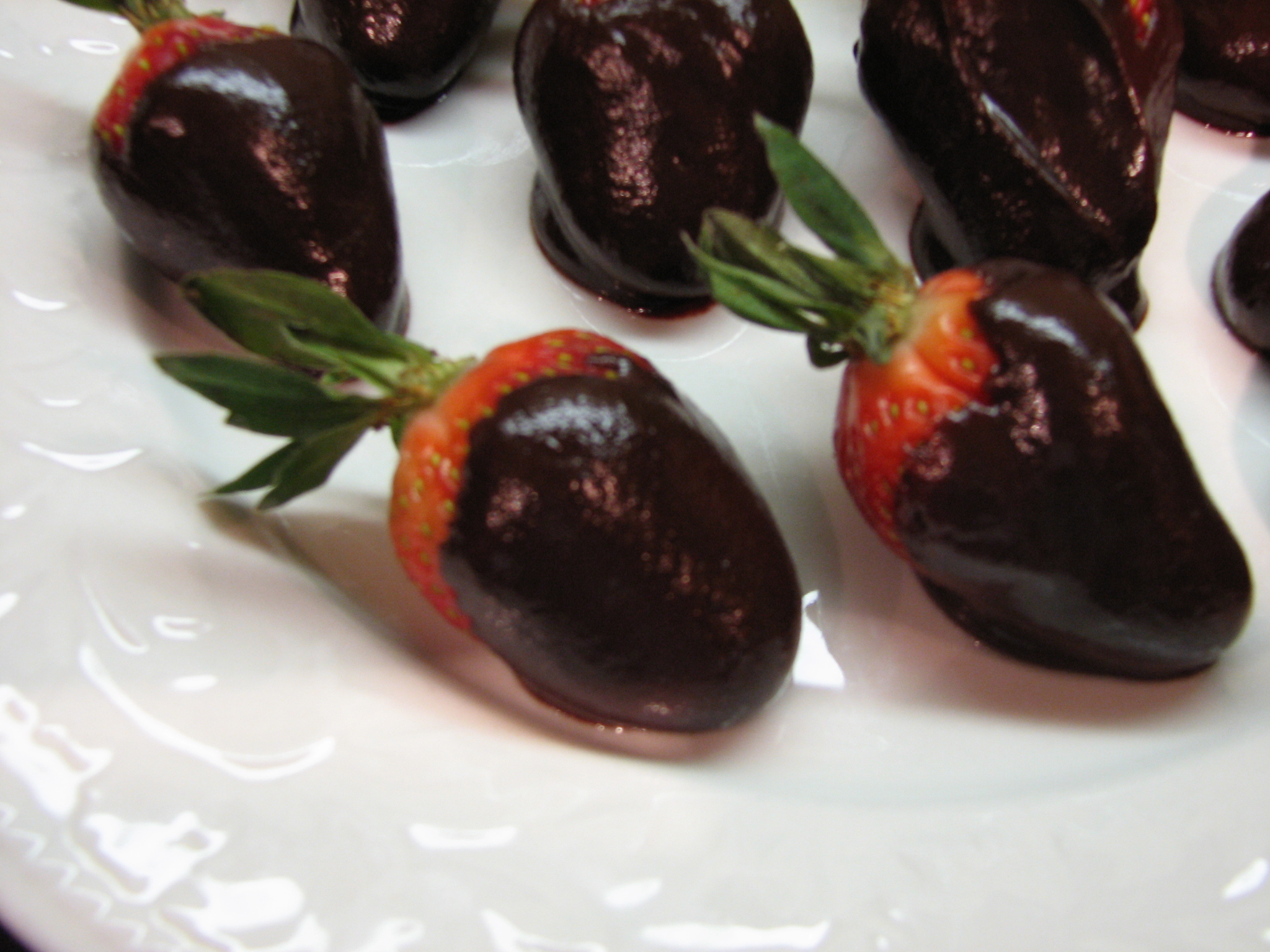
Take your dry strawberries and dip into the chocolate and put on a chilled plate or pan covered with wax paper.

Dippidy-do, I love you, chocolate.

Stick in the refrigerator for 45 minutes so that the chocolate has time to set up.  Then serve it up and enjoy.

Mmmmm ... Chocolate and Strawberries!

(PS – my photos will improve, I promise.  I’m now motivated to learn how to use my camera much better!)

The Best Soup I’ve Ever Tasted

I love soup, and when the weather starts turning cool I try to eat soup as often as possible. A lot of people will choose the salad when given the choice, but I often go with the soup as a first course, especially if it’s all made from scratch.

My three favorite soups:

3) Cream of Artichoke soup at  The Messina Hof Vintage House in Bryan, Texas. The restaurant there is hit or miss, but the cream of artichoke will change your life.

2) Red Chicken Curry at Samui Thai in Plano, Texas. I judge thai food joints based on their curry, and Samui always is rock solid.  The bamboo shoots and aubergine are incredible.  I’m not sure if you can really count this as a soup, but it’s my list so I make the rules.

1) Chicken and Mushroom soup. Right here, right now. Buckle up.

Here is the ingredient list (for the most part):

Make a classic mirepoix, which is diced onion, celery, and carrot. I cut these in random sizes for texture. Melt 3tblsn unsalted butter and then throw in the mirepoix and salt. Caution: you are going to add a lot of salt to this dish, but you want to do a little as you go. The salt will help reduce the vege.

Once the carrots start getting soft, add a bunch of garlic. I did four cloves here, but you could go with more if you are a garlic geek. Keep it moving so it doesn’t burn. We are going to use three types of mushrooms here: shitake, oyster, and plain ol’ white button mushrooms, all sliced in a rough chop. Clean the mushrooms WITHOUT water (rub them down w/a towel to remove the dirt). Once you get them sliced, toss them in. Shitake:

Oyster:

Button:

And into the pot with more salt. The shitake have this great beefy taste, the oyster a buttery chewy taste, and the buttons are just a great all around mushroom. If the vege start to look dry, add a little bit of olive oil. It should look like this:

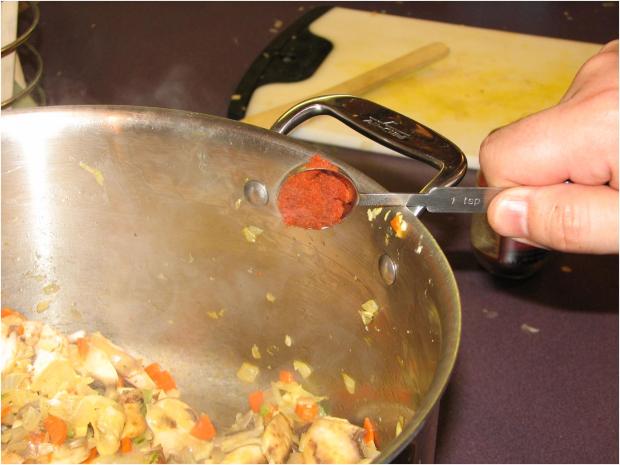
When the mushrooms all start looking soft, add a tspn of red curry paste.

This is what I use. Now, it’s not a thai dish, but we do want a bit of the thai spice that it’s hard to combine with anything other than the paste.

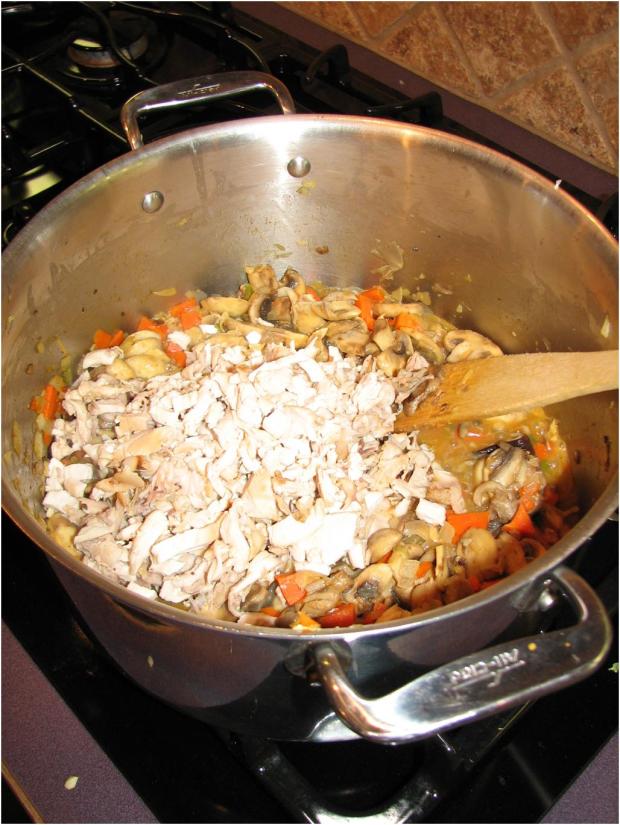
Add the curry paste and toss the mixture to make sure it’s good and mixed in. Let it cook down for a few minutes, then add some white wine. How much? Hell, I don’t know. About that much:

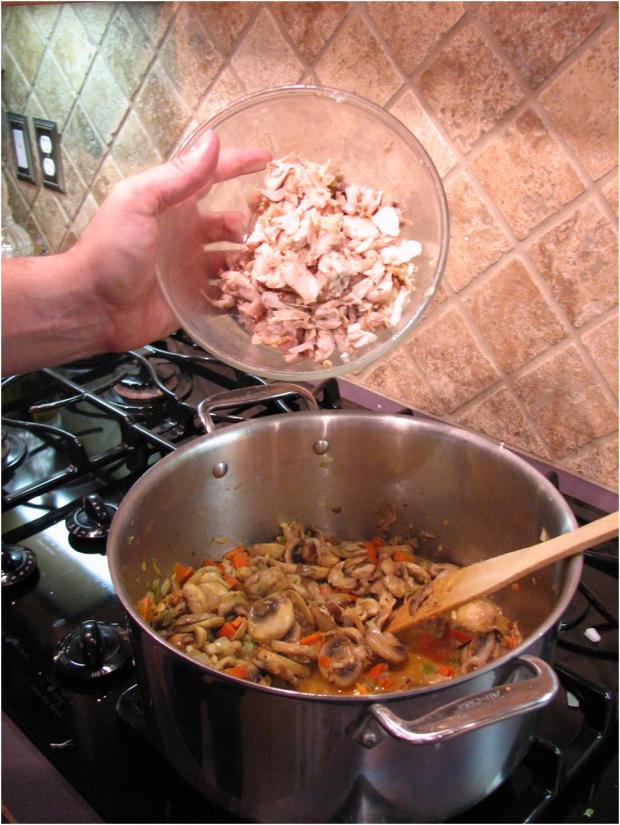
Let that simmer for about five minutes and then add ½ chicken, chopped up. I just used one of those rotisserie chickens from the grocery store. I think the flavor was Garlic Herb. By “1/2 chicken”, I mean ½ breast, a leg, thigh, and then all the dark meat from the back. That’s some of the tastiest meat on the bird.

Then add 6oz of tomato sauce.

And about 6oz of chicken broth.

Simmer for 5 minutes or so, stirring regularly. We are looking for the liquid to reduce down quite a bit. Once you get it so that you can see the moisture but it’s not standing in broth, add 1c of heavy cream:

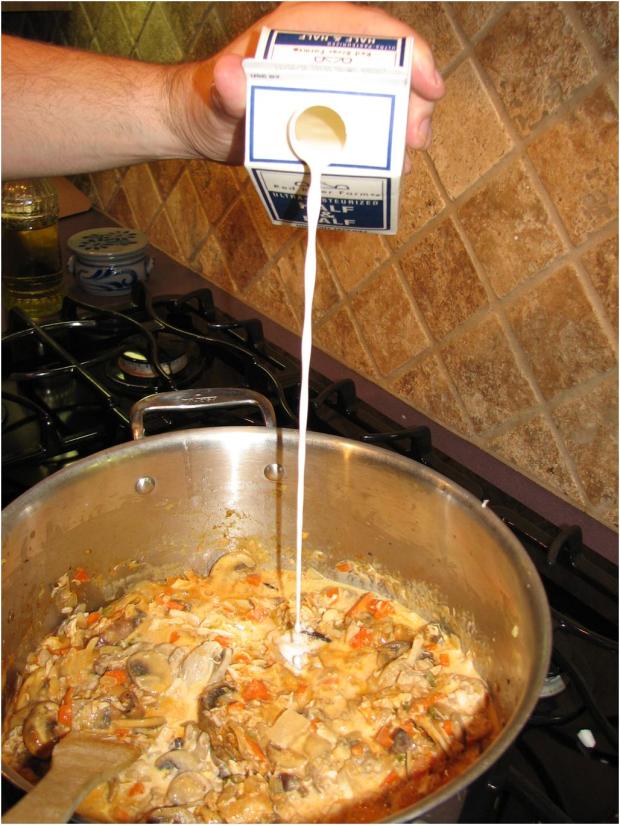
And 1c of half and half:

Of course, you’ll need to add more salt. Go ahead and grind some pepper in this as well. Let it simmer for 10 minutes or so, add chicken broth to keep the liquid at a soupy consistency. It should look like this:

Get some parmesan cheese (not the cheap powdered crap…get grated parm), and add a cup or so. How much? Hell, I don’t know. About this much:

Cut the heat down to low, and let it simmer for yet another 10 minutes.

The cheese should finish off the flavor. Toast up some French bread and sprinkle on some fresh parsley, and you have one of the most delicious things you’ve ever tasted.

That’s it. The best soup I’ve ever tasted.