Dad’s Mustard Brisket

Of all the things I cook, the most requested recipe is brisket. As a Texan, it should be required in order to graduate high school to know how to properly cook a brisket. It doesn’t have to be smoked, but right before they hand you a diploma, if you can’t answer “slow and long” to the question of how a brisket should be cooked, they should send you back to class.

My brisket is a world-stopper. You’ve never had BBQ quite like this, and the key is yellow mustard. Not fancy brown or Dijon mustard, but plain ol’ French’s mustard. Here’s my secret, though: This isn’t my recipe. It’s my dad’s. When he first told me how he was doing his brisket, I just about squeezed my eyeballs out of my head squinting at him. Sure enough, though, he was right. He’s right about a lot of things that I challenge him on, but none moreso than mustard brisket. Here’s to you, dad.

I’ve never officially gone thru this procedure before because of one major component, and we might as well tackle it head-on right out of the chute. To properly cook a brisket, you’ve got to dedicate an entire day to doing it. Not a “day” as in “when the sun is up”, rather a full 24 hours. An entire rotation of the friggin Earth. If you aren’t willing to put in the time, sacrifice some sleep, and do this right then don’t bother with it. Go get yourself a nice margarita and rent Brokeback Mountain. When you get started on this, take notes of time and do it right. Don’t come bitching to me if you pull this thing after the sun goes down and it tastes like shit. Not my problem. You’ve been warned.

Your timeline is:

Day 1: Brine for 4-6 hours, up to overnight

Day 2: Marinate overnight

Day 3: Smoking

4-6 hours unwrapped

12-14 hours wrapped

4-7 hours in the cooler

Example:

1) Put the brisket on at noon unwrapped

2) Wrap it at 6pm

3) Put it in the cooler at 7am

4) Serve at noon.

24 hours.

Good so far?  Good.

Now that we have the unpleasantness of the requirements out of the way, let’s get to the basics of Texas BBQ beef. The brisket was just a trash piece of meat until just a few decades ago because no one knew how to cook it right. For reference, picture a delicious bovine:

The brisket is the cut just above the front legs. Think of it as your chest if you were to get down on all fours. Because of where it is, more than half of the entire body weight of the animal sits on this piece of meat. Therefore, it has to be strong, long meat fibers that are filled with fat and connective tissue. In addition, there are three different muscles that come in, and therefore three different meat fiber directions. This makes things really difficult to manage, especially when it comes to cutting the finished roast.

Ranchers would just toss this thing because it was so hard to cook. There’s an entire cap of fat on one side, and all three muscles are separated by  layers of fat and membranes that are really deep and hard to get to before it’s cooked. Even then, you can easily mess up the presentation by cutting it wrong. The direction of the cut is almost as important as how it’s cooked. About 50 years ago, though, ranchers started noticing that their Mexican hands were taking the briskets and making incredible dishes with them. They figured out that what they were doing was cooking it over low heat for a long time in a braise. They took the braised meat and cooked it over dry heat, and the modern Texas BBQ was born.

Now that I’ve officially scared hell out of you for cooking this thing, let’s get things prepped. We’ll need:

-an untrimmed brisket. UNTRIMMED by the butcher, that is. Don’t get a trimmed brisket.

-Bottle of Allegro marinade

-French’s yellow mustard (generic will do; I’m using French’s here so you see it’s not anything special)

-An oven bag

-Your favorite BBQ rub

That’s it. Not a whole bunch to this thing. Your brisket needs to be untrimmed. Competition BBQueers will try to tell you to trim a brisket, but that’s just because they are trying to skip on time. Keep it untrimmed…we are going to need as much fat as we can get. What size?  Hell, I don’t know.  About this big will do:

Doesn’t really matter. When you go to pick it out, what you are going to be looking for is a solid cap of fat on the backside of the brisket (they always put the label on the opposite side because it’s prettier). I had someone tell me one time that they went to Central Market and bought a “prime” brisket. I’m not sure that it even exists. This is meant for trashy cuts of beef, so the sinewy-est, fatty, marbled up slab of brisket you can find is perfect. If you spend more than $2.50/lbs for your brisket, you got taken. Look for it on sale, and buy it when it’s around $1/lbs and freeze it.

Take your brisket out of the plastic and rinse it under water to get off all the extra blood. Let’s examine:

You see the long meat fibers here? They lie just under that membrane on top of the meat. Don’t peel it off…I just want to point out how the meat runs for later. We are going to cut AGAINST the grain when we serve.

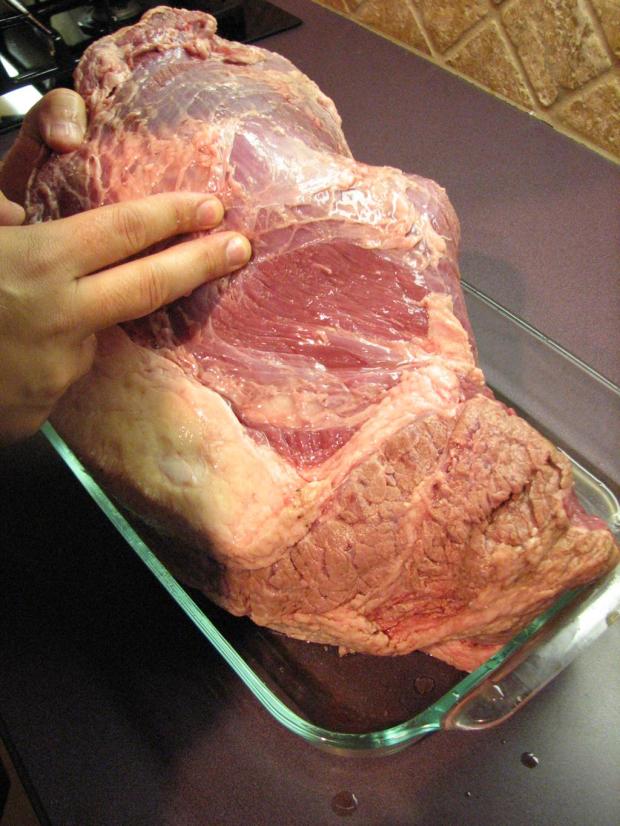
I pulled back that membrane a little bit to get a good shot. See how the direction of the fibers curves away? When we start cutting, we’ll need to look for that, and stop when we get to the point where we aren’t cutting against those grains.

The fat cap:

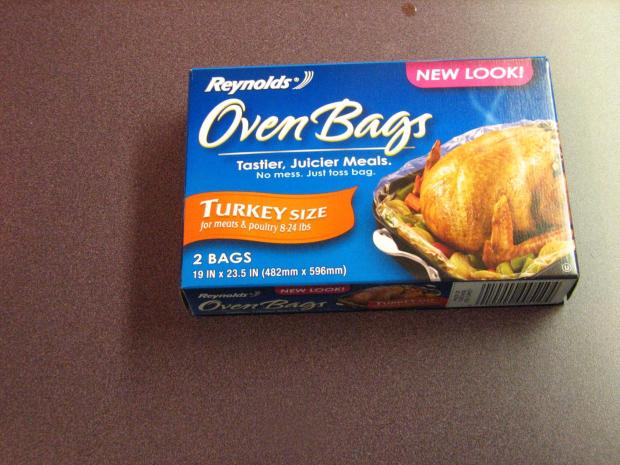
One of my favorite tools is the Reynolds turkey bag. They are just plastic bags that you can marinate/brine your meat in. Take one out, and put your brisket in, with the fat cap side DOWN.
I like to put it into a pan in case there’s a leak in the bag, and there’s always a leak in the bag.

Now, take that Allegro marinade and pour in enough so that it comes up about halfway up the brisket.

Make sure that it’s the fat cap side that’s down, and not the meat fibers. What we are trying to do is use that salt and acid that’s in the Allegro to break down the fat and the muscle fibers around the fat. If you brine this with the meat side down, you are going to turn the meat into mush, and we don’t want that. Seal up the back and put into the fridge for 4-6 hours, up to overnight.
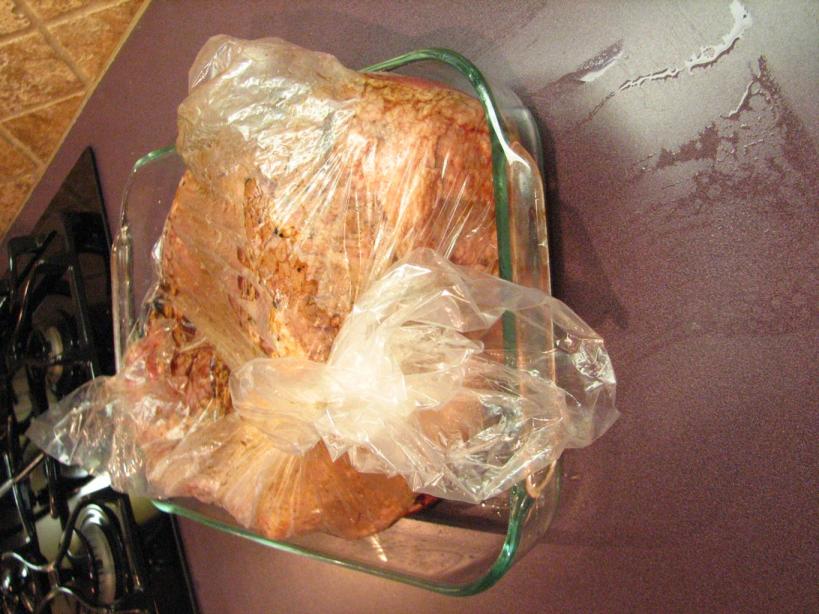
When you are finished, pull it out and lay it into a pan big enough to hold the whole thing. This is key…you are going to be flipping it in just a bit. Start with the fat cap side DOWN.

Get your yellow mustard out and squeeze LIBERALLY all over this thing, and then smear it with your hands so that it’s thick all the way around. Go ahead and rub it in kinda hard into the cracks and crevices where you can get your fingers. I always start mine out right:
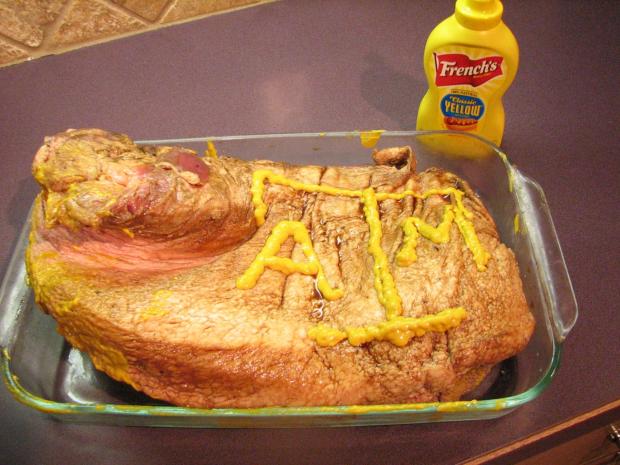
Coated:
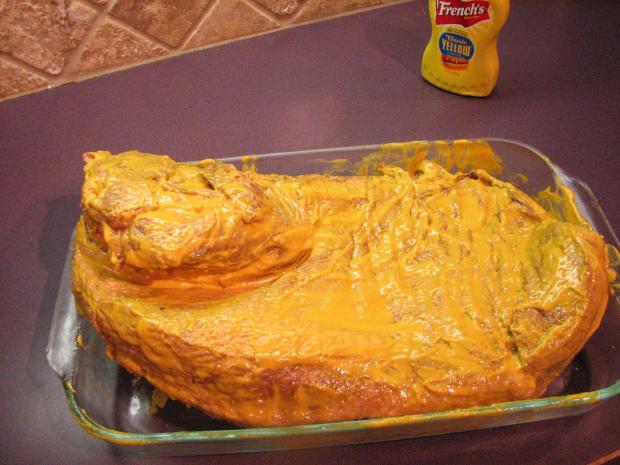
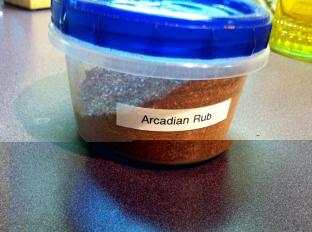
When you get a good thick layer on it, grab your favorite bbq rub and sprinkle it LIBERALLY all over. You don’t have to use the Arcadian Rub, but you want to make sure you use one with some brown sugar, salt, and spicy cayenne. You know what? Just use the damn Arcadian Rub.

Flip it over and get the other side as well (fat cap back down). DON’T RUB IT. Just sprinkle on top of the mustard. If you’ve disturbed the mustard coating, make sure it’s even and then re-sprinkle to cover.
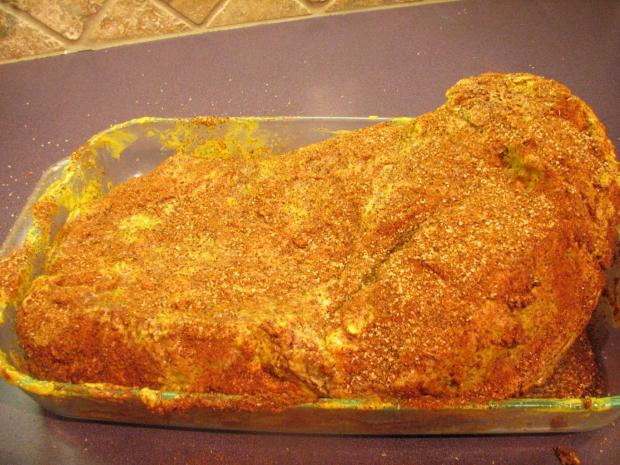
A close-up:

Now, we need to put this back into the fridge overnight. Don’t skimp. Needs to be overnight. If you put it in unwrapped, though, your fridge is going to smell like this for weeks, so grab a new trashbag (unscented) and put the whole thing in, pan and all. Seal it up and let it sit in the cold.
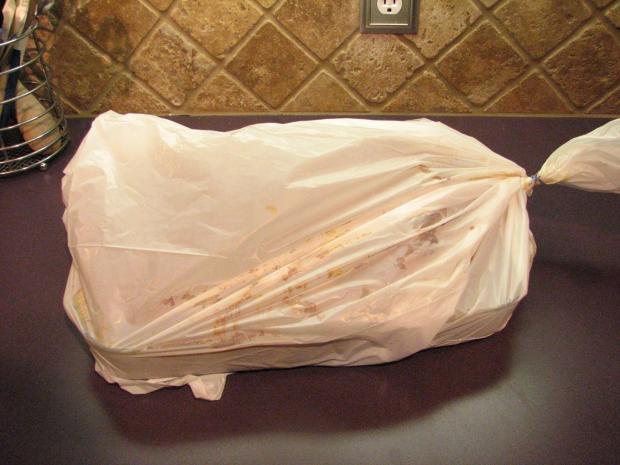
After a night in the fridge, poke that bad boy’s head out and take a look. The rub has gotten wet with the mustard and has made an incredible coat around the meat. That will be important for the next few hours as we slow smoke this

Close-up:

When you take it to your smoker, make sure you’ve let your smoker go enough so you are regulated to about 225deg constantly. Don’t try to singe this or sear it at first. It’s totally unnecessary, despite what you may hear from BBQ “experts” on tv. Just make sure you have a hard rolling smoke going, and your temp is around 225deg. 250deg at the highest.

I’m using mesquite.  Not pecan and especially not oak, which is good for firewood and that’s about it.  Use mesquite wood on your beef.  I could almost accept someone mixing in some pecan, but it’s not needed.  Just use mesquite.  Stop asking questions.  Use mesquite.

Put it into the grill with the fat cap UP. UP.

There are differing opinions on whether or not you should smoke fat side down or up. The folks who say “down” say that it helps keep the meat from charring. However, it you run your smoker right, it should never char since we aren’t getting above 250deg. Also, if the cap of fat is up, then it will melt down inthru the meat fibers, coating them with the delicious fat and Allegro brine. Does it matter? In the long run, probably not. However, this is how I do it and I know it works. Try it this way and see if it’s not good. If not, do it however you want to do it. This is America, baby.

After 4 hours:
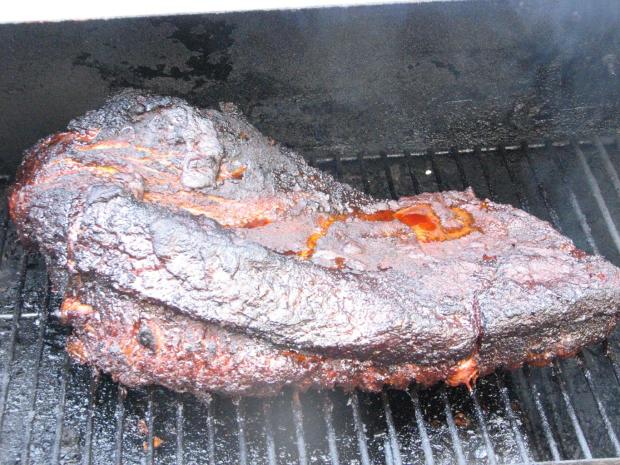
After six hours (with a couple of sweet potatoes thrown on to smoke for dinner):

You notice how black it is? That’s GOOD. We call that “bark” in the BBQ world. It’s the blackened layer right around the outside that has all the seasoning flavor from the mustard mixed with our rub. After six hours, we need to wrap this. You can go a little longer if you like, but I think six hours is plenty.

Get your handy prep table out, and lay two layers of heavy duty foil (the long package). Lift your brisket right out of the grill and onto the foil.

Fold the first layer of foil around the briskets. Fold it TIGHT and do it so that all corners are covered. I start at the bottom, fold across like you are putting a diaper on a baby (old style diaper on a baby, that is).

Do both ends, tucking in each loose piece, pinching them together, and making sure they are sealed up TIGHT.

When you get it all sealed up, a nice fold or pinch will keep it together. Just like a good marriage.

You might have some spots left exposed after the first wrap. No worries..we’ve got three more layers to go. Second layer from the bottom:

After both bottom layers go on, take another large piece of foil and wrap all the way around the top, covering that hole at the top, tuck under, but make sure you fold corners so that it fits like it should. Do that twice. You should have used four sheets of foil so far.
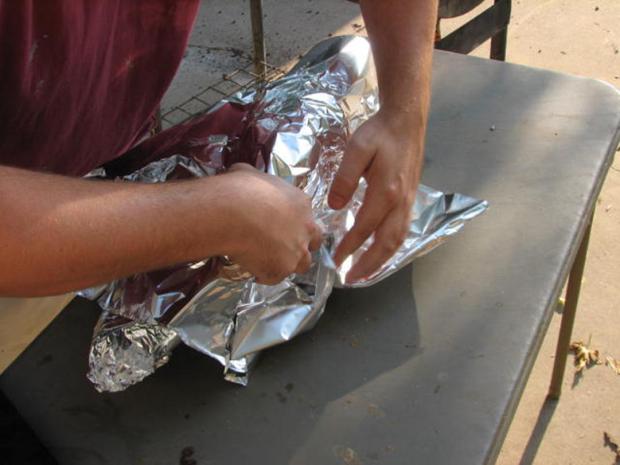
Then you’ve got your tight wrapped brisket, ready to go on for the long burn. Again, make sure you are watching your fire constantly and keeping it between 225-250deg.
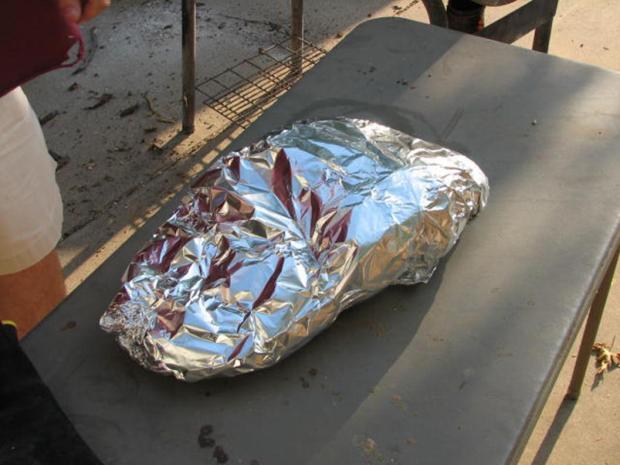
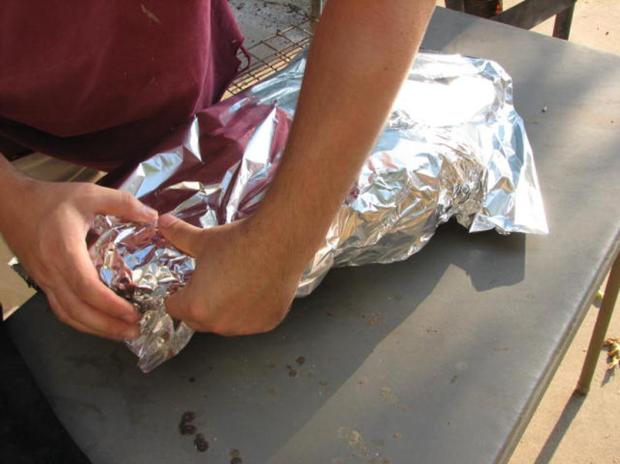
Back on it goes. Let’s add up the time so far:

-Allegro brine (4-6 hours, potentially overnight)

-Mustard and rub down (overnight)

-4-6 hours on the smoker at 225-250deg.

Up next, this needs to go for 12-14 hours wrapped at the same temps. Crazy, right? Yeah, just trust me on this.

After the smoker has done it’s work, the pretty foil will go from a nice golden yellow to a dark brown.

After 12-14 hours, take the entire brisket and place it in to your BBQ Cooler and let it rest for up to seven hours.

Do NOT open the cooler or disturb the foil until you are ready to cut.  That’s important.  Let it rest, and the rest is just as important as the other steps.  Don’t skip on this…let it rest.  Up to 7 hours max, no less than 4 hours.

When you are ready to carve, here’s a little trick.  You’ve got the fat side up still, so reach into the cooler and either rip the foil with your fingers or take a knife and cut the foil open.  You should be able to pick it up from underneath and flip it out onto your carving board.  However, get a pan so you can collect the drippings before you flip it out.  I use the same pan that I used to marinate the brisket.  Just tip it so the drippings run out, flip your brisket out onto your board, and then collect as much of the drippings as possible.  If you have some drippings that come out onto the board, go ahead and try to rake those into your pan also.  It will make the carving so much less messy.

Big ol’ slab of beef.

From the bird’s eye view:

When you start to cut, keep in mind how the meat fibers run.  Again, we are going to cut against the grain.  There’s a little secret to make sure you do this correctly.

a) start at the “skinny” end of the brisket

b) start on one corner, where you think you need to start

c) cut off the top of the corner on a bias (or on an angle) to make sure you are starting right.  If you chose the wrong corner, you can easily go to the other corner w/o too much of a do-over.

How do you know if you’ve cut it against the grain?  The part you cut should fall apart, with the meat fibers being really short.

I like to use an electric knife.  Honed steel is good, but don’t foresake the precision of an electric knife here.  Start making about 1/4″-1/2″ slices along that same line that you started on just a bit of a bias.

Excuse the blurriness, but you get the idea.

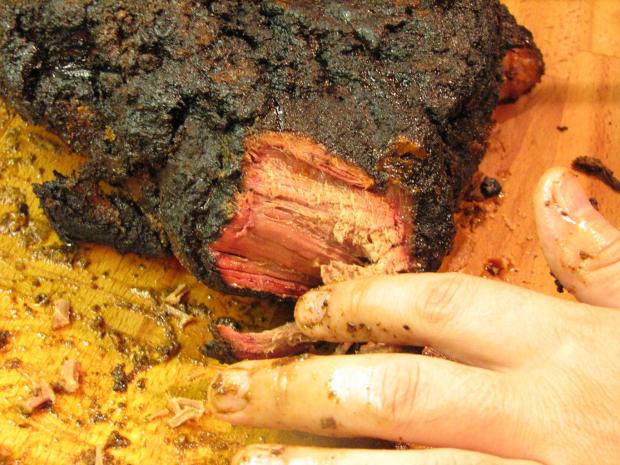
This is what I’m talking about being “against the grain”.  See the short meat fibers now that seem to fall apart?  That’s what you want.  This will be so tender that the meat will literally fall apart when you try to pick it up.

Here’s your brisket slice, about as whole as you can get it.  It’s ok if it falls apart.  It’s going to be so good and tender, it doesn’t matter if it stays in long slices.
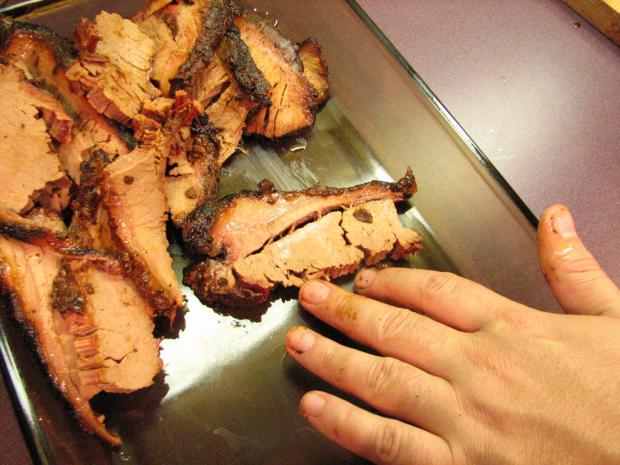
Continue on until you get to the point where the meat fibers begin to turn.  You’ll know you are there when you get to the big thick part of the brisket, and your slices look like they are slanted.  Then, turn the brisket 90degrees and start cutting right across the top, which will now be against the grain.  You’ve got two different muscles in here, but they’ll both be going the same way.

A close-up of the muscle, with a thin membrane separating.

Here are the long meat fibers.  Cut against then so your knife is perpendicular to the muscles.
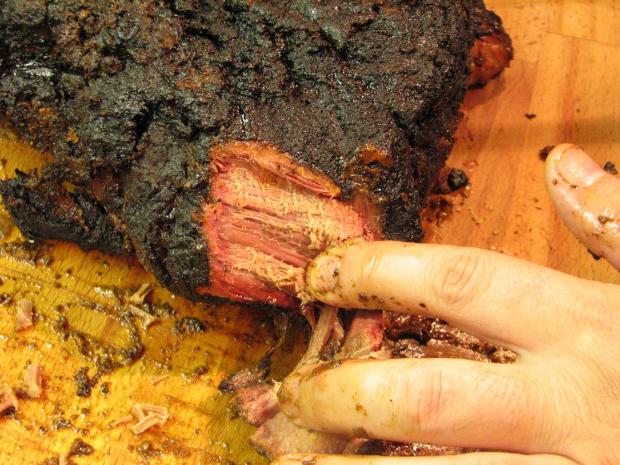
Close-up, of the slices.
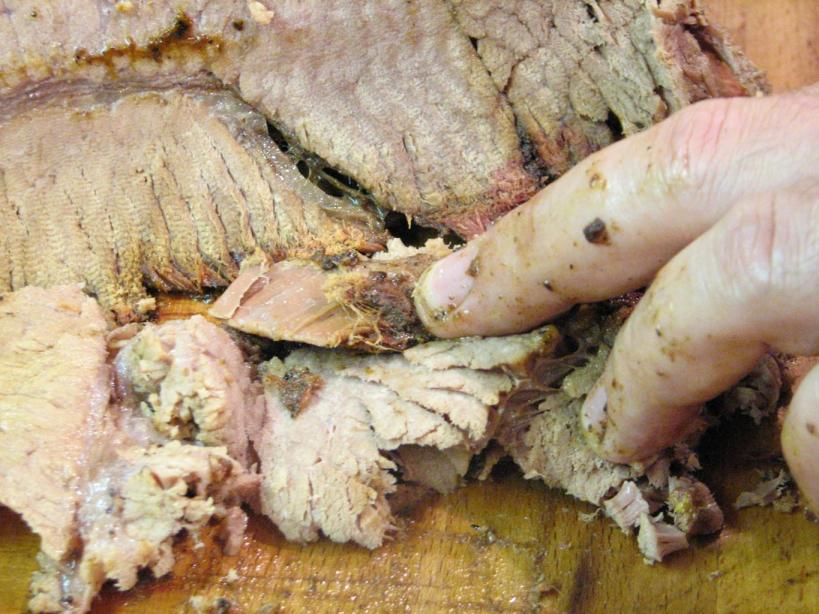
When it’s all sliced up, you have should be able to peel some of the extra fat off and keep it in a pile up at the top.  Plus, you have tons of extras left over.

There’s all the brisket cut up.

That fat still has tons of potential to it.  Let’s not throw it away.

If you take your fat trimmings and put them into a skillet, you can start to render some of the extra fat off.  Brown on both sides for a bit…
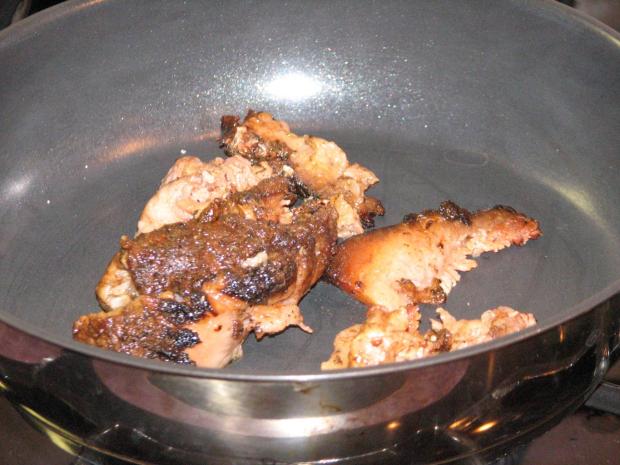
Then add a little beef broth or some of the drippings back to the pan and let it suck as much of the fat out as possible.

Then take that hot grease and drippings and pour it right back over the sliced brisket.  Cover it with foil, put it into the oven at 170deg for a few minutes just to keep warm until it’s time to serve.

Presentation on the plate:
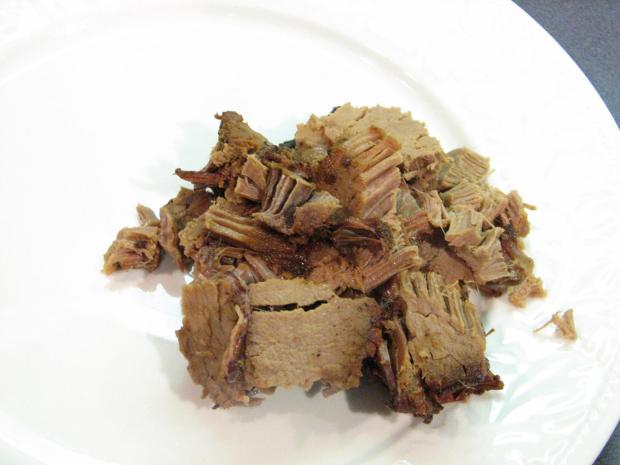
In the pan, you’ll have this deliciousness:

I’m not opposed to putting sauce on this, but if you are going to use sauce, let’s use the WGD brisket sauce and not just some sugary sweet crap off the shelf.

That’s it.  My dad’s mustard brisket, cooked for a full 24 hours and about as perfect as Texas BBQ can be.

Shiner Bocker Beans

You know what I like? Beans. You know what else? Shiner Bock. You know what’s REEEEEEL good together? Beans and Shiner Bock. Your life as a bean-eater is about to change. For the better. Bocker better.
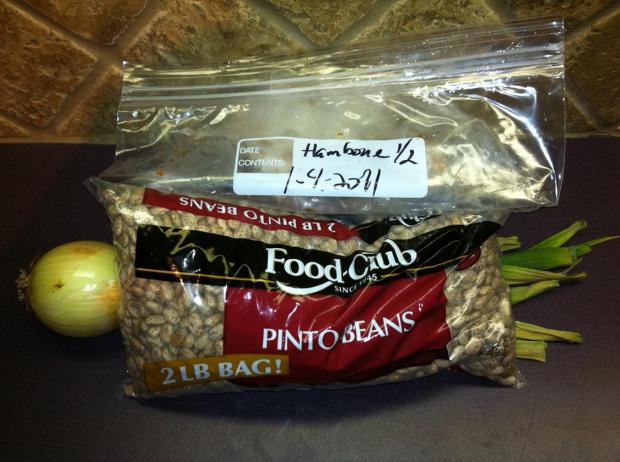
A quick glance at the ingredients:

-2lbs of dry pintos

-a medium yellow onion (I’m using a fresh one here with the greens still attached, right out of the garden)

-a tomato or two, homegrown if possible

-a juicy ripe jalepeno, homegrown if possible

-pork (I had a hambone from NYD that I needed to get out of the deepfreeze)

-SHINER THUMS UP BOCK

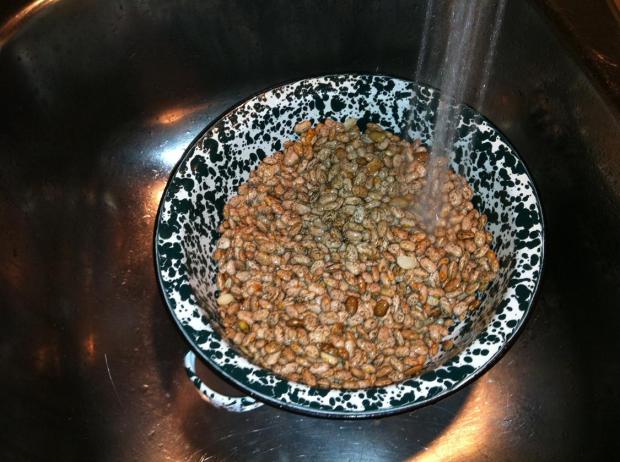
Pour the dried beans into a colander and rinse them off really good under cool water.

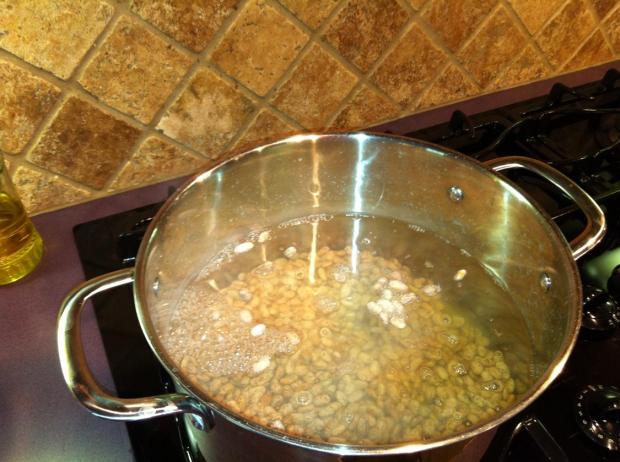
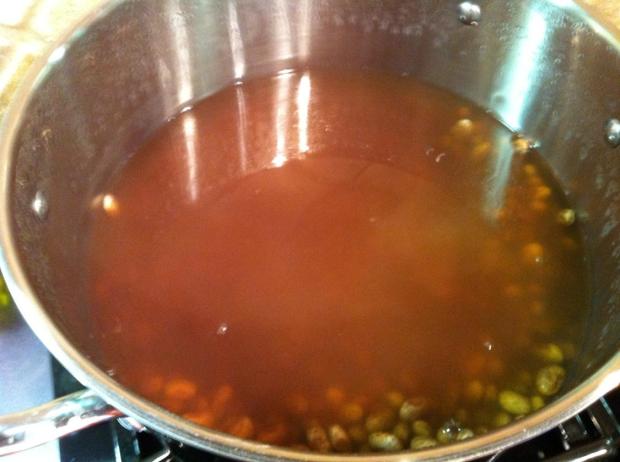
Get your best stock pot out and put a few cups of water in, just enough to cover the beans. A thick bottom on your pot will keep the beans from scorching. It makes a difference because we are going to be cooking for a LONG time. Add some salt when you turn the heat on. The salt will soften the water and flavor the beans.

Pour in the beans and bring the water to a boil. After the water boils, let it go for 10 minutes and then cut the heat off and cover the pot. It will need to sit for an hour in the hot water.

After an hour, strain the water off the beans back into your colander. Don’t rinse the beans…just pour the water off.

Add enough water back to the pot to cover the beans plus another inch and then add the beans back in. Throw the heat back to the beans and bring them back to a boil. Add a little bit of salt, but not too much if any at all. We’ll add our seasoning later on.

Now…before we go any farther, let’s discuss pork and beans. Pork is good, too. Pork is real good. I save all my bacon drippings in an Illy Coffee can. It’s perfect for storing bacon grease so I can use it for cooking. Nothing other than bacon drippings goes into this can. No vegetable oil or olive oil or butter…just pork fat. I’d drink this in a pinch if I had to. Add a couple of good scoops of fat to the pot.

I mentioned my New Year’s hambone. I make a ham every NYD to go along with my blackeyed peas and cabbage. That’s also my birthday, so I get a pineapple upside-down cake, too. When I’m on death row, that might be my last meal. Anyway…(tense)…back to the pork. If you don’t have a spare hambone laying around your freezer, get some hamhocks from the grocery store. They are a close 2nd place on the pork scale for me when it comes to beans. Hambone is the way you want to go if possible, though.

I like to leave a bunch of meat on the ham when I carve it just for the reason that I know that at some point in the next few months I’m going to make beans, and the ham in the beans will send it over the top. If for some reason you don’t have a hambone and have to use hamhocks, it’s ok to get a couple of slices of country ham from the meat counter at your grocery store.  Don’t use deli sandwich slices…the ham you add needs to be thick cuts.  If you are using a hambone, make sure you take off all the cloves and you’ll want to separate the joint, but other than that just pitch all that pork into the pot.

Heat. Cover. Go.

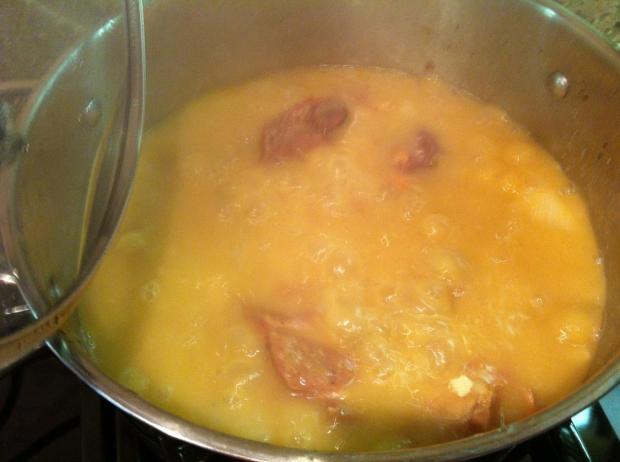
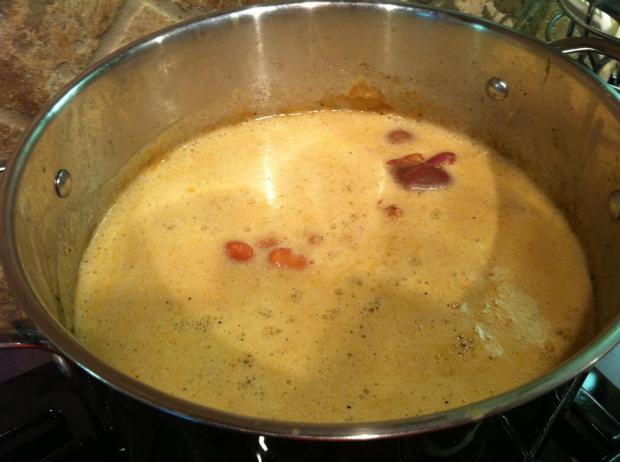
After it comes to a boil, set it to simmer and uncover. It’s going to slow simmer ALL DAMN DAY. 5 hours at least. After it starts to simmer, let’s start putting in some flavor. Take an onion and quarter it. If you are lucky enough to have a whole fresh onion, go ahead and rough chop the greens, too.

While you are at it, throw in 5-6 cloves of garlic, peeled but whole. The simmer: (note the delicious fat on top)

The vege mise en place:

In they go:

Stir it in well, and let it simmer again. For an hour. Uncovered. UNCOVERED!!!! WHOOOOOP!!!

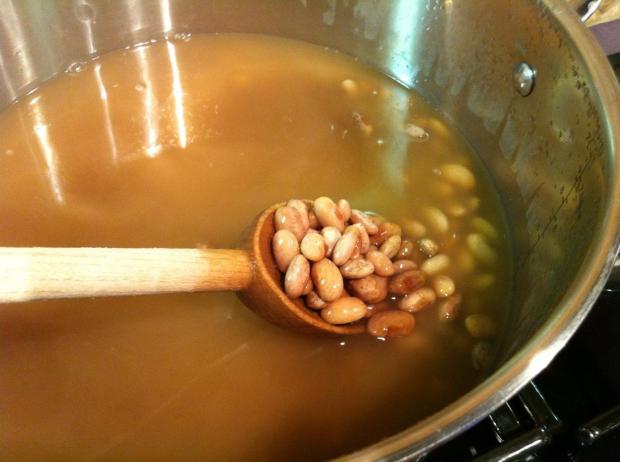
After an hour or so, cover it back up but make sure you lower the heat so you don’t burn it. The onion and garlic will break down and leave you with a nice full body of flavor. Plus, the starch will start leaking out of the beans and the fat and connective tissue will start melting from the pork. It all leaves you with a delicious brown color and a thick gravy.

Now we are going to start adding flavor. Remember the Arcadian Rub? Let’s sprinkle in 2tblspns.

Now we are starting to resemble real live beans. Make sure every 15 minutes or so, you give them a good fold. Try not to stir too hard and break up the beans…just a gentle fold.

You should be to the point where you can see the line along the side of the pan where the liquid started. We’ve lost a lot of liquid so far from the beans soaking it up and the constant simmer evaporating the water out. If you ever get to the point where you are running low on liquid, you need to add some back in. And that’s where the Shiner comes in.

I set a bottle out at room temp so I’m not adding cold beer to the beans and ceasing the simmer. Pour it in slowly…it will foam up as the carbonation fizzes out.

The foam will subside pretty quickly, but be careful so that it doesn’t overflow onto your cooking surface.

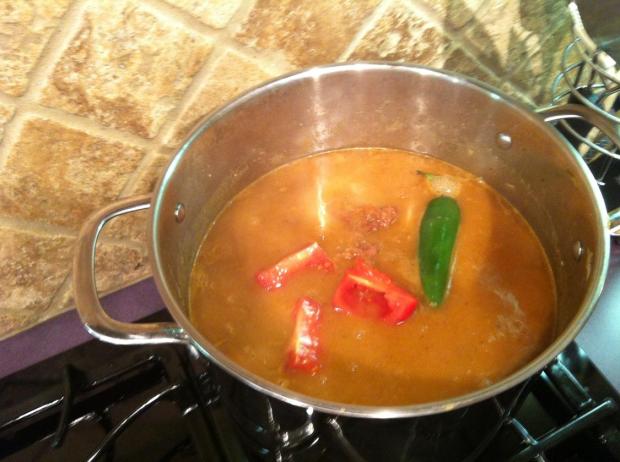
While you are here, go ahead and throw in a quartered tomato or two. If you like it spicy, pitch in a whole jalepeno. Don’t pierce it or cut it up. Just throw it in whole. Any real Texan will tell you that the Jalepeno not only packs a solid wallop, but it also has a delicious fruity flavor. Let it boil for a while…if you don’t want it too spicy, take it out after 30 minutes, bifurcate the pepper and remove the seeds and inner membrane with a spoon. That’s what makes it spicy. You can then throw the pepper back it so it can continue its purpose in life.  If you like onion or think that it needs a bit more of the onion flavor, you can throw in another quartered onion.

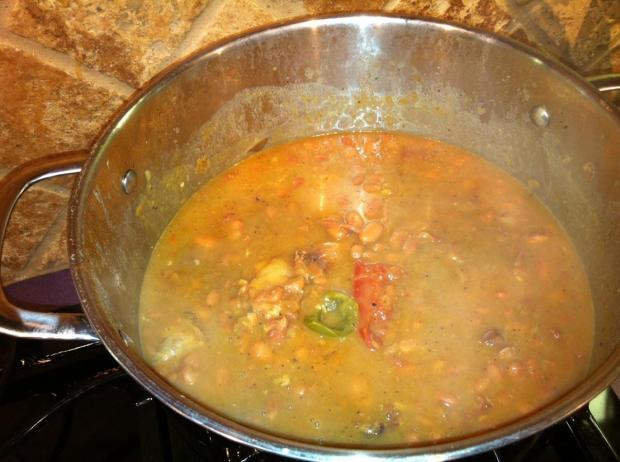
All along the way, you should be tasting this to see how it is coming. I like a lot of cowboy in my beans, so after an hour with the tomato and the jalepeno I’ll add Arcadian rub every 5-10 minutes and taste. If the spice/flavor is there, but you want it a bit more salty go ahead and add some fine grain salt like table salt. Pull the beans from the heat and let them rest for a few minutes, covered. Then you are ready to serve ’em right out of the pot.

The essence of Texas ranch-style beans. Serve straight up or with some of momma’s cornbread like a good boy/girl. Congrats to you; you are the proud new eater of the Shiner Bocker Beans.

Trav’s Corner: Southwestern Chicken Liver Pate

I have been trying to get more liver into my diet lately, as it is the richest source of vitamin A out there. The vitamin A found in liver is much more readily absorbed and complete than the beta carotene found in plant sources and is one of the best antioxidants around. That being said, liver can challenging to make appetizing, especially when you don’t want to fry it (for carb avoidance reasons in my case). This recipe is not only appetizing, but simple and inexpensive to boot.

1 bucket of chicken livers (about 1 1/3 pounds)

½ an onion, chopped coarse

2 cloves garlic, smashed

1 bay leaf

2 t dried thyme leaves

2 t dried basil

1 jalapeño, sliced

4 Anaheim or New Mexico chiles, roasted, peeled, and seeded

1 t bourbon

1 stick of butter, room temp

Put everything except the last three items in a saucepan and cover with water. Bring to a boil, and then turn down to a simmer for three minutes. Remove from heat and cover for 5 minutes. Remove the bay leaf and discard. Using a slotted spoon, move everything to a food processor. Add the chiles and the bourbon. Pulse a few times to combine, season with salt and pepper (I recommend kosher salt and freshly finely ground pepper), and while the processor is running, add the butter a pat at a time until fully incorporated. Continue processing until silky smooth. Scrape into ramekins or small bowls and chill for at least three hours before serving. If you want to keep it longer, put some melted butter on top and cover in the fridge for a week or the freezer for 2 months. Serve with crackers, toast, or tortilla chips, or even with veggies.

Variations: If you like it spicier, throw in a Serrano pepper with the boil. For a smoky flavor, take out the jalapeño and use a chipotle with the chiles. For a more Mexican flavor, substitute Poblanos for the chiles and throw in some chopped cilantro with the butter.

Strawberry Stuff

When I was a kid, one of the greatest joys in life was the random family “get-together”. It could be a family reunion, a holiday, or just a random gathering of our clan of peeps. The best part of these gatherings was the food…OH THE FOOD…that would come out of the families who were from all over North/East Texas. I’ve joked often that I’m pedigree White Trash, but this might be the cherry on the top of the sundae, so to speak. I don’t even remember when this particular dish showed up the first time, but after it did it became a staple in our get-togetherin’. I distinctly remember heated conversations over whose favorite dessert this was as various family members tried to claim that it was their favorite over some other family member.

The original incarnation of this dish was made with peaches and was simply called “Peach Stuff”, and as far as I know has remained so in the family up until this point. I’ve often wondered outloud if this thing would be good with just about any different fruit you throw into it. However, your available ingredients will limit the type of fruit you use. I’m getting ahead of myself…let’s get this thing built and then go back and reassess.

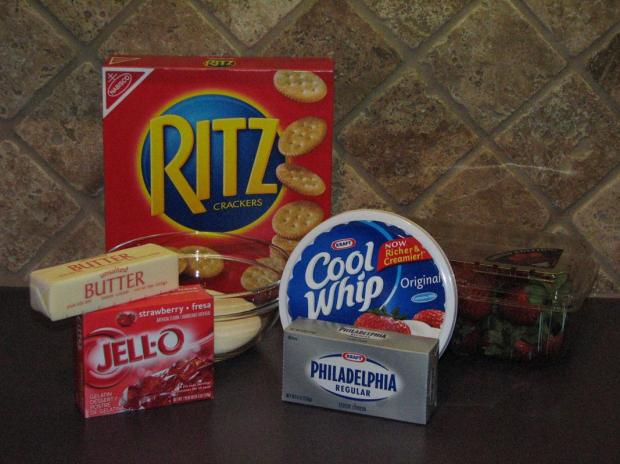
Ingredients:

-Two tubes of Ritz crackers

-a stick and a half of unsalted butter (real butter…don’t you DARE use margarine)

-a large pack of strawberry jello (or two small packs)

-a tub of Cool Whip (full strength…not the lite crap)

-a stick of Philly cream cheese (full strength…no the lite crap)

-a cup of sugar

-2lbs of fresh strawberries

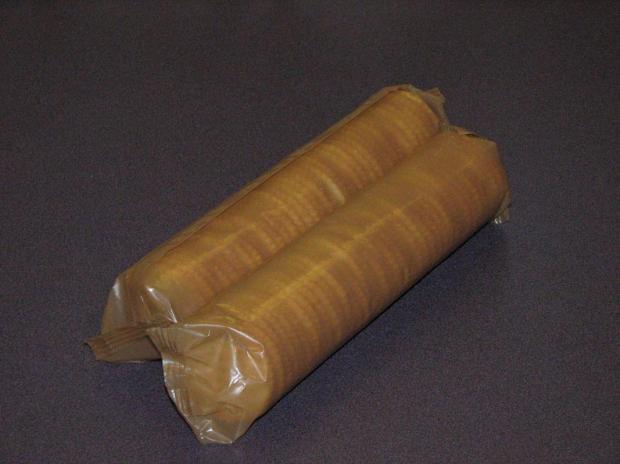
Take the two tubes of Ritz and crush them GENTLY so that you don’t bust open the packages. Trust me..it’s easier to do this inside the package. I tried using a food processor on it one time, but it made the crumbs too small. You want a varied sized crumble on this.

By rolling the crackers inside, you can crush them with your thumbs. Just make sure you don’t leave any big chucks. Even if you do, though, you can crunch them in just a bit.

In a 13×9 ungreased pan, dump your crumbs out.

You can see some of the bigger crumbs here…just squeeze them with your fingers to smash them.

Melt the butter (just so that it’s soft…don’t get it too hot or it will separate).

Pour the butter into the crumbs.

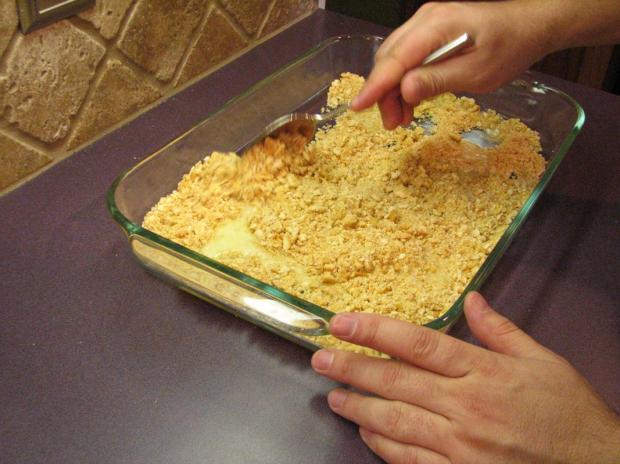
With a big metal spoon, mix the crumbs and butter together so that it’s evenly spread.

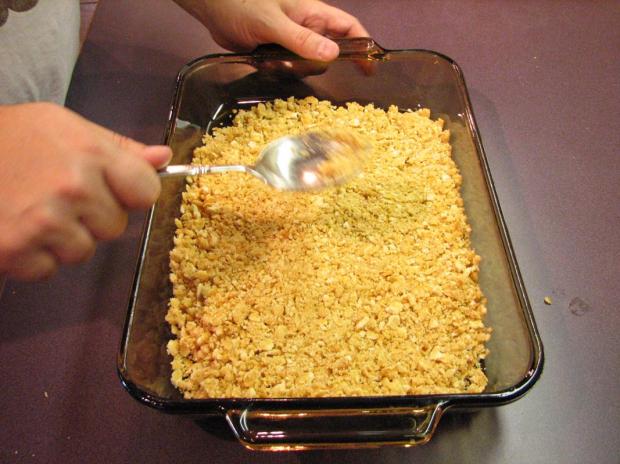
Turn the spoon over and start whacking the crumbs so that they even out all over the pan (you’ll notice the pan is suddenly a different color…I grabbed the bigger one on accident when I started out and had to change). Don’t whack too hard. You can use the weight of the spoon if your spoon is big enough. Smacking it will pack the crumbs in. It will take you a good 10min to do this, probably. You want the edges especially to be sealed up around the corners. Again, in just a bit this will make sense.

It should look something a-like so:

Packed in good.

In a preheated oven, put this on the middle rack and cook for 20-25 min @ 350deg. It may take a bit longer, but that should be about right. You are looking for it to be nice and golden brown.

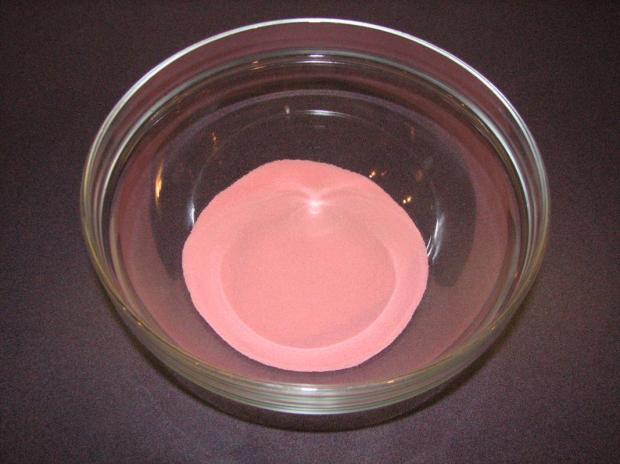
In the meantime, prepare the Jello as per the instructions on the package.

Once you get it made, slip it in the fridge for 20 min, then into the freezer. We want it to get to where it’s JUST starting to set up, but not too set up.

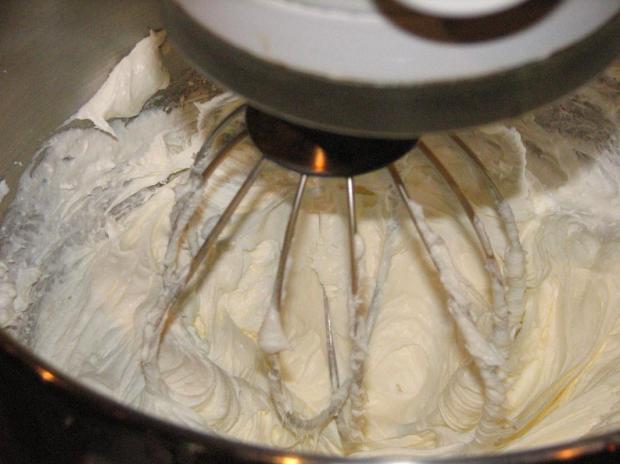
Now then…let’s make the good part. Dump the Cool Whip, cream cheese, and sugar into your mixer and start whipping it up. It helps to leave the cream cheese and Cool Whip out for an hour or so to soften. Whip it on high. The sugar needs to be dissolved completely, and the mixture can use the extra fluff.

When it’s good and whipped, it will look almost like Crisco. Appetizing.

And you get to pick who gets to lick the beater.

Pull your crust out and let it cool. Don’t try to put the cream cheese mixture on when it’s still hot or it will be a mess.

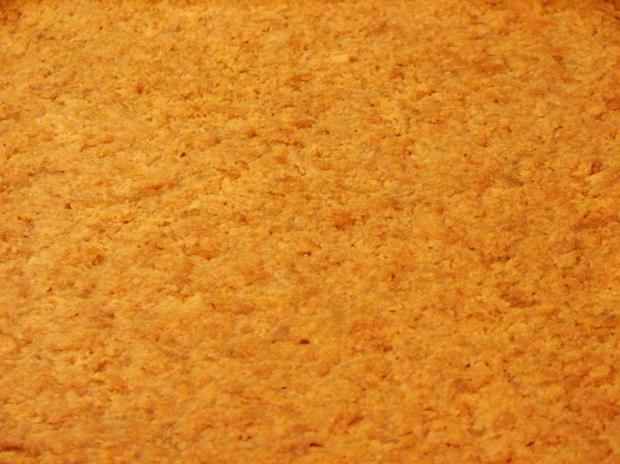
A close-up of the crust. You’ll be amazed at how good this will make your house smell.

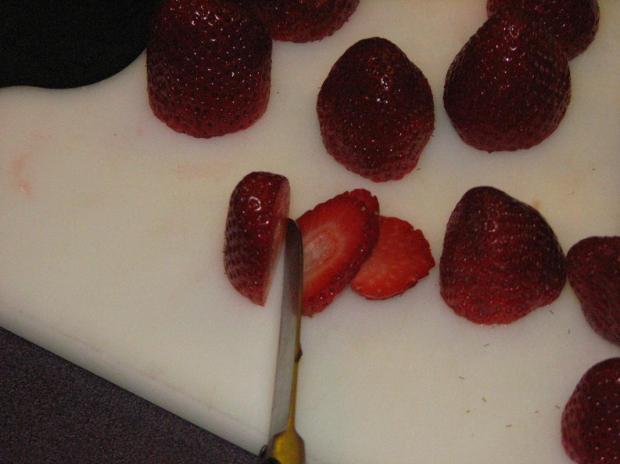
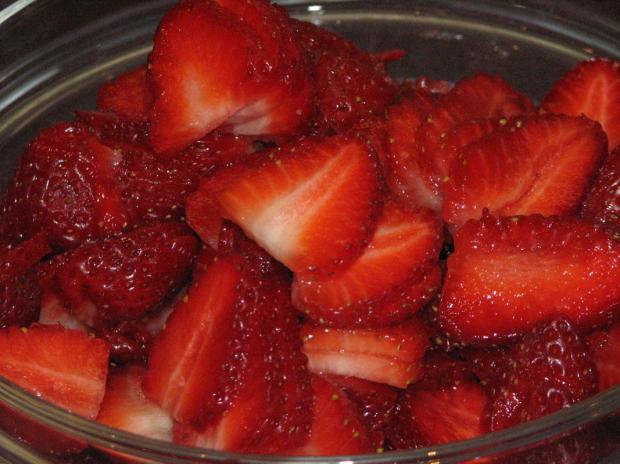
Top the strawberries and slice them up. They need to be in pretty thin slices, which you can accomplish with either a knife:

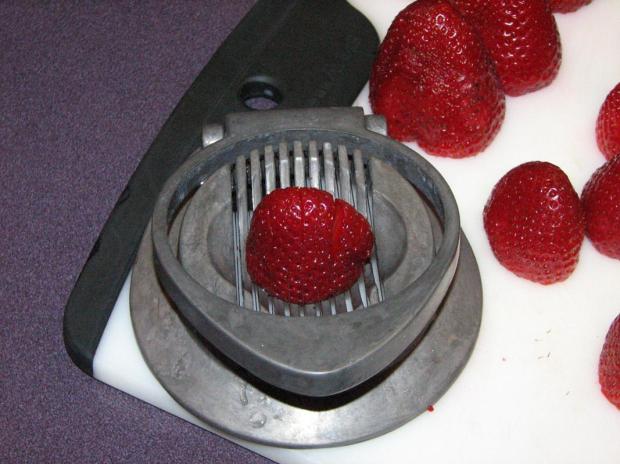
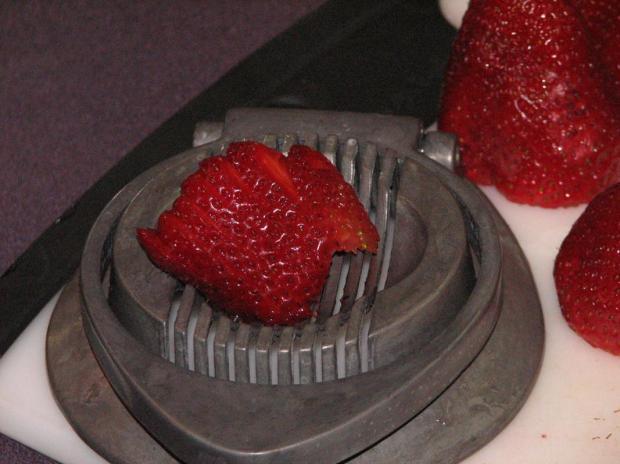
Or an egg slicer, which will cut your work down by a ton. This is one of my favorite tools in the kitchen. I use it for eggs, mushrooms, and strawberries when I want them sliced. You have to go easy at first or you’ll smoosh the strawberries. Just go easy so you don’t end up with a mush.

I thought about macerating these with sugar, but that will drain them of water and you don’t want that. When they are sliced up, put them back in the fridge to keep them cold until your crumbs are cool and your Jello is ready to use.

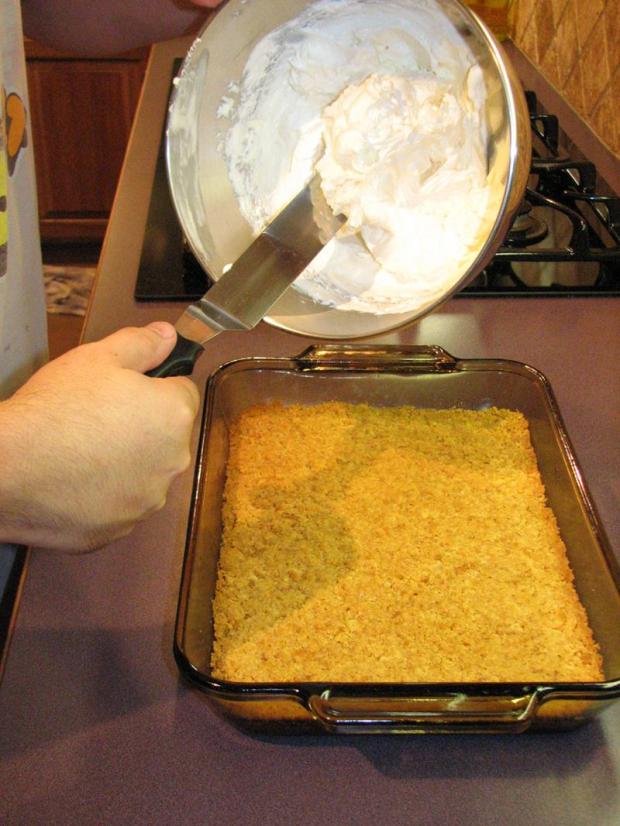
When the crumbs are cool, dump the cream cheese on them and spread them out. Go EASY with this or you’ll f up your crumbs. You need them to be sealed off completely by the cream cheese, and if you push too hard you’ll move the crumbs. Bad. Just go easy.

Speaking of the Jello, by this point it should be ready to go. This is borderline too far…when it starts getting thick, pull it.

Spread the cream cheese and make the edges TIGHT. It needs to seal up the crumbs. Using a paper towel, clean up the sides. It doesn’t have to be too clean, but you’ll want a separate layer look for presentation. If that doesn’t matter to you, then don’t worry about it.

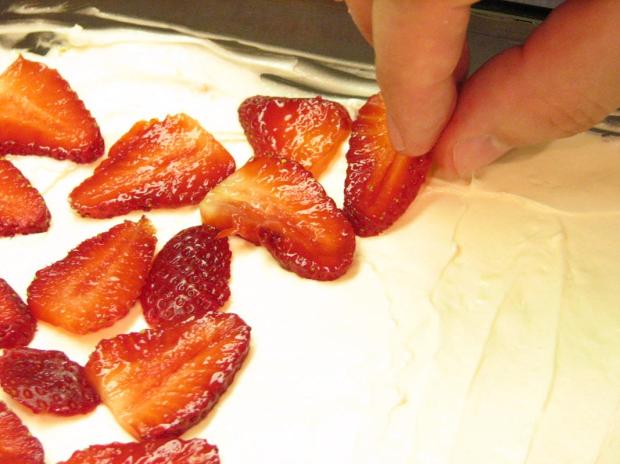
Arrange the first layer of strawberries evenly on the cream cheese.

Once you have the bottom layer covered, then take the rest and even spread them out. You put the first layer down one-by-one so you know that you get good coverage of the white stuff.

\\

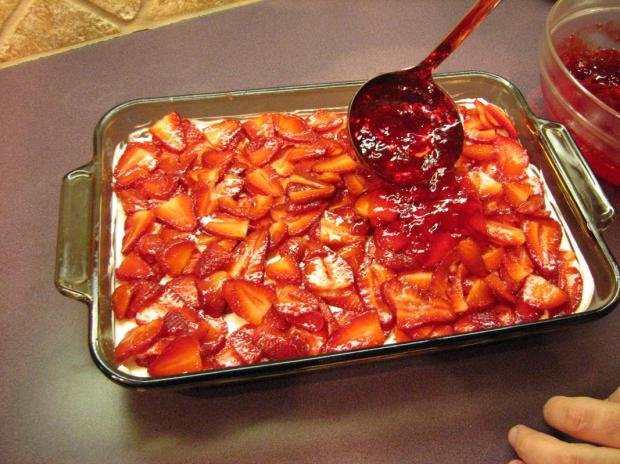
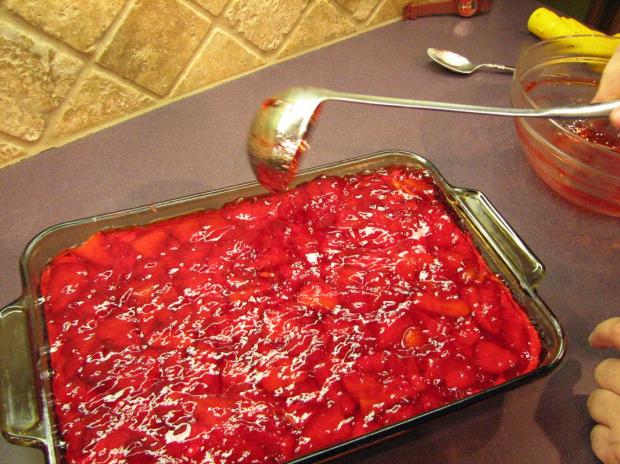
With a ladle, carefully pour the Jello onto the strawberries. Go easy now…if you pour to fast or heavy, it will penetrate the crumb layer and make ’em soggy. Bad.

Pour it over evenly.

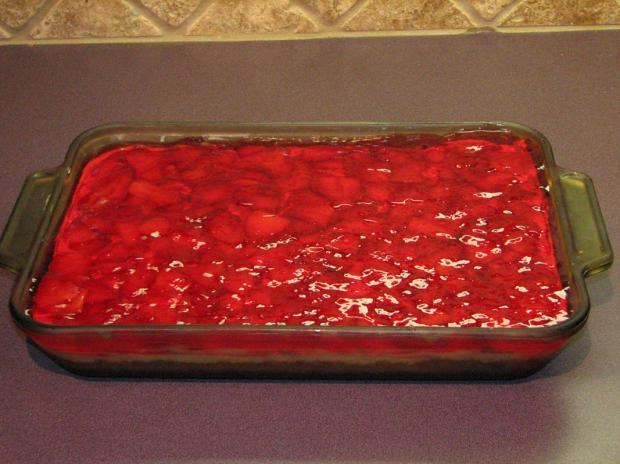
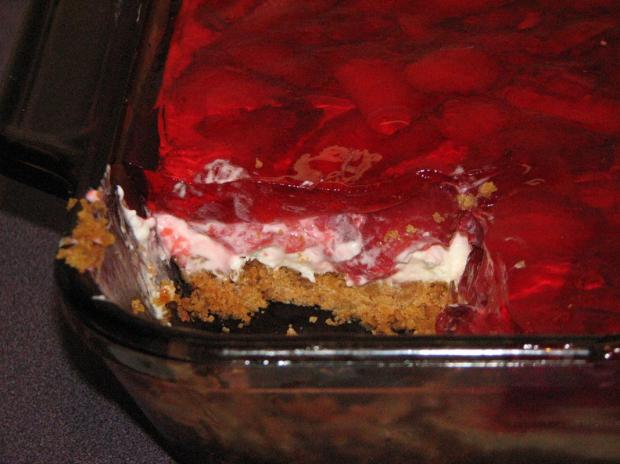
From the side, you can see the layers. Now then…how white trash is this thing? Ritz crackers, whipped cream, cream cheese, and Jello with fruit in it sounds like every recipe out of the local Baptist church cookbook, doesn’t it? I’m sure that’s where this thing came from. Doesn’t matter, though…we are 12 hours away from greatness.

Cover the pan and put it into the fridge overnight. The Jello needs a few hours to set up completely. Don’t pull it early. When you do, though, this is what you are treated to. Oh, man.

The first slice is always the hardest to get out, but when you do get it out you’ve got this crispy, crunchy crust, creamy sweet layer of goodness, then the tart and crisp strawberry/Jello layer.

Back to the original conversation…this was Peach Stuff when I was a kid. You use peach Jello instead of strawberry, and use canned peaches instead of strawberries. You can chill the cans of peaches and drain them, using the juice as the “cold water” on the instructions on the package. I’m sure you can use just about any fruit flavor that Jello makes outside of lemon or lime. Whatever fruit you choose, though, this will be a instant favorite at your family get-togethers or holidays.

Trav’s Corner: Blog Lasagna

11:30 Decide to make lasagna for dinner. Do a quick inventory and realize I no longer have a good pan for lasagna. This will need to be purchased. I can make the sauce now, but lunch first: pinto beans over spring greens with chopped roma tomatoes and hot sauce.

12:22 Assemble ingredients for sauce: 1 lb ground beef, 1 pkg Johnsonville Sweet Italian sausage (removed from casing), 1 onion (chopped), 8 cloves of garlic (peeled and chopped), dried basil, & oregano, ½ a bottle of 2003 Terrazas Malbec Reserva, V-8 low sodium, 1 regular size can of diced tomatoes, 4 large cans of crushed tomatoes. Grabbed a small stockpot.

12:29 Heated up pan over high heat with a little olive oil. Threw in ground beef and sausage. Stirred it around with a wooden spoon, breaking up meat until finely crumbled. Threw in 2 tbsp basil and one tbsp oregano. Let the water cook off, then stirred occasionally, letting the meat brown and caramelization develop on the bottom of the pan. Poured off some of the grease, and then threw in the onions. Sweated the onions some, threw in the garlic and stirred for about a minute. Poured in the red wine and brought to a boil while scraping the bottom of the pan with a spoon. Added about 1 ½ cups of V-8, brought back to a boil. Added all the tomatoes, brought back to a boil, tasted and added 1/2 cup of sugar. Covered and set aside to cool. Done at 1:10.

3:59 Purchased 9 x 11 Pyrex pan w/silicone lid. However, realizing that I have a lot of sauce, also purchase two “deep lasagna pan” foil containers. 

4:52 Begin assembly. Preheated oven to 350. In each pan, put the following layers, bottom to top: sauce, uncooked noodles (4 across, then one broken noodle going sideways (alternate sides of sideways noodle)), sauce, mozz, noodles, sauce, mozz, a 24 oz container of small curd cottage cheese mixed with an egg, noodles, sauce, mozz, noodles, sauce mozz. I regret not getting parm to mix with the mozz. I have to open a 26 oz can of Del Monte “Traditional” spaghetti sauce to finish the last layer and a half of the second lasagna. Covered with plastic wrap, then aluminum foil. Thought about how every time I tell someone about this, they ask “won’t it melt?” To which I have always bit my tongue and said “no, it won’t. Seriously.” Put the lasagnas in the oven at 5:27. Set timer for 1 hour and twenty minutes. 

6:47 Looked at lasagnas. Noting that there was no overspill from the pans, decided on another 15 minutes. 

7:01 Took off covers and set timer for 30 minutes. 

7:30 Took out of oven to rest and cool. 

7:40 Couldn’t wait any longer. Cut a piece. Mmm…


Big Red Ribs

If I have my choice of bbq, it’s going to be ribs. The meat is awesome, they are fun to cook, and you can chew on the bones when they are cooked right. Brisket feeds more people and is much easier to prepare, but ribs are what BBQ is all about. That being said, you can’t just throw a rack of ribs on the smoker and smother them with bbq sauce and expect good ribs. The best ribs are cooked for a long time with a bit of care.

There are three types of pork ribs. If you picture a butchered pig:

You can see the ribs attached to the spine directly under the loin, or the “backstrap”. Those are baby-back ribs.  A lot of people get confused there because they think “babyback” is the operative word, as if the back part is “baby” or from a young pig. Actually, it should read as “baby back-ribs”, meaning that those ribs are back ribs (i.e.-contain part of the spine) and are small (“baby”). Those are the most lean and the most expensive. The next portion of the rib bones (you if you follow along the rib secion) you get the spareribs. Those are the ones we are going to eat because they have a lot of connective tissue and take smoke really well. For the record, the last part is the countrystyle ribs, which are really meaty and cut across the bone instead of with the bone. The layer of meat that lays directly on top of the country-style ribs is the part of the pork that they cut for bacon, which is the “pork belly”.

Prep

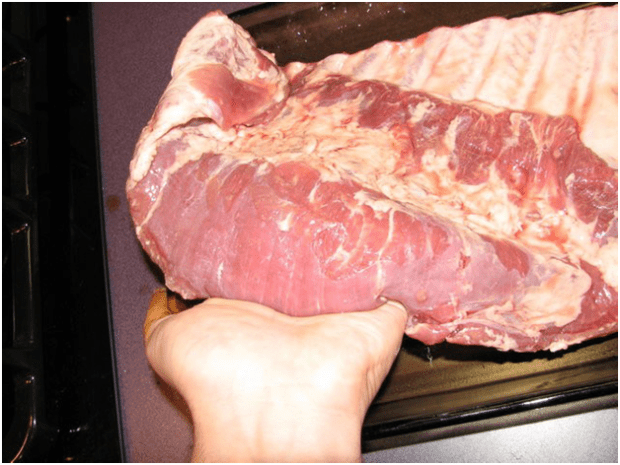
A rack of spareribs needs to be prepared or you’ll get some tough stuff. This is what we are looking at:

This is the backside of the ribs, or the concave side. These need to be trimmed. There is a flap of meat right in the middle of the rack that needs to be taken off:

As well, you need to trim off the meat at the bottom of the rack:

Both of those trimmings should be kept and cooked. They aren’t ribs, but they are delicious, so you can marinate them and cook them at the same time as the ribs. They are good testers as well so you can tell how the meat is cooking.  Now, you HAVE to remove the silverskin on the concave side of the ribs. The best way I’ve found to do this is to use one of my probe thermometers. Stick the thermometer under the skin, pull it away, then peel the skin off. That’s important so you aren’t trying to eat it from the ribs when they are cooked.

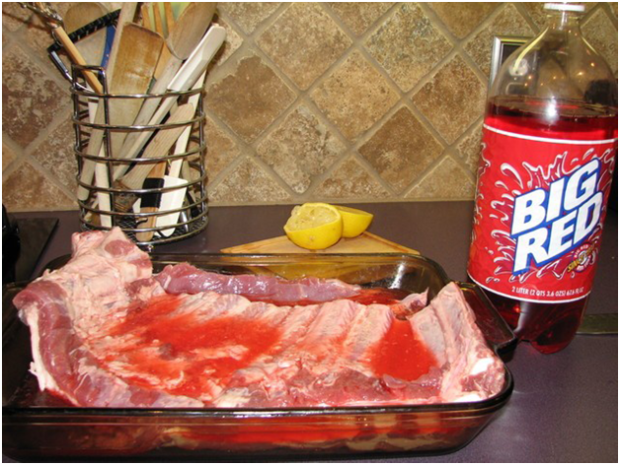
I like to wash the rack at this point under cool water just to rinse off the blood and juice that it was packaged in.  Then, pour Big Red soda on it up to about halfway up the pan, squeeze half a lemon, cover with saran wrap and put it in the fridge for a few hours, potentially overnight.

That might be the white trash in me talking, but I’m a Big Red fan, especially the stuff made in Dublin with cane sugar. The soda adds the sugar that the pork needs for flavor as well as a brine because there is so much sodium in soda. As well, the lemon adds the acid that the marinade needs to start breaking down the meat fibers to be tender.

Rub

There are two types of rubs in bbq…dry and wet. We use the wet rub on the brisket, but we are going to use a dry rub on this because there is a higher surface-to-mass ratio. The wet rub will permeate the meat, but the dry rub will season just the surface, which is what we want…sweet, carmelized outside and a tender inside. That’s balance; Taoism in food.

1/4 cup light brown sugar (pack it in good)

3 tbls pepper

4 tbls ks

1/4 cup paprika (get sweet paprika, not smoked)

1 1/2 tbls garlic powder

1 teaspoon cayenne powder

1 teaspoon coriander

1 teaspoon cumin

Mix all those ingredients together well with your fingers in a bowl. That’s your BBQ rub, and it’s universal for anything you want to BBQ. If you want more heat, throw some red pepper flakes in or a bit more cayenne. Also, if you want a slightly sweeter flavor, you can go 1/2 onion powder with your garlic powder. You can store it in a ziploc for a couple months as well.

After you let the ribs marinate in the Big Red for 1/2 a day to a day, take them out and blot the surface dry with a paper towel. Don’t go overboard and try to soak up all the juice…just get the pools of juice out of there.

Take a handful of rub and cover both sides. You don’t have to have a huge layer, but you can taste the rub and see that it’s not overpowering, so make sure you get good coverage on both sides as well as the ends. The bone marrow takes seasoning very well and is good to eat. Don’t forget about the trimmings as well.

Wrap the rack back up and let it sit in the fridge again, up to a day. I like to leave it overnight, but you’ll want to go at least a couple of hours min.

Smoke

Straight mesquite is going to be a bit harsh for this, so I like to mix pecan in for the smoke. Use mesquite to get your smoker hot, then add wood at a 2:1 ratio, pecan to mesquite. Don’t let people tell you that oak is good for this. Be a real man and use mesquite. You’ll need to keep the heat at 225-250 for this one, and let’s go with a 3-2-1 smoking routine: 3 hours on the smoker unwrapped, 2 wrapped in foil (double layers of heavy duty foil and don’t put the creases down or the juice will fall out), 1 hour wrapped in the cooler.  Depending on the size of the rack or how your heat fluctuates, you may need to increase to a 4-2-1 or even a 4-3-1.  What you are looking for is to be able to grab onto the end of a rib bone, jiggle, and have the rib bone come out with little effort.  Once the connective tissue melts down, this should be an easy feat.

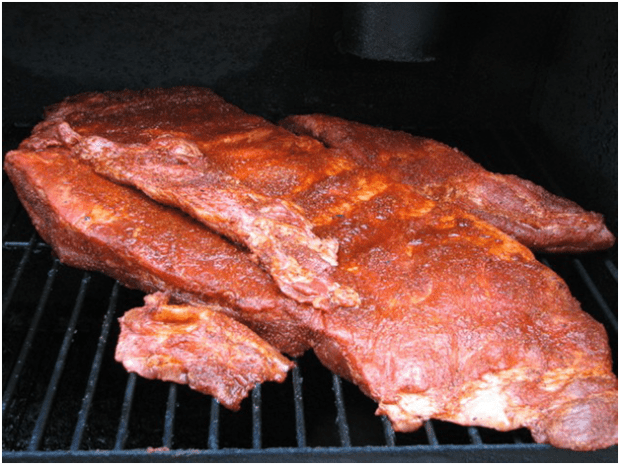
Put the ribs concave side down (that’s the side we pulled the silverskin off of). As the rack cooks, the concave will relax because the connective tissue next to the bone will melt into the meat. You’ll want to put the rack away from the fire because the bone will burn really quickly if you aren’t careful. With five hours of smoke time, the ribs will have ample heat/time to cook so don’t worry about that. Again, don’t forget the trimmings…throw them right on top of the rack of ribs and let them cook. They have some fat, so the fat will melt into the meat.

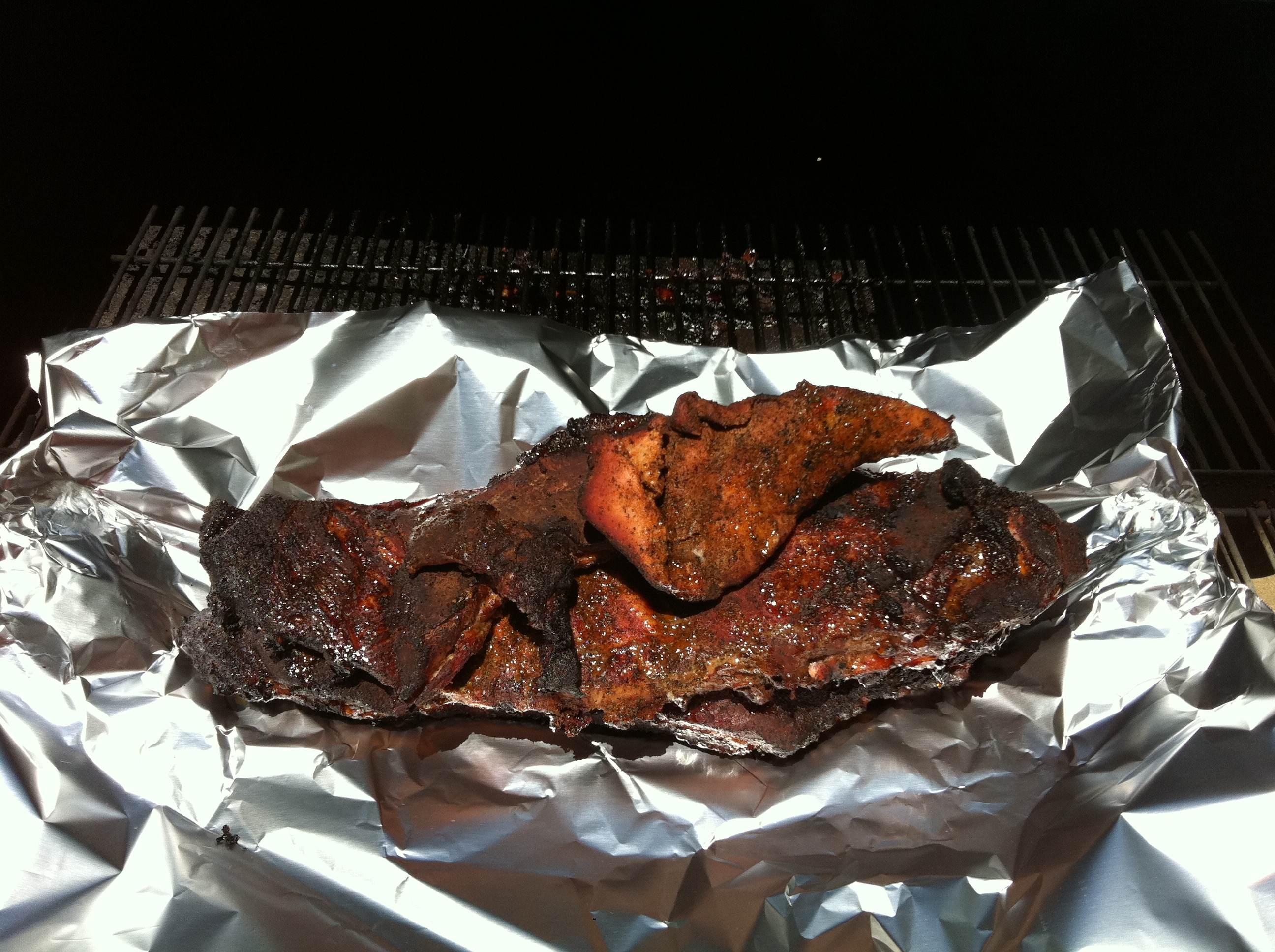
After 3-4 hours, you should have a nice bark around the edges (but not scorched) and a nice red-brown color to the meat.

At this point, go ahead and wrap it up with heavy duty foil.  Wrap it twice and make sure the juices can’t drip out.

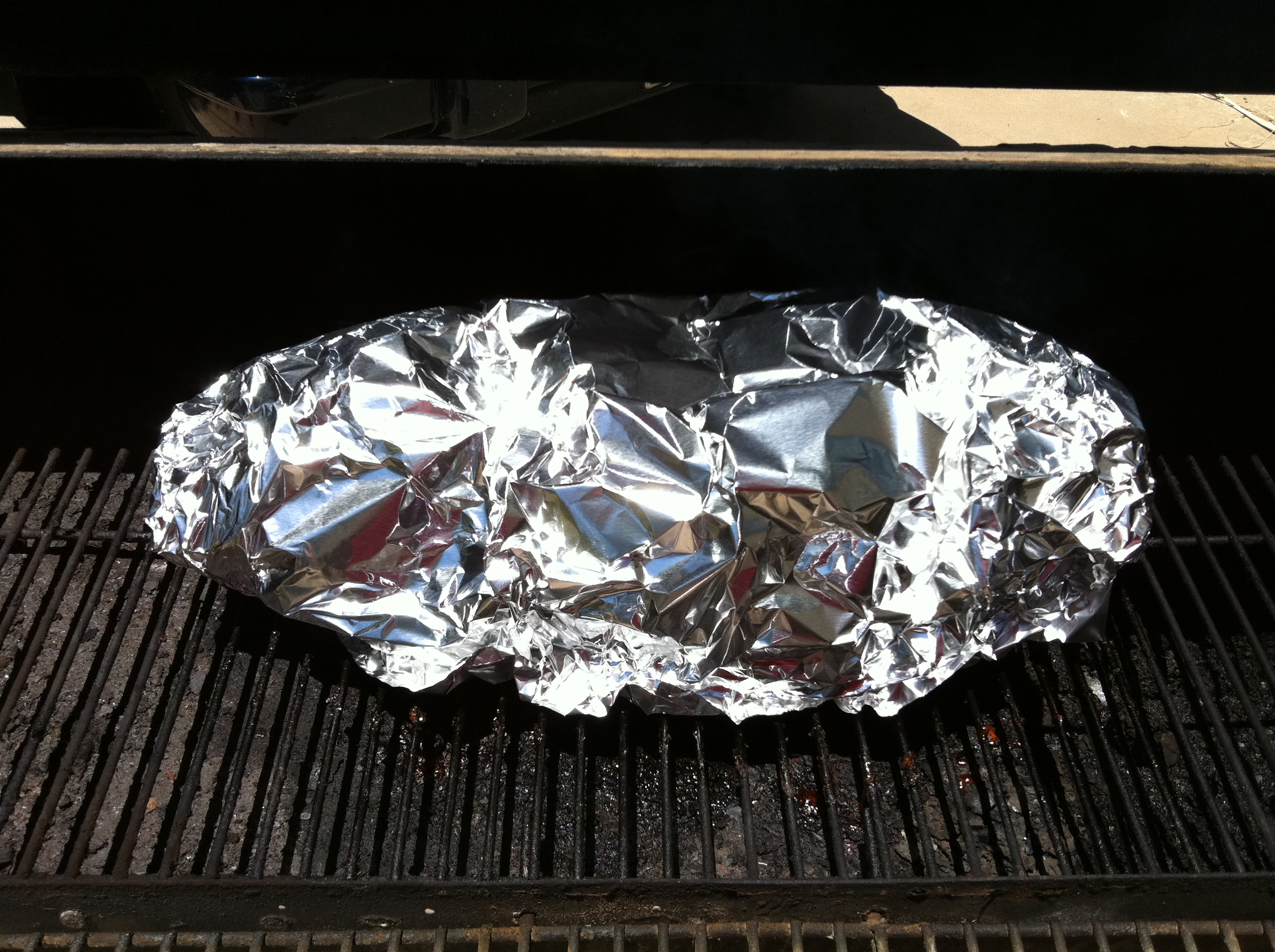
You’ve got another 2-3 hours at 225-250 to let these cook in their own juices…a rib confit, so to speak.

This is one of the most beautiful sights in the world…hours of smoke turn the aluminum gold. I think it may be the work of God.

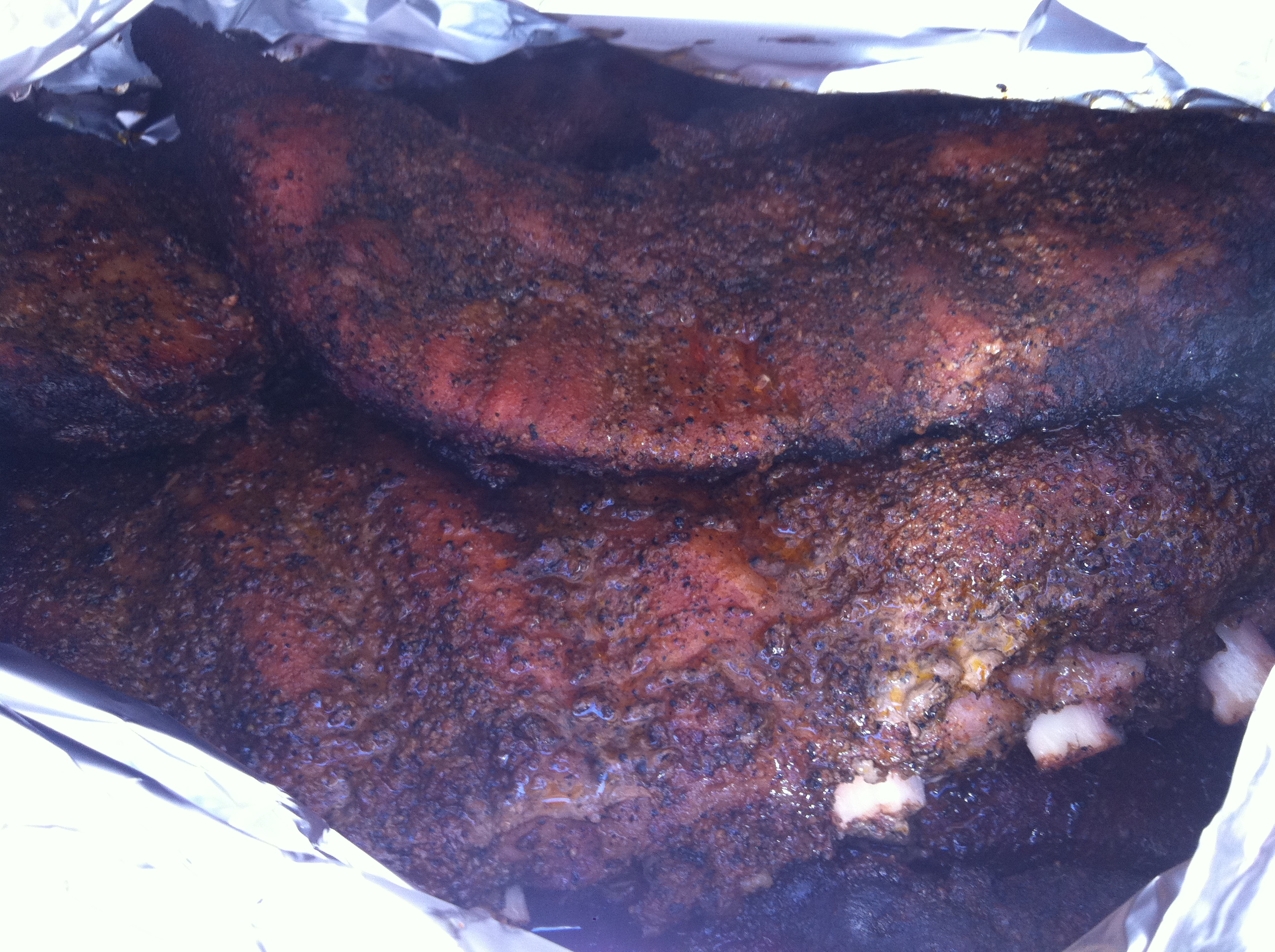
At some point, you’ll need to CAREFULLY unwrap the rack just enough to get access to the bone so you can do your jiggle test.  If you spill any of that juice, I swear to you I’ll come to your house and cut your hair at the scalp with my pocketknife.  DON’T do it.

After the rack passes the jiggle test, then the ribs need a good hour to three hour rest in a cooler.  Take them directly (still wrapped in foil) from the heat and into a cooler.  Don’t open the lid until you are ready to cut/serve.  They will stay hot in the cooler, trust me.  Whatever you do, don’t open the cooler for at least an hour. DON’T do it.

Take the ribs out, cut one of the ends of the foil right next to the rack and pour the juice out into a bowl.  You should be able to squeeze the rack right out of the foil pouch now, so lay it up on a cutting board and cut them right in the middle between each rib (or two, depending on how many people you are serving). They are ready to eat, but if you want you can toss them in the juice.  If you want them extra gooey and kinda sugary like one of those sissy Kentucky fellers, then coat them with your favorite BBQ.  These are good enough without any sort of sauce.  If you go with sauce, try to do one on your own or try one without a whole bunch of sugar, like Stubb’s (which is my favorite bottled bbq sauce).

Tah. Dah. Big Red Ribs.