Killing Frost and Terrorist Black Flies

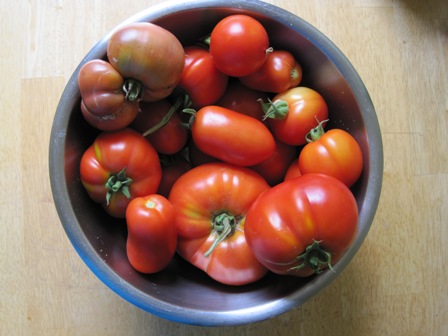
The first day of November was glorious—a bright blue sky, upper 70s, no wind, overnight low in the upper 50s. Totally kick-ass weather for growing a fall crop of tomatoes, eggplants and chili peppers.

This is North Texas …It can be 90 degrees one day and 30 the next; we can have 100-degree temperature swings within the same year.


(February 2011. It was 10 degrees. 113 degrees August 5, 2011 after 10 p.m. )

I knew something was up because the last two days have been filled with black flies acting crazy, terrorizing me – at home, the office, the coffee shop, everywhere.

Black flies are one of the most annoying critters on Plant Earth. I grew up on a ranch with lots of animals pooping nearby, let’s just say you can never have enough fly swats, fly paper or bug zappers. But when the flies swarm and act crazier than usual, you know the weather is about to change. After a sudden killing frost you can walk around and see thousands of fly exoskeletons on the ground.

As a gardener, I know the end is near for my tender annual vegetables—it’s November. I’m in USDA zone 7B with an average first frost date of November 14. But, I’m clinging to the hope that I can nurse my plants along, especially since they just started producing fruit after surviving a wretchedly hot, bone-dry summer. (No exaggeration, it’s on record as the driest, hottest summer since 1950).

So I pulled up my trusty weather app on my iPhone and sure enough … big cold front moving in—decidedly not good for the garden.

I put in an emergency call to handyman husband to get supplies at the hardware store and I made a mad 5 p.m. dash to the feed store to get plastic sheeting. An hour and a half later we have the garden covered. (I am not going back out there to take a picture, Ok I took a picture this morning.)

The temps went from 70 degrees to 45 in about two hours with winds gusting up to 40 mph. I made one last harvest, just in case.

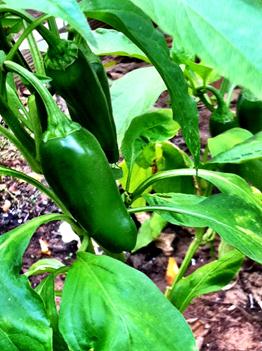
Jalapenos are beautiful, fruity and spicy-delicious right out of the garden.

Serrano peppers just off the vine.

Thanks for the help, sweet husband. Eggplant parmesan is in your future.

Shiner Bocker Beans

You know what I like? Beans. You know what else? Shiner Bock. You know what’s REEEEEEL good together? Beans and Shiner Bock. Your life as a bean-eater is about to change. For the better. Bocker better.

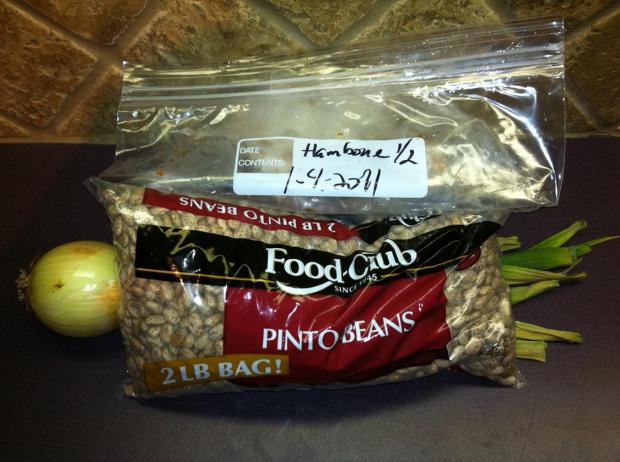
A quick glance at the ingredients:

-2lbs of dry pintos

-a medium yellow onion (I’m using a fresh one here with the greens still attached, right out of the garden)

-a tomato or two, homegrown if possible

-a juicy ripe jalepeno, homegrown if possible

-pork (I had a hambone from NYD that I needed to get out of the deepfreeze)

-SHINER THUMS UP BOCK
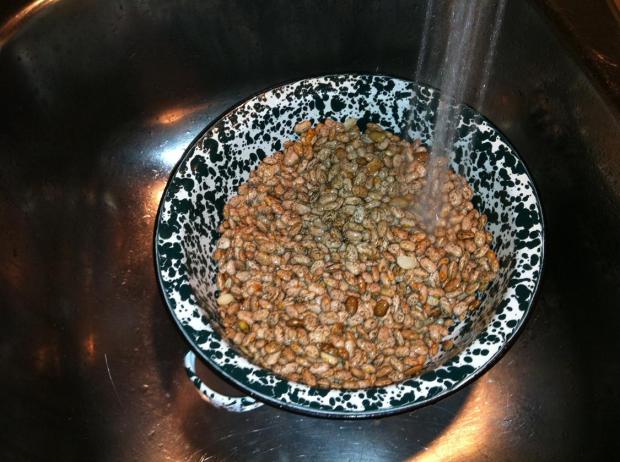
Pour the dried beans into a colander and rinse them off really good under cool water.
Get your best stock pot out and put a few cups of water in, just enough to cover the beans. A thick bottom on your pot will keep the beans from scorching. It makes a difference because we are going to be cooking for a LONG time. Add some salt when you turn the heat on. The salt will soften the water and flavor the beans.

Pour in the beans and bring the water to a boil. After the water boils, let it go for 10 minutes and then cut the heat off and cover the pot. It will need to sit for an hour in the hot water.
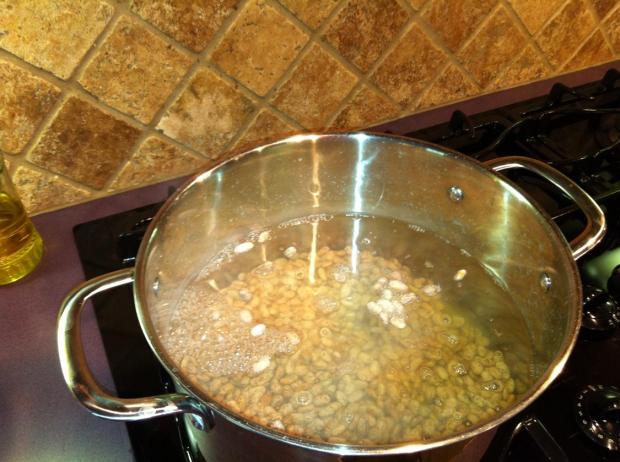
After an hour, strain the water off the beans back into your colander. Don’t rinse the beans…just pour the water off.
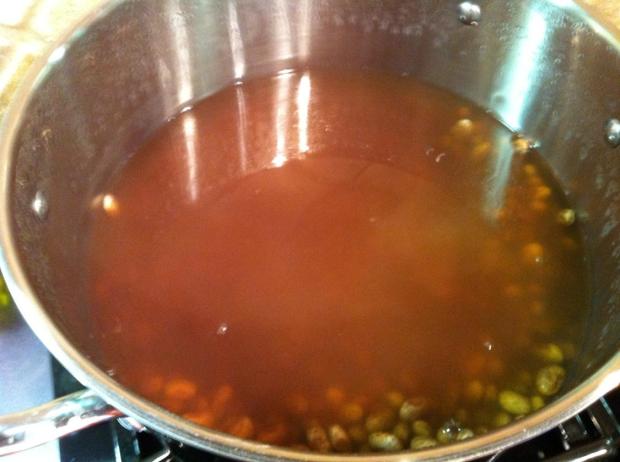
Add enough water back to the pot to cover the beans plus another inch and then add the beans back in. Throw the heat back to the beans and bring them back to a boil. Add a little bit of salt, but not too much if any at all. We’ll add our seasoning later on.
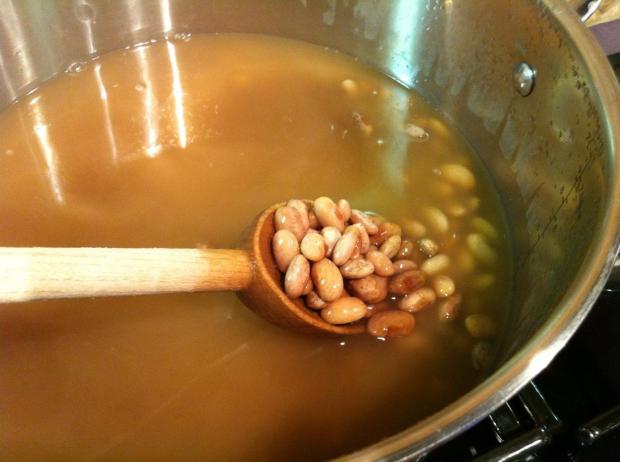
Now…before we go any farther, let’s discuss pork and beans. Pork is good, too. Pork is real good. I save all my bacon drippings in an Illy Coffee can. It’s perfect for storing bacon grease so I can use it for cooking. Nothing other than bacon drippings goes into this can. No vegetable oil or olive oil or butter…just pork fat. I’d drink this in a pinch if I had to. Add a couple of good scoops of fat to the pot.

I mentioned my New Year’s hambone. I make a ham every NYD to go along with my blackeyed peas and cabbage. That’s also my birthday, so I get a pineapple upside-down cake, too. When I’m on death row, that might be my last meal. Anyway…(tense)…back to the pork. If you don’t have a spare hambone laying around your freezer, get some hamhocks from the grocery store. They are a close 2nd place on the pork scale for me when it comes to beans. Hambone is the way you want to go if possible, though.
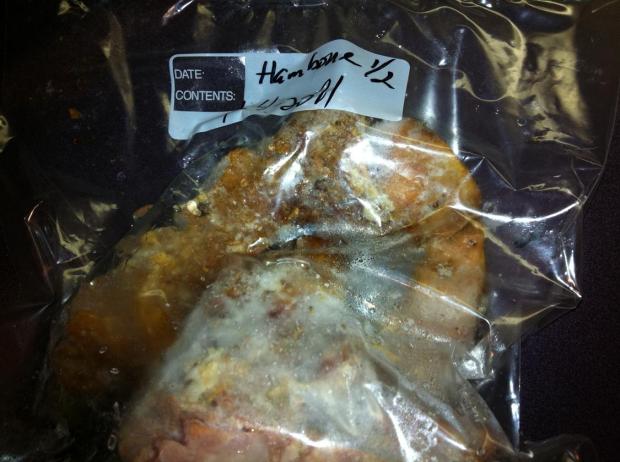
I like to leave a bunch of meat on the ham when I carve it just for the reason that I know that at some point in the next few months I’m going to make beans, and the ham in the beans will send it over the top. If for some reason you don’t have a hambone and have to use hamhocks, it’s ok to get a couple of slices of country ham from the meat counter at your grocery store.  Don’t use deli sandwich slices…the ham you add needs to be thick cuts.  If you are using a hambone, make sure you take off all the cloves and you’ll want to separate the joint, but other than that just pitch all that pork into the pot.

Heat. Cover. Go.

After it comes to a boil, set it to simmer and uncover. It’s going to slow simmer ALL DAMN DAY. 5 hours at least. After it starts to simmer, let’s start putting in some flavor. Take an onion and quarter it. If you are lucky enough to have a whole fresh onion, go ahead and rough chop the greens, too.

While you are at it, throw in 5-6 cloves of garlic, peeled but whole. The simmer: (note the delicious fat on top)

The vege mise en place:

In they go:

Stir it in well, and let it simmer again. For an hour. Uncovered. UNCOVERED!!!! WHOOOOOP!!!

After an hour or so, cover it back up but make sure you lower the heat so you don’t burn it. The onion and garlic will break down and leave you with a nice full body of flavor. Plus, the starch will start leaking out of the beans and the fat and connective tissue will start melting from the pork. It all leaves you with a delicious brown color and a thick gravy.
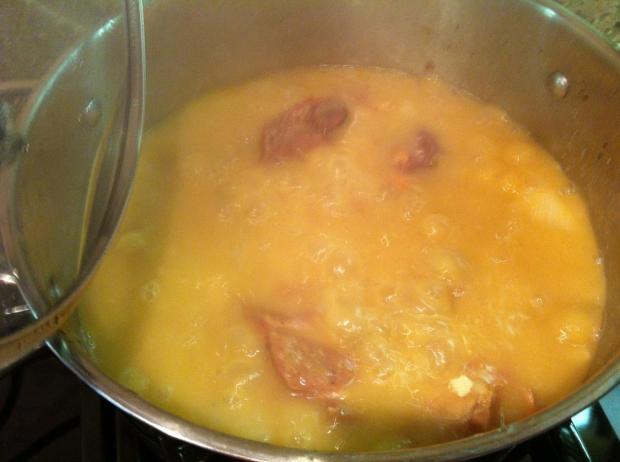
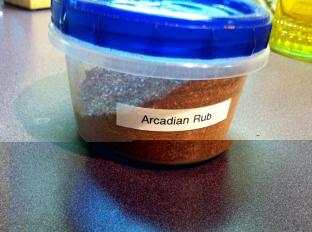
Now we are going to start adding flavor. Remember the Arcadian Rub? Let’s sprinkle in 2tblspns.
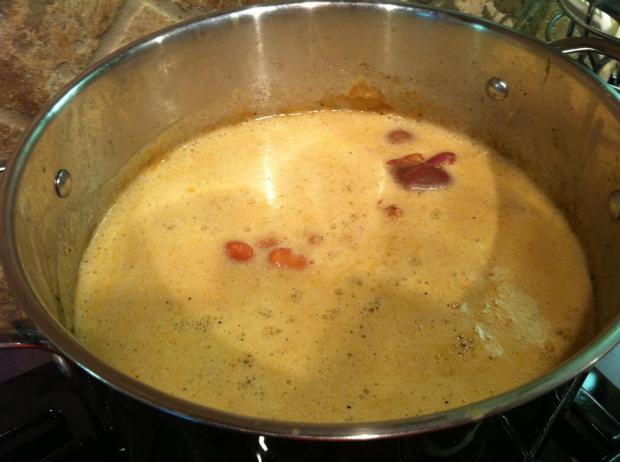
Now we are starting to resemble real live beans. Make sure every 15 minutes or so, you give them a good fold. Try not to stir too hard and break up the beans…just a gentle fold.

You should be to the point where you can see the line along the side of the pan where the liquid started. We’ve lost a lot of liquid so far from the beans soaking it up and the constant simmer evaporating the water out. If you ever get to the point where you are running low on liquid, you need to add some back in. And that’s where the Shiner comes in.

I set a bottle out at room temp so I’m not adding cold beer to the beans and ceasing the simmer. Pour it in slowly…it will foam up as the carbonation fizzes out.

The foam will subside pretty quickly, but be careful so that it doesn’t overflow onto your cooking surface.
While you are here, go ahead and throw in a quartered tomato or two. If you like it spicy, pitch in a whole jalepeno. Don’t pierce it or cut it up. Just throw it in whole. Any real Texan will tell you that the Jalepeno not only packs a solid wallop, but it also has a delicious fruity flavor. Let it boil for a while…if you don’t want it too spicy, take it out after 30 minutes, bifurcate the pepper and remove the seeds and inner membrane with a spoon. That’s what makes it spicy. You can then throw the pepper back it so it can continue its purpose in life.  If you like onion or think that it needs a bit more of the onion flavor, you can throw in another quartered onion.
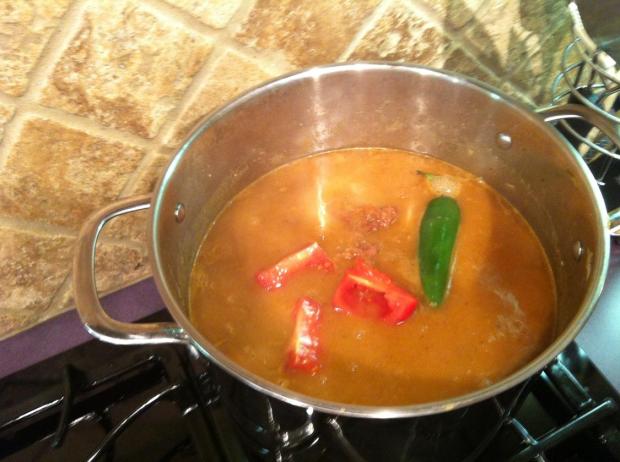
All along the way, you should be tasting this to see how it is coming. I like a lot of cowboy in my beans, so after an hour with the tomato and the jalepeno I’ll add Arcadian rub every 5-10 minutes and taste. If the spice/flavor is there, but you want it a bit more salty go ahead and add some fine grain salt like table salt. Pull the beans from the heat and let them rest for a few minutes, covered. Then you are ready to serve ’em right out of the pot.

The essence of Texas ranch-style beans. Serve straight up or with some of momma’s cornbread like a good boy/girl. Congrats to you; you are the proud new eater of the Shiner Bocker Beans.


Tomato Tutorial: Determinate v. Indeterminate

Tomato Tutorial: Determinate v. Indeterminate

Determinate or indeterminate, who knew?


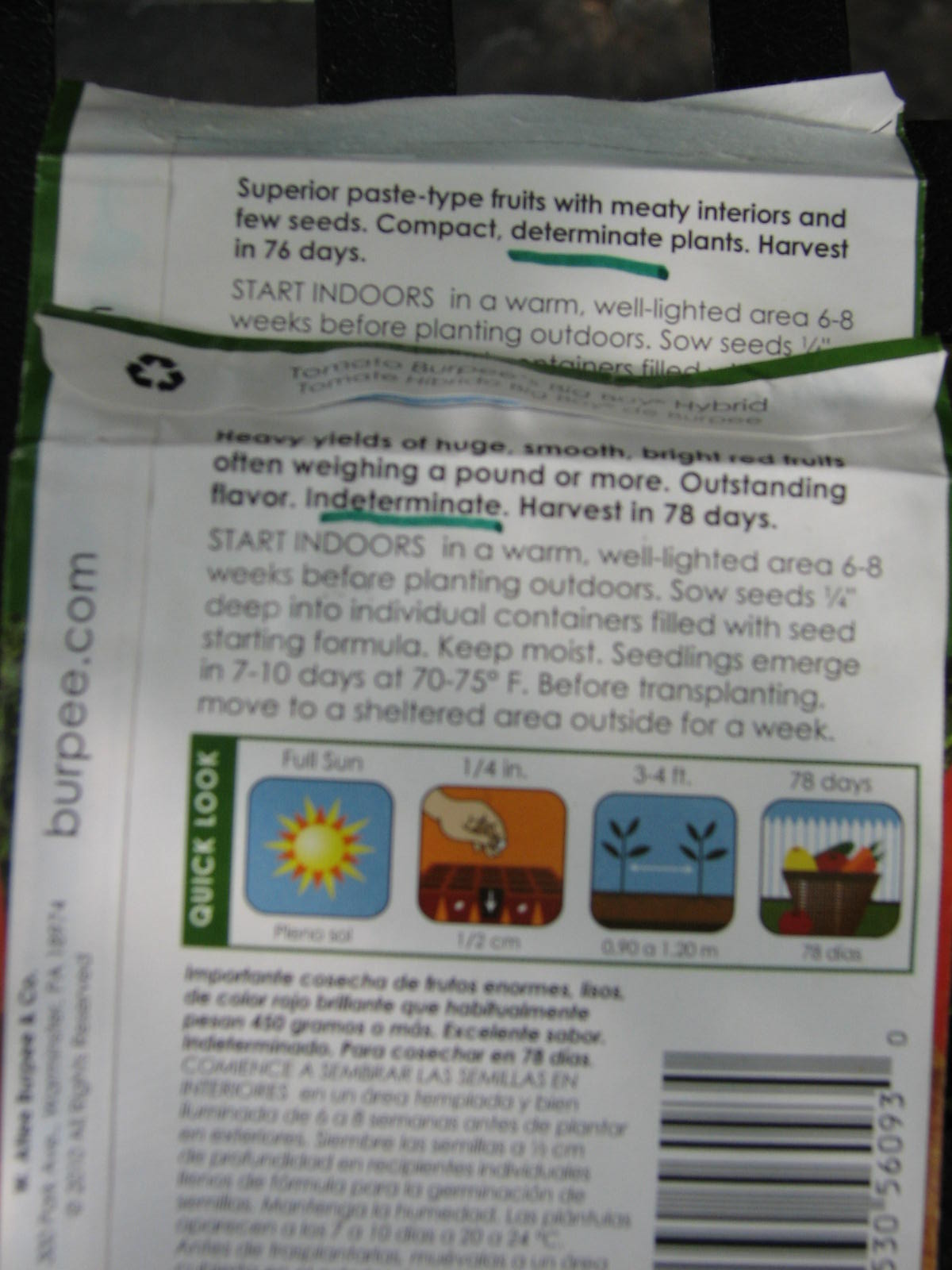
If you start paying attention to the info on the back of seed packages or catalogue descriptions you will start to notice one of two words showing up. Determinate or Indeterminate.

Until recently, I would just shrug not understanding what that was all about. Occasionally you will see semi-determinate, which is usually an heirloom cultivar. However the classification is similar to pole beans or bush beans.


What’s the difference?

Determinate= a bush-type plant, meaning that the plant has a “determinate” height. It will grow to a point then will stop growing up. All new growth will then take place from side-shoots off the main stem. And the plant will be bushy. These plants usually set fruit and ripen in a concentrated span of time, making this a great type if you want to can tomatoes.

Growing determinate plants: use a tomato cage, a good sturdy one, it might be helpful to also put a stake near the main stem and tie the stem to it. It will keep the plant from toppling over when its heavy with fruit.

Sturdy tomato cage.

Indeterminate= vine-type plant. This is a tomato that will continue to grow and has an “indeterminate” height. These can be unruly, if not staked and caged well. For those of you in Texas you know what I mean. In August the tomato vines will be heavy and 10 feet tall and still growing. And you will be looking at this profuse vine thinking “what am I supposed to do with this?” These types set fruit and ripen continuously, so you have an ongoing supply of tomatoes from the vine.

Growing indeterminate plants: use a very tall stake or tomato ladder so the vines can grow up. This helps to keep the fruit off the ground which leads to a whole other set of problems.

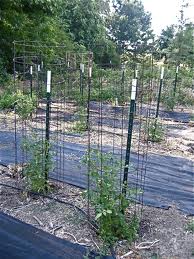
I’ve also been known to drive in a T-post and use in conjunction with a cage. When the vines get too heavy for the cage to support it, the T-post will prop the cage up. T-posts are in abundance on the ranch because we use them to build barbed-wire fences.

An example of using a T-post with a cage (this is not my garden, BTW)

One type is not better than the other, but it’s helpful to know what kind you are growing when planning your garden. You can select specific types depending on what you want to accomplish or the planting space you have available. Personally I like a variety of both in my garden. I have a small raised-bed garden at my house and a large plot in our family garden out at the ranch. In my small home garden I’ve planted a variety of both indeterminate and determinate tomatoes.

The determinate types will suit my purposes better at home because they are compact plants and will ripen in a concentrated period of time. I can harvest my main tomato crop, then move on to my next crop and get the most out of my small garden. I’m also hoping to have enough come off at one time to can (aka put up) my crop.

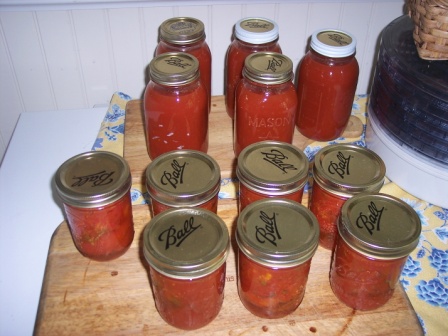
Canned tomatoes

At our ranch plot, I’ve got more indeterminate varieties because we have much more space and can provide plenty of room for the plants to spread out. I’m hoping the indeterminates can provide a just-in-time regular delivery of homegrown tomatoes to eat throughout the season.

One last note about growing tomatoes in Texas: think of growing tomatoes in 2 shorter growing seasons, instead of one long season. Tomatoes will take a hiatus from mid-July to late August when it’s too hot. In fact, most tomatoes will not set fruit when overnight temps reach 80-85 degrees.

My plan is to grow an early crop, pull up spent plants, then replant in late August for a fall harvest.

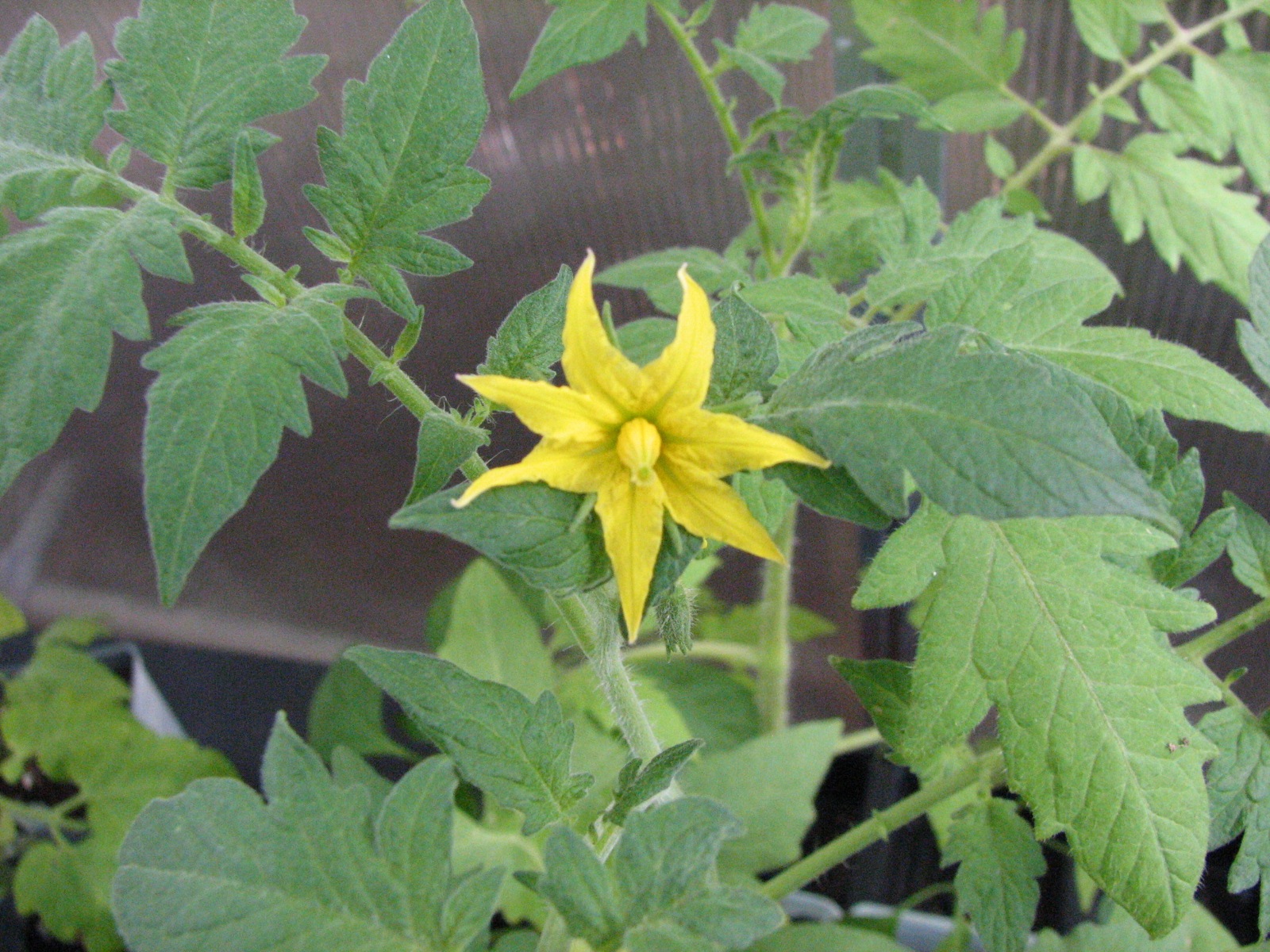
Flowers on the tomato vine now hopefully mean juicy tomatoes later.

Fingers crossed. Happy Gardening 🙂

Garden Calamities, Bad Kids and More Bad Dogs

Garden Calamities, Bad Kids and More Bad Dogs

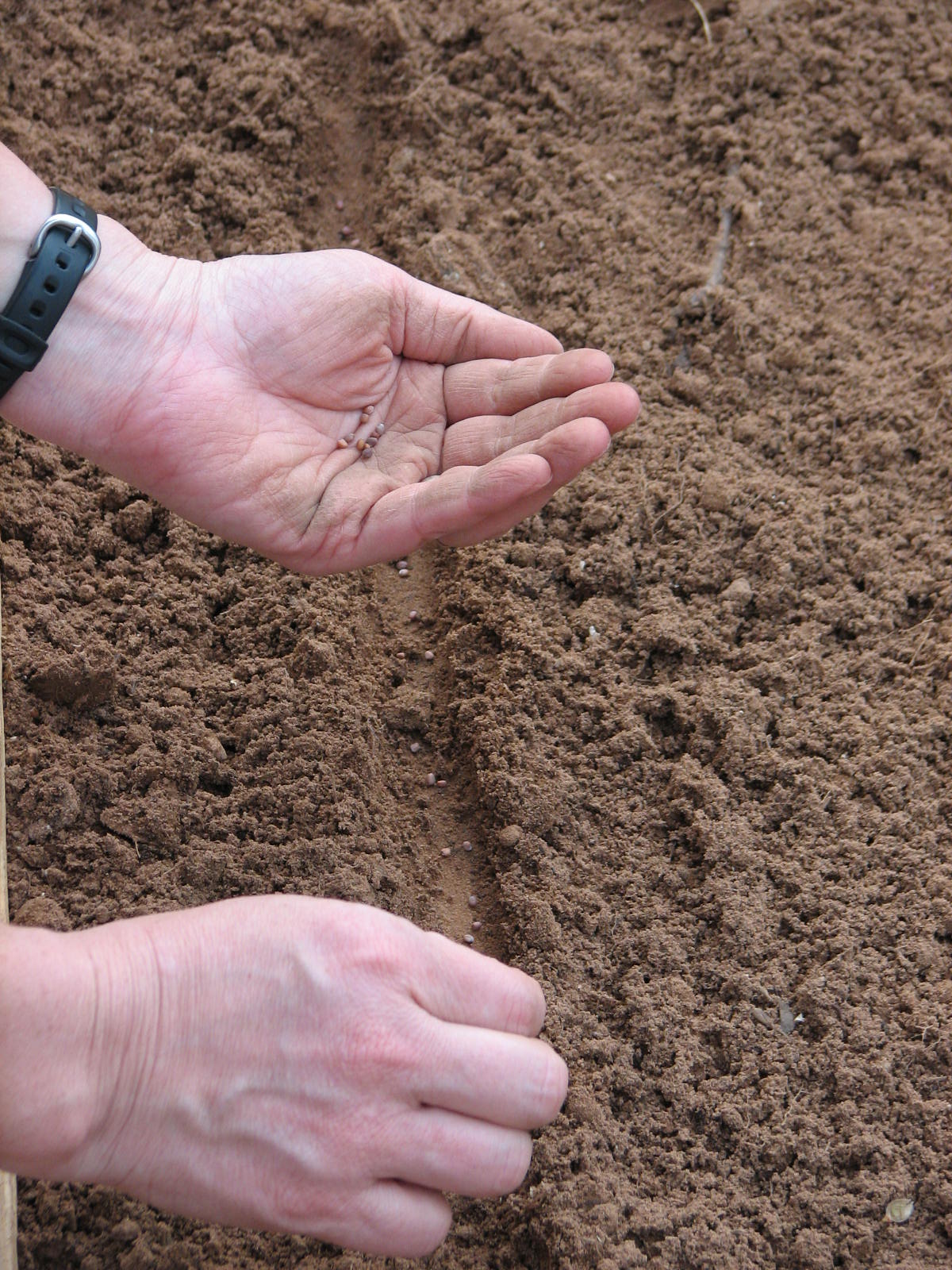
7 to 10 days ago I planted a few rows of spring plants that are space-savers—ideal for my intensive gardening plan. These are also the plants that give you quick pay-off in terms of gardening—radishes, mesclun, rocket (aka arugula), spinach and carrots. All sprout quickly and can be harvested between 25-45 days.  A super-speedy turnaround considering our beloved tomatoes can take up to 90 days to mature.

Planting a sorta-early spring garden...

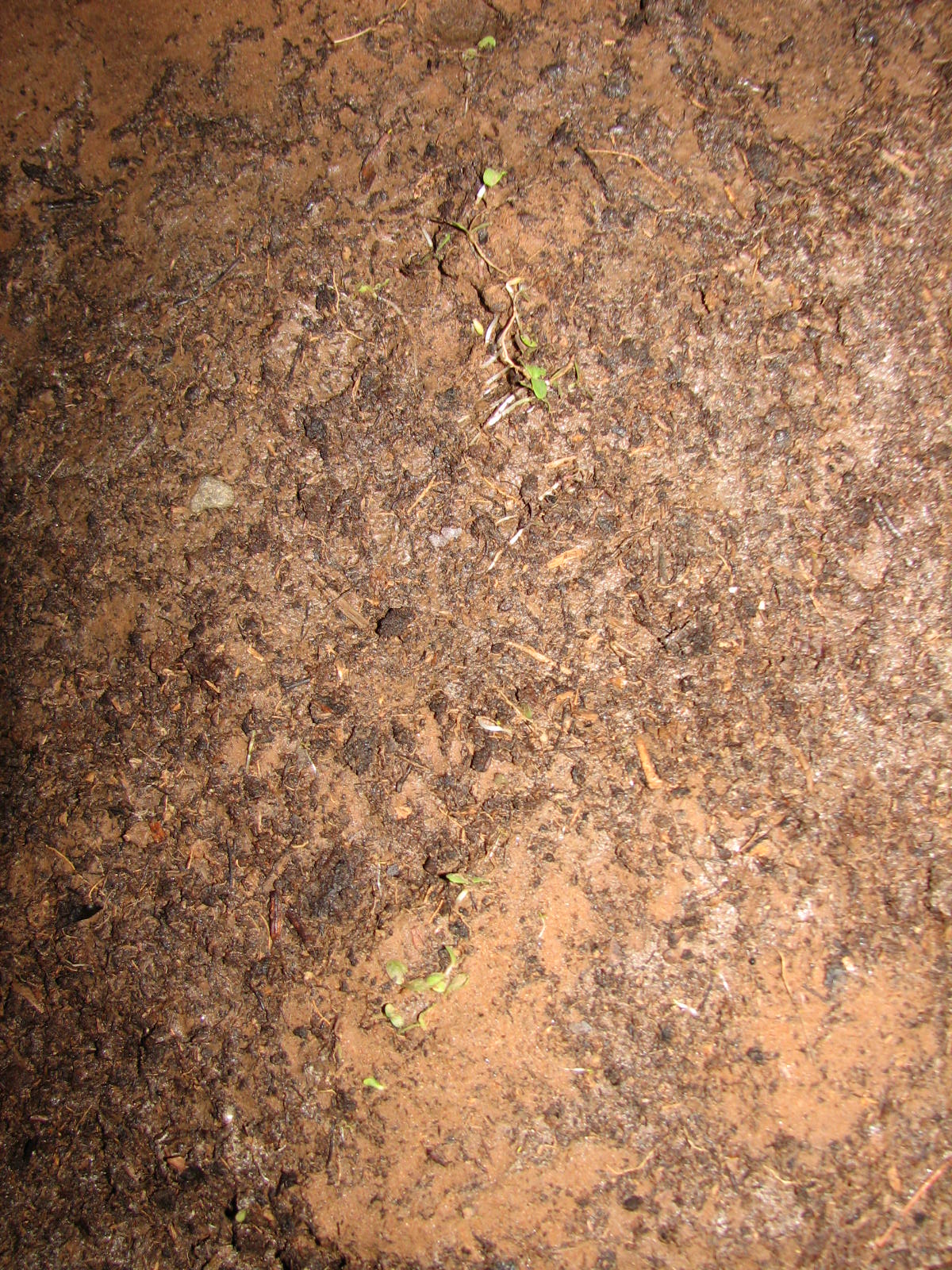
These quick-return crops have already started to show signs of life … this photo was taken on Monday, 7 days after they were planted.  

Showing signs of life.

See the little sprouts coming up … I have no idea what this is because I didn’t properly label my rows – oh well. I will be able to identify them once they get past the initial phase of sprouting.  

Then Tuesday, I started writing this piece and decided to take photos showing progress.  I went out to the garden to take photos, but there was evidence of a minor Garden Calamity.

Evidence of a very bad dog.

A big dog print in my raised bed …  I only planted half of one raised bed and that is the only place the dog tromped thru. Of course it’s right in the middle of a planted row.

 I still didn’t get the story finished, so after work on Wednesday, I went to take another progress photo.

Then another Garden Calamity struck … usually when that happens it has to do with a bad dog. Yesterday it had to do with a kid … my 4-yr old son came into the house and declared: “I water momma’s flowlers. I help jew, mom.” I didn’t think a lot of it, but then walked out to see what he was talking about.

Seedlings almost washed away by a 4-yr old.

Holy Garden Calamity, Batman! I don’t’ think 4-yr olds understand that you can’t put the sprinkler wand/spray head thingy right up next to the seedlings. And this story has changed drastically since the initial draft, due to Garden Calamities.

Bad kid, good kid? Definitly a cute kid!

More to come on tomatoes and spring gardening in North Texas… I’m dying to plant my tomatoes, but the old farmers say, “thunder in February, frost in April.” And we had thunder in February along with a frozen foot of snow and ice that cancelled school for a week. I’m going to wait a few more days on planting my tomatoes. Hopefully I can avoid future Garden Calamities.

96 tomato plants ... almost ready for a North Texas garden home!

Tomato time in Texas

Tomato time in Texas

About 2 more weeks and we North Texas gardeners will be able to plant our tender crops.  And that means Tomatoes!  [Why exactly do we have to add an “e” when we make the word “tomato” plural – don’t answer that Micki Jo].

If you have ever had homegrown tomatoes you can fully appreciate the greatness of having fresh garden-ripened tomatoes.  Unfortunately half the year we are relegated to those hard, sorta red tomatoes—I call them red baseballs in the grocery store.

Garden tomatoes!

You can never have enough tomatoes during the summer months … when you are up to your eyeballs, all you have to do is can them.  Then in the winter when you are making a stew or chili, pop open a couple jars of our canned tomatoes, and ta-dah – happiness in a jar.

Canned tomatoes

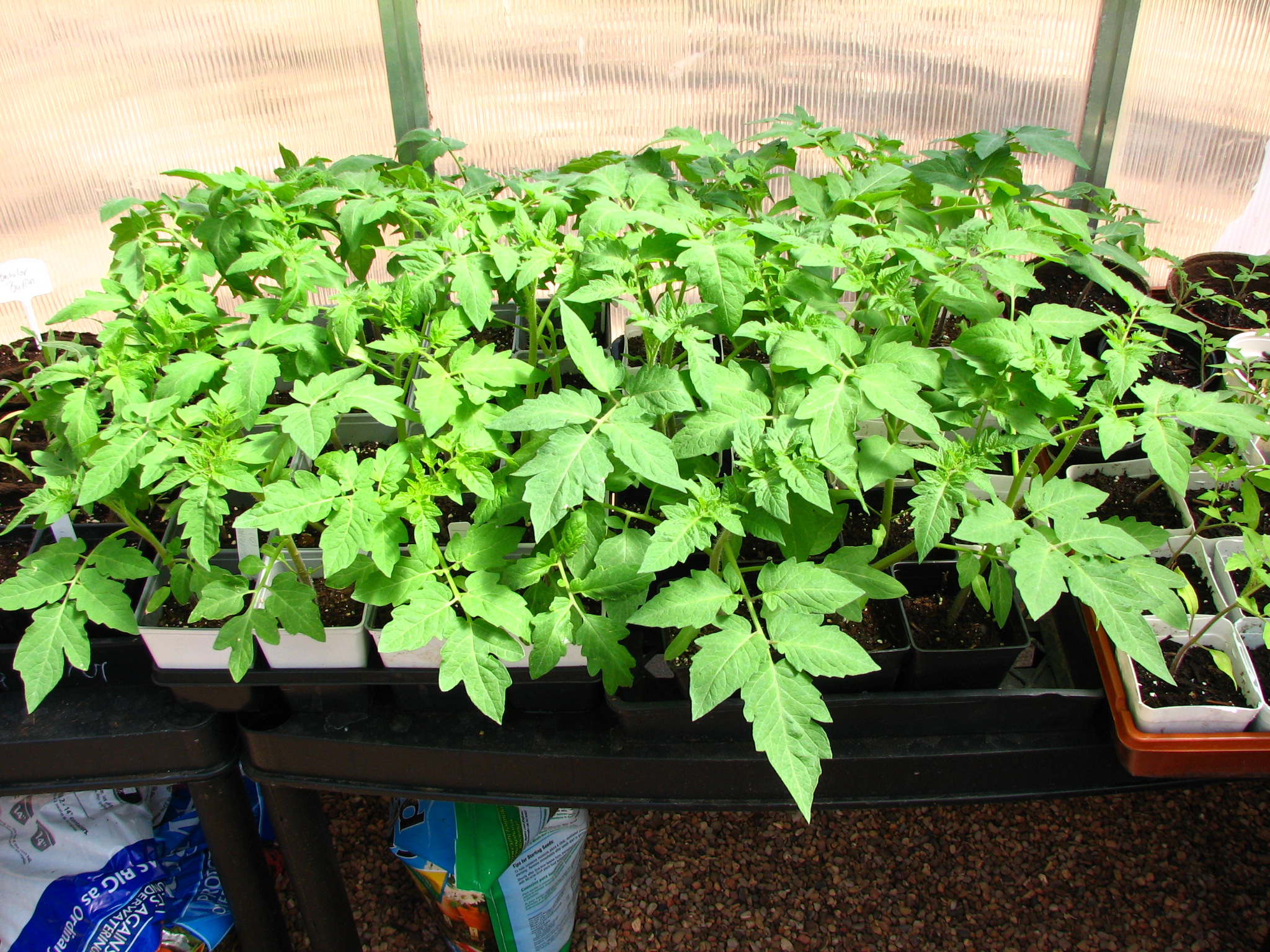
I went nuts in my greenhouse this winter with tomatoes … There are about 100 or so plants. Yikes! 

Lots and lots of 'maters ... Tomato plants galore

Calling all Gardeners! I need a few of you to take these off my hands!

Just a few good Tomatoes …

I woke up and it’s Spring.  First week of March down and it seems like it was just winter – wait it was just winter.  One month ago we were still digging out of a big-time snow storm that left all of North Texas crippled — school was cancelled for a week!

This looks like the coldest animal on Earth

Nothing says spring in Graham like Daffodils. 

There was once a big push to make Graham the Daffodil Capital. [of Texas or the U.S., I’m not sure]. But you can still see the remnants all around us.

To me Spring means Baseball … 

AND gardening. Oh how I love to plant stuff to watch it grow … 

Plant a seed and watch it grow ...


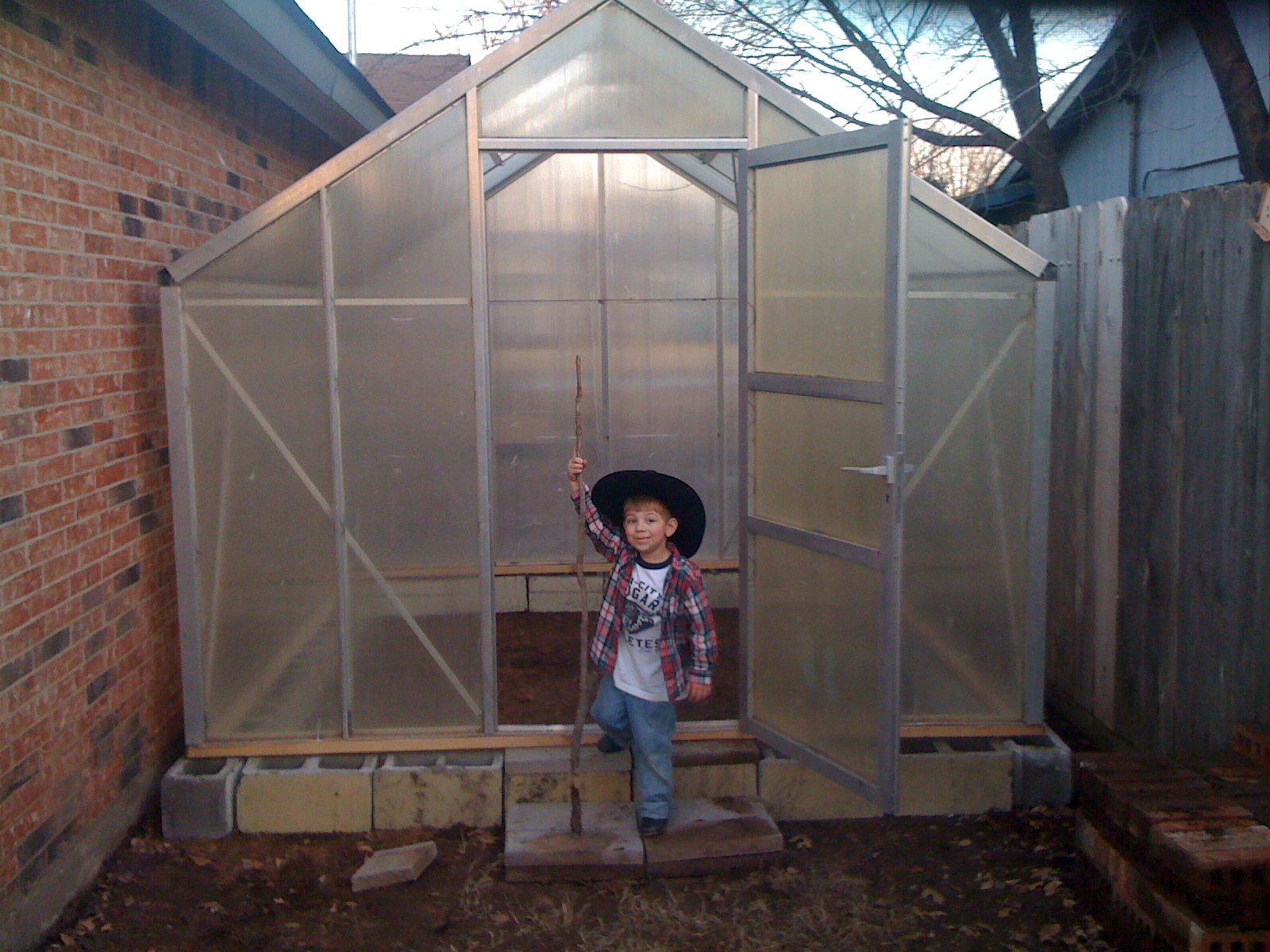
This year, Spring has a new element for me – my greenhouse!  One of the best, most-thoughtful gifts ever given to me. (awwwhhh – thanks, babes.)

The day it was set into place ... We have very good skilled labor. Look at the hat --it's felt-- that means winter.

Look!  Sprouted seeds!  This just happens to be Nasturtiums, which are also edible.    Very cool touch to throw a few blossoms into a tossed salad.

 When these sprouts grow up they should look like this …

A red nasturtium ...

And look at the Tomatoes!  Oh I am hopeful that we will have lots of good Tomatoes!

Just a few good tomatoes ...

I am sharing my plants with other vegetable gardeners around me.  Just a few good tomatoes … that’s all I’m looking for. That and maybe a BLT sandwich …