Spring’s Fling: Chocolate Covered Strawberries

Spring’s Fling: Chocolate Covered Strawberries

Strawberries and Chocolate ... Simple Goodness.

Spring is the season for strawberries.  I love berries of all kinds.  And now is the strawberry’s time to shine.  When you are making things with 3 to 5 ingredients, it’s really important to get the best available ingredients possible. This means using fresh produce. If you can get locally-grown produce, even better.

For me one of life’s simple pleasures is chocolate-covered strawberries. I’m a chocoholic and a lover of all berries. But this is simple and delicious.  There are three ingredients: strawberries, cream and chocolate.

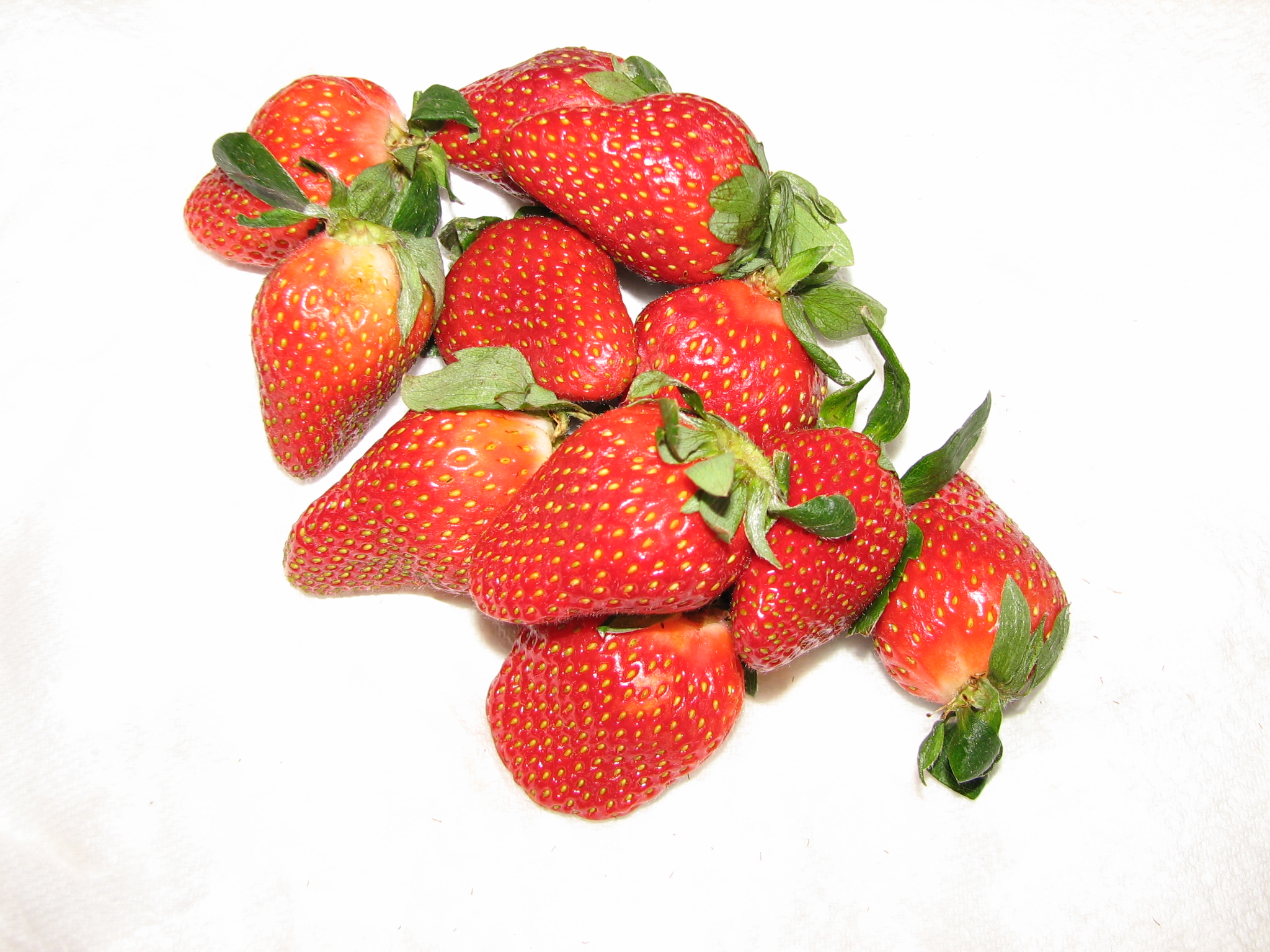
Wash a package of fresh strawberries and pat dry.  I used a one-pound package for this recipe. Set them aside to continue drying.  You want them to be as dry as possible to dip into the chocolate.

Strawberries! These came from United Supermarkets!

Next, use a high-quality semi-sweet chocolate.  Scharffen Berger is my favorite … it’s happiness in a wrapper.

Happiness in a wrapper!

If you can’t find it in your local grocery store, Ghirardelli makes a good-quality chocolate and is readily available in most stores.  If you prefer, you can use a darker chocolate, which has a higher percentage of cacao. Kitchen Tip: sometimes you can find a good chocolate bar for melting and baking in the candy section instead of the baking section.

Put 3-4 ounces (one bar) of chocolate in a microwave-safe bowl.

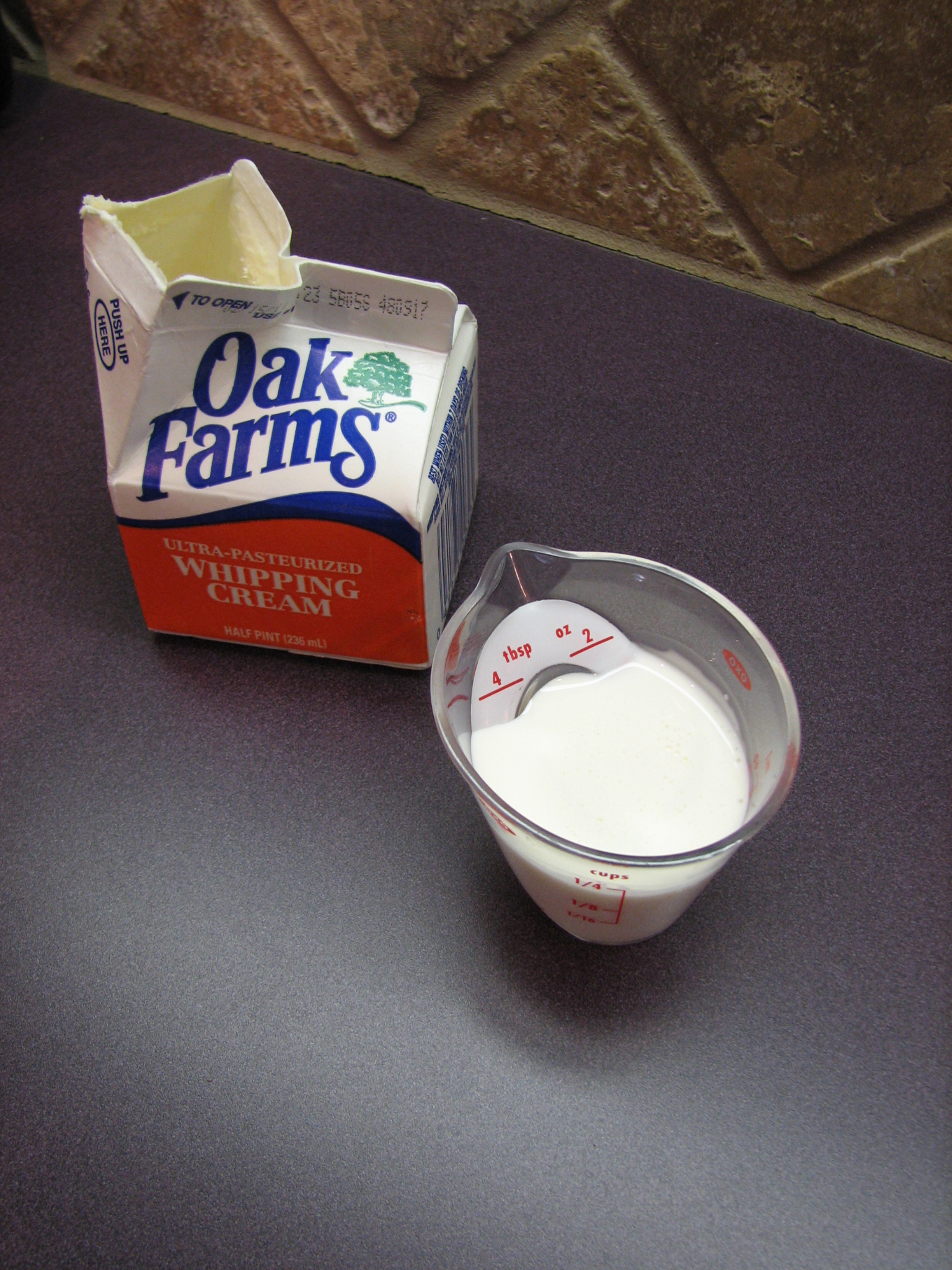
Add 1/4 cup of heavy cream. (technically this is chocolate ganache, which is just the fancy way of saying: chocolate with cream.)

I love cream.
Cream makes everything better-- that and butter!

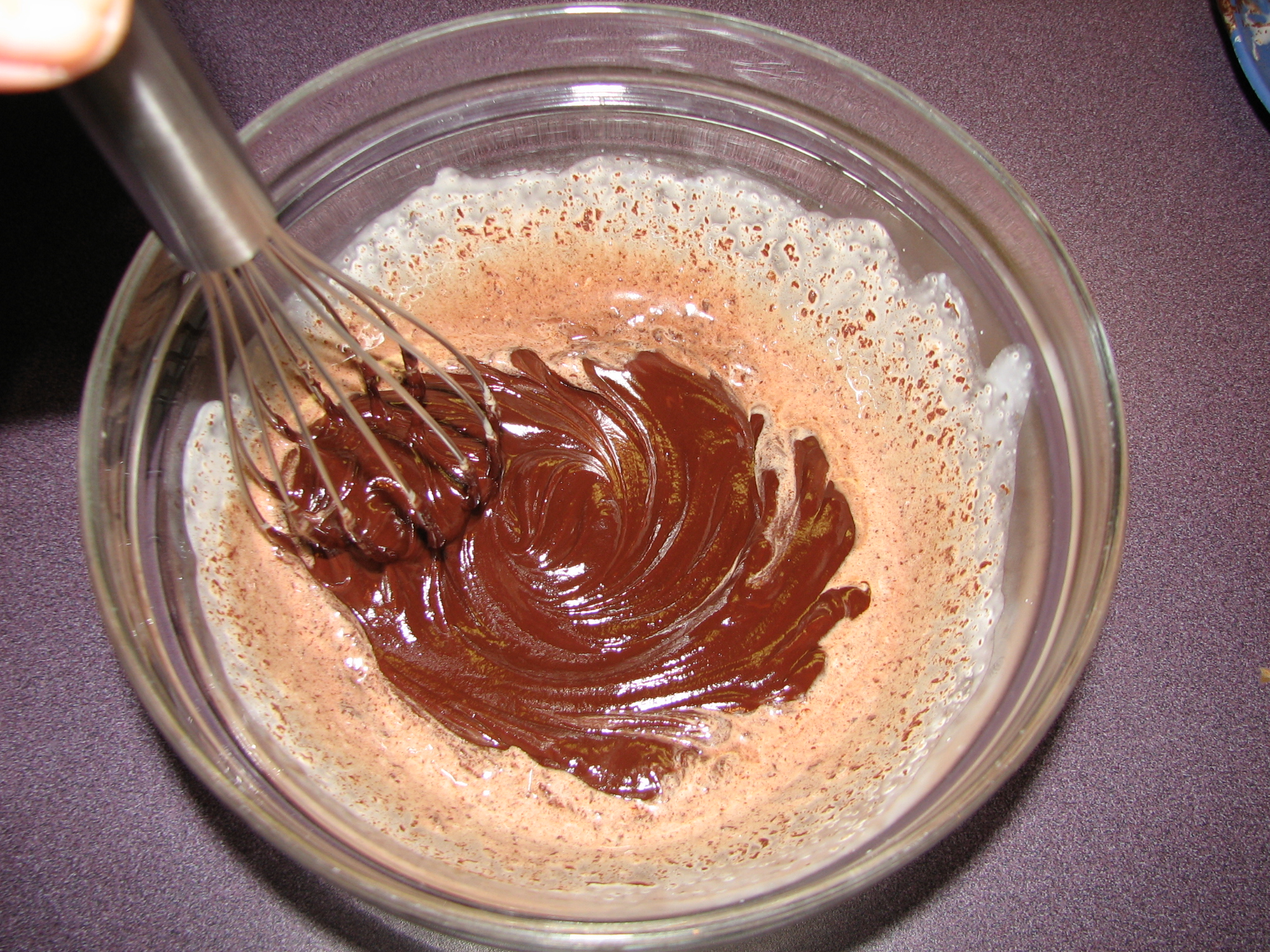
Microwave for 30 seconds at a time, stirring in between, until the chocolate and cream have melted together.

Mix well!

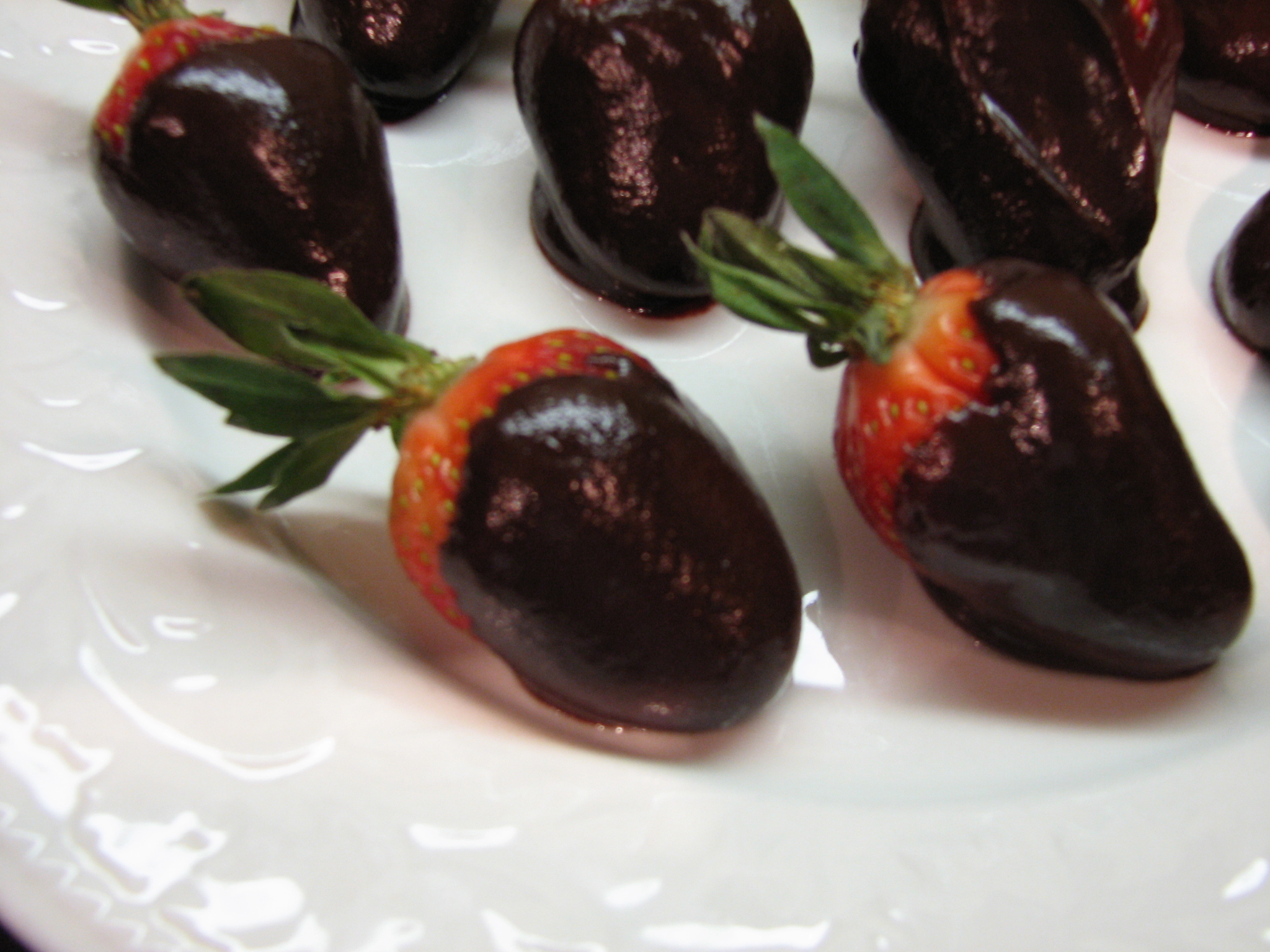
Take your dry strawberries and dip into the chocolate and put on a chilled plate or pan covered with wax paper.

Dippidy-do, I love you, chocolate.

Stick in the refrigerator for 45 minutes so that the chocolate has time to set up.  Then serve it up and enjoy.

Mmmmm ... Chocolate and Strawberries!

(PS – my photos will improve, I promise.  I’m now motivated to learn how to use my camera much better!)

The Best Soup I’ve Ever Tasted

I love soup, and when the weather starts turning cool I try to eat soup as often as possible. A lot of people will choose the salad when given the choice, but I often go with the soup as a first course, especially if it’s all made from scratch.

My three favorite soups:

3) Cream of Artichoke soup at  The Messina Hof Vintage House in Bryan, Texas. The restaurant there is hit or miss, but the cream of artichoke will change your life.

2) Red Chicken Curry at Samui Thai in Plano, Texas. I judge thai food joints based on their curry, and Samui always is rock solid.  The bamboo shoots and aubergine are incredible.  I’m not sure if you can really count this as a soup, but it’s my list so I make the rules.

1) Chicken and Mushroom soup. Right here, right now. Buckle up.

Here is the ingredient list (for the most part):

Make a classic mirepoix, which is diced onion, celery, and carrot. I cut these in random sizes for texture. Melt 3tblsn unsalted butter and then throw in the mirepoix and salt. Caution: you are going to add a lot of salt to this dish, but you want to do a little as you go. The salt will help reduce the vege.

Once the carrots start getting soft, add a bunch of garlic. I did four cloves here, but you could go with more if you are a garlic geek. Keep it moving so it doesn’t burn. We are going to use three types of mushrooms here: shitake, oyster, and plain ol’ white button mushrooms, all sliced in a rough chop. Clean the mushrooms WITHOUT water (rub them down w/a towel to remove the dirt). Once you get them sliced, toss them in. Shitake:

Oyster:

Button:

And into the pot with more salt. The shitake have this great beefy taste, the oyster a buttery chewy taste, and the buttons are just a great all around mushroom. If the vege start to look dry, add a little bit of olive oil. It should look like this:

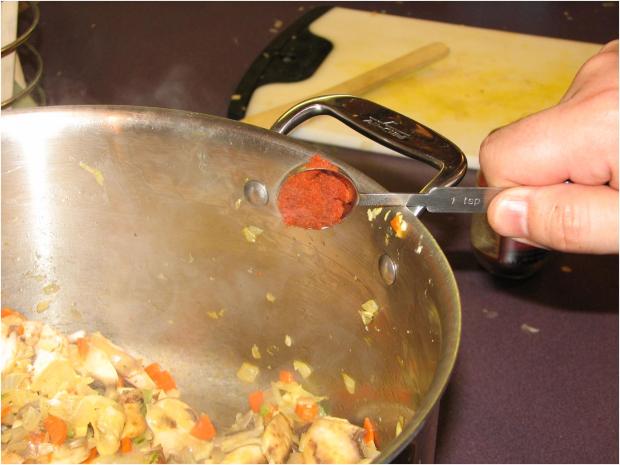
When the mushrooms all start looking soft, add a tspn of red curry paste.

This is what I use. Now, it’s not a thai dish, but we do want a bit of the thai spice that it’s hard to combine with anything other than the paste.

Add the curry paste and toss the mixture to make sure it’s good and mixed in. Let it cook down for a few minutes, then add some white wine. How much? Hell, I don’t know. About that much:

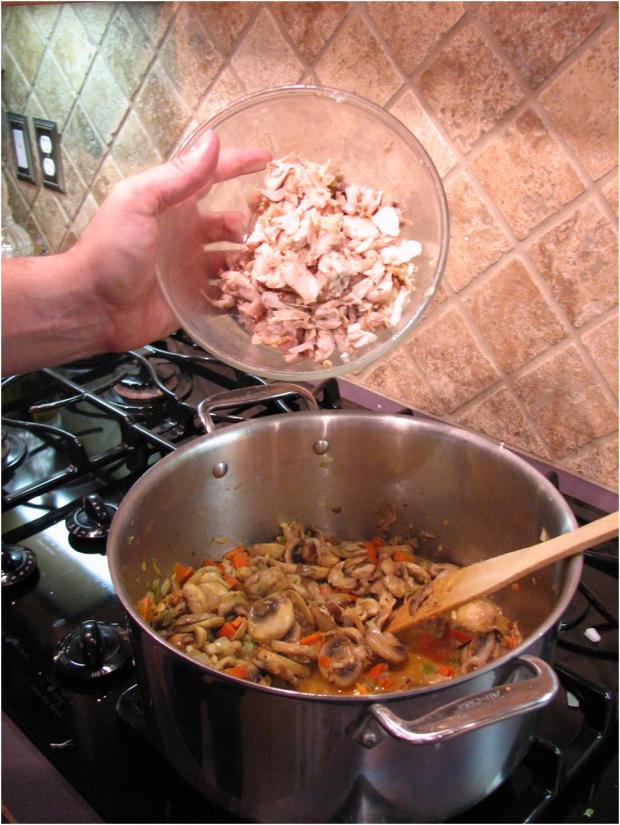
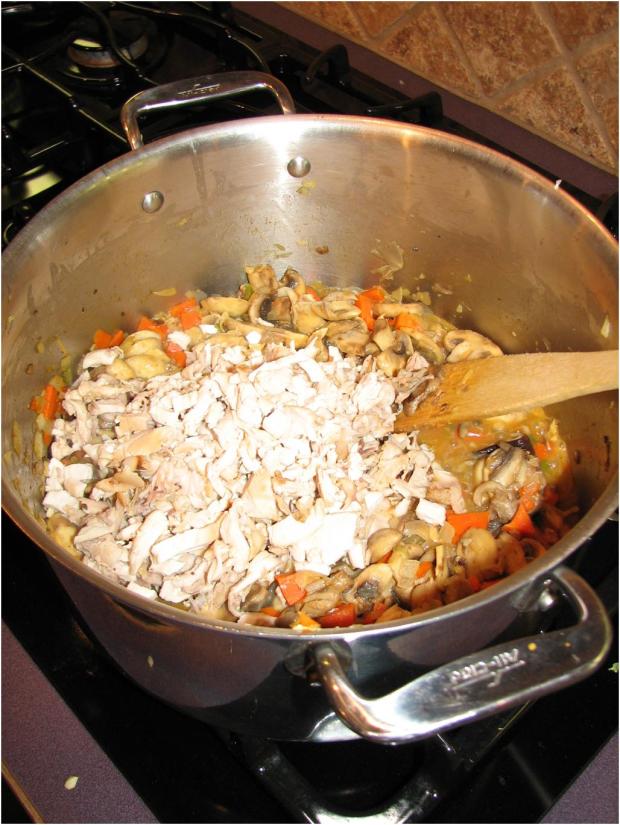
Let that simmer for about five minutes and then add ½ chicken, chopped up. I just used one of those rotisserie chickens from the grocery store. I think the flavor was Garlic Herb. By “1/2 chicken”, I mean ½ breast, a leg, thigh, and then all the dark meat from the back. That’s some of the tastiest meat on the bird.

Then add 6oz of tomato sauce.

And about 6oz of chicken broth.

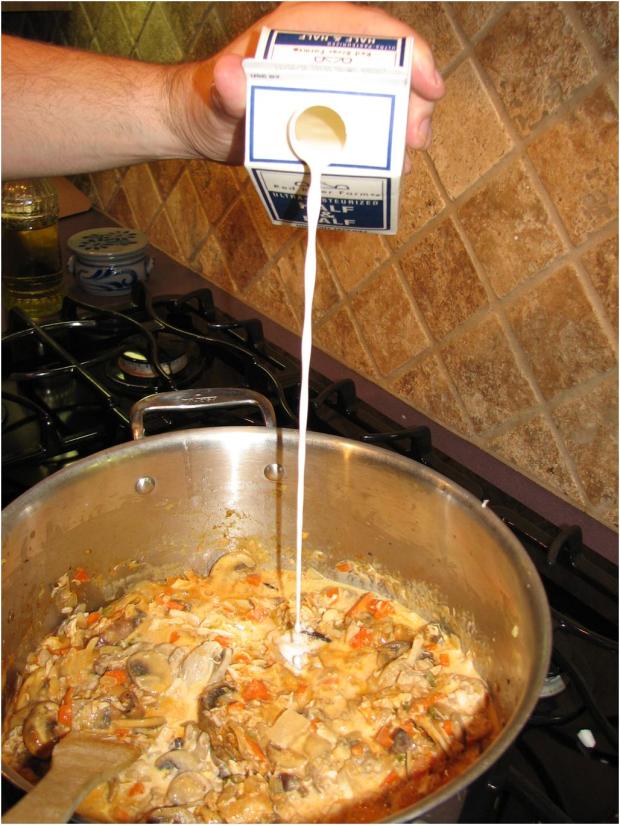
Simmer for 5 minutes or so, stirring regularly. We are looking for the liquid to reduce down quite a bit. Once you get it so that you can see the moisture but it’s not standing in broth, add 1c of heavy cream:

And 1c of half and half:

Of course, you’ll need to add more salt. Go ahead and grind some pepper in this as well. Let it simmer for 10 minutes or so, add chicken broth to keep the liquid at a soupy consistency. It should look like this:

Get some parmesan cheese (not the cheap powdered crap…get grated parm), and add a cup or so. How much? Hell, I don’t know. About this much:

Cut the heat down to low, and let it simmer for yet another 10 minutes.

The cheese should finish off the flavor. Toast up some French bread and sprinkle on some fresh parsley, and you have one of the most delicious things you’ve ever tasted.

That’s it. The best soup I’ve ever tasted.

Trav’s Corner: Speckled Trout Tacos

One of the great things about being a food junkie is you get to find other food junkies and learn how to really cook things right.  Our S. Texas buddy, Travis, is a REAL foodie; a bona fide professional chef who left the trade for a normal job.  We’ve invited him to share some of his favorites from time to time here on AE.

——————————————————————————————

My corner of Arcadia is on the beach at South Padre Island. We’ve got a little place on the bay in Port Isabel with a dock and we keep an underwater light there that comes on at night to attract speckled sea trout. Not only are these fun to catch, but they’re also real good eating. My 7 year old son likes to catch a couple every night. We keep them for trout tacos. Here’s how I do it.

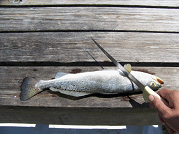
First, you’ve got to filet the fish. Start by laying the fish on the cleaning station with his back towards you.


Lift up the side fin and position your filet knife right next to the fin with the back of the knife at a diagonal towards the head:


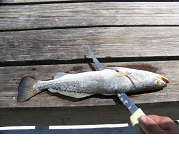
Cut straight down to the backbone, and then turn the knife so that it cuts along the backbone.

 It’ll be tough at first as you’ll have to cut through some ribs, but after you get through that, it’ll go real easy all the way to the tail. Some people like to leave a piece at the end attached to the tail to make it easier to skin, but I prefer to cut it all the way off. Next you’ll want to remove the ribs. Place your knife right along the rib line and cut down at an angle, following the rib bones.


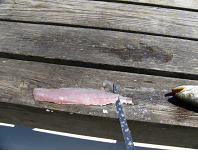
To get the skin off, lay the filet flat against your cutting surface, skin side down. Holding your knife flat, start at the tail end and cut through a little piece of meat to the skin.


Hold onto this piece with one hand and move the knife back and forth with the other. Let the knife do the work. Don’t try to push the knife along, and don’t pull the skin. This takes practice, but you can just trim off any skin you miss. Now turn the fish over and repeat.

 After you wash them off, you’ve got two nice filets. The next step is seasoning. I could put together some bad ass blend, but Tony Chachere already did:


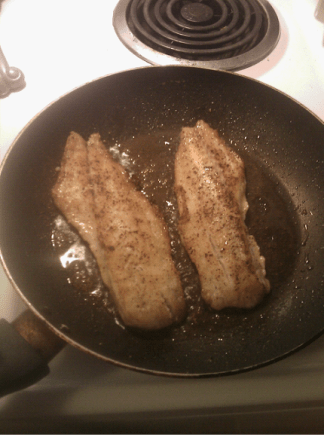
Sprinkle this stuff on liberally, and then the filets go into a hot nonstick pan with canola oil. Cook over high heat until browned and then turn over and do the other side:

Note: searing with Tony’s can result in some pretty caustic fumes. Make sure your vent hood is on (assuming it vents to the outside) or make sure your kitchen is well ventilated. Once the filets are browned on both sides, remove from the pan and place on a paper towel or rack to drain.

While they’re draining, heat a tortilla in a dry pan until warmed through. I like Mission multigrain tortillas with this for health reasons (and cause they’re really good), but you can use corn or flour or whatever.

Once you’ve got all the tortillas warmed up (two filets makes about 6 tacos) you can start assembly. Break off a piece of filet long enough to cover the tortilla lengthwise. Next, spoon on some Greek yogurt:


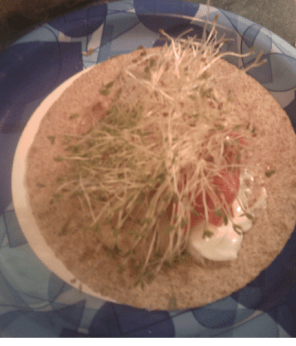
This is some good stuff, and you can use it like sour cream. Next, squeeze some lime juice on there and start adding toppings. Here’s one with tomato, avocado and sprouts, but you can go with what you like here, including cabbage, peppers, onion, lettuce, cheese, cilantro, etc.


Now sprinkle on your favorite hot sauce and go to town. I usually serve with rice and beans.

Special note: you inland types can sub bass or catfish for the trout. Tilapia will do in a pinch. Just go with white fleshed fish and you should be fine.

Big Red Ribs

If I have my choice of bbq, it’s going to be ribs. The meat is awesome, they are fun to cook, and you can chew on the bones when they are cooked right. Brisket feeds more people and is much easier to prepare, but ribs are what BBQ is all about. That being said, you can’t just throw a rack of ribs on the smoker and smother them with bbq sauce and expect good ribs. The best ribs are cooked for a long time with a bit of care.

There are three types of pork ribs. If you picture a butchered pig:

You can see the ribs attached to the spine directly under the loin, or the “backstrap”. Those are baby-back ribs.  A lot of people get confused there because they think “babyback” is the operative word, as if the back part is “baby” or from a young pig. Actually, it should read as “baby back-ribs”, meaning that those ribs are back ribs (i.e.-contain part of the spine) and are small (“baby”). Those are the most lean and the most expensive. The next portion of the rib bones (you if you follow along the rib secion) you get the spareribs. Those are the ones we are going to eat because they have a lot of connective tissue and take smoke really well. For the record, the last part is the countrystyle ribs, which are really meaty and cut across the bone instead of with the bone. The layer of meat that lays directly on top of the country-style ribs is the part of the pork that they cut for bacon, which is the “pork belly”.

Prep

A rack of spareribs needs to be prepared or you’ll get some tough stuff. This is what we are looking at:

This is the backside of the ribs, or the concave side. These need to be trimmed. There is a flap of meat right in the middle of the rack that needs to be taken off:

As well, you need to trim off the meat at the bottom of the rack:
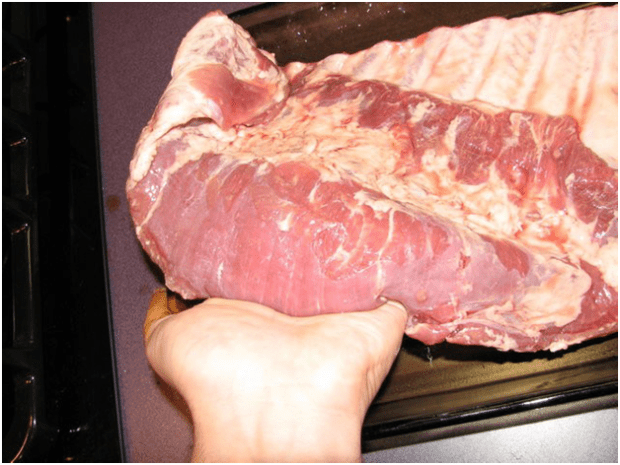
Both of those trimmings should be kept and cooked. They aren’t ribs, but they are delicious, so you can marinate them and cook them at the same time as the ribs. They are good testers as well so you can tell how the meat is cooking.  Now, you HAVE to remove the silverskin on the concave side of the ribs. The best way I’ve found to do this is to use one of my probe thermometers. Stick the thermometer under the skin, pull it away, then peel the skin off. That’s important so you aren’t trying to eat it from the ribs when they are cooked.

I like to wash the rack at this point under cool water just to rinse off the blood and juice that it was packaged in.  Then, pour Big Red soda on it up to about halfway up the pan, squeeze half a lemon, cover with saran wrap and put it in the fridge for a few hours, potentially overnight.
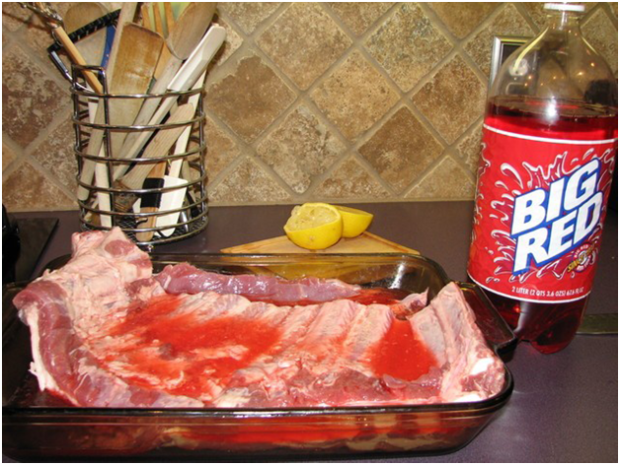
That might be the white trash in me talking, but I’m a Big Red fan, especially the stuff made in Dublin with cane sugar. The soda adds the sugar that the pork needs for flavor as well as a brine because there is so much sodium in soda. As well, the lemon adds the acid that the marinade needs to start breaking down the meat fibers to be tender.

Rub

There are two types of rubs in bbq…dry and wet. We use the wet rub on the brisket, but we are going to use a dry rub on this because there is a higher surface-to-mass ratio. The wet rub will permeate the meat, but the dry rub will season just the surface, which is what we want…sweet, carmelized outside and a tender inside. That’s balance; Taoism in food.

1/4 cup light brown sugar (pack it in good)

3 tbls pepper

4 tbls ks

1/4 cup paprika (get sweet paprika, not smoked)

1 1/2 tbls garlic powder

1 teaspoon cayenne powder

1 teaspoon coriander

1 teaspoon cumin

Mix all those ingredients together well with your fingers in a bowl. That’s your BBQ rub, and it’s universal for anything you want to BBQ. If you want more heat, throw some red pepper flakes in or a bit more cayenne. Also, if you want a slightly sweeter flavor, you can go 1/2 onion powder with your garlic powder. You can store it in a ziploc for a couple months as well.

After you let the ribs marinate in the Big Red for 1/2 a day to a day, take them out and blot the surface dry with a paper towel. Don’t go overboard and try to soak up all the juice…just get the pools of juice out of there.

Take a handful of rub and cover both sides. You don’t have to have a huge layer, but you can taste the rub and see that it’s not overpowering, so make sure you get good coverage on both sides as well as the ends. The bone marrow takes seasoning very well and is good to eat. Don’t forget about the trimmings as well.

Wrap the rack back up and let it sit in the fridge again, up to a day. I like to leave it overnight, but you’ll want to go at least a couple of hours min.

Smoke

Straight mesquite is going to be a bit harsh for this, so I like to mix pecan in for the smoke. Use mesquite to get your smoker hot, then add wood at a 2:1 ratio, pecan to mesquite. Don’t let people tell you that oak is good for this. Be a real man and use mesquite. You’ll need to keep the heat at 225-250 for this one, and let’s go with a 3-2-1 smoking routine: 3 hours on the smoker unwrapped, 2 wrapped in foil (double layers of heavy duty foil and don’t put the creases down or the juice will fall out), 1 hour wrapped in the cooler.  Depending on the size of the rack or how your heat fluctuates, you may need to increase to a 4-2-1 or even a 4-3-1.  What you are looking for is to be able to grab onto the end of a rib bone, jiggle, and have the rib bone come out with little effort.  Once the connective tissue melts down, this should be an easy feat.

Put the ribs concave side down (that’s the side we pulled the silverskin off of). As the rack cooks, the concave will relax because the connective tissue next to the bone will melt into the meat. You’ll want to put the rack away from the fire because the bone will burn really quickly if you aren’t careful. With five hours of smoke time, the ribs will have ample heat/time to cook so don’t worry about that. Again, don’t forget the trimmings…throw them right on top of the rack of ribs and let them cook. They have some fat, so the fat will melt into the meat.
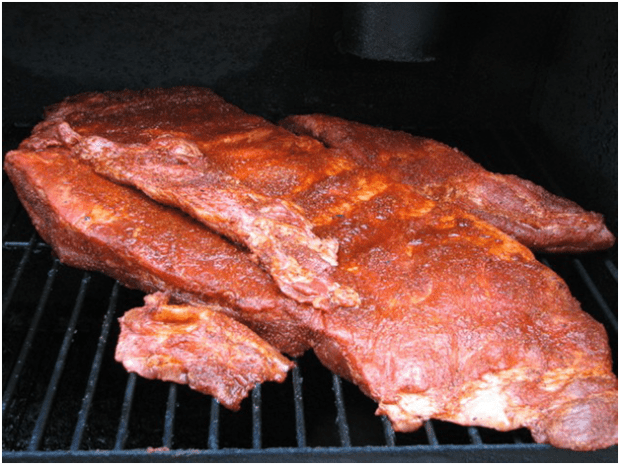
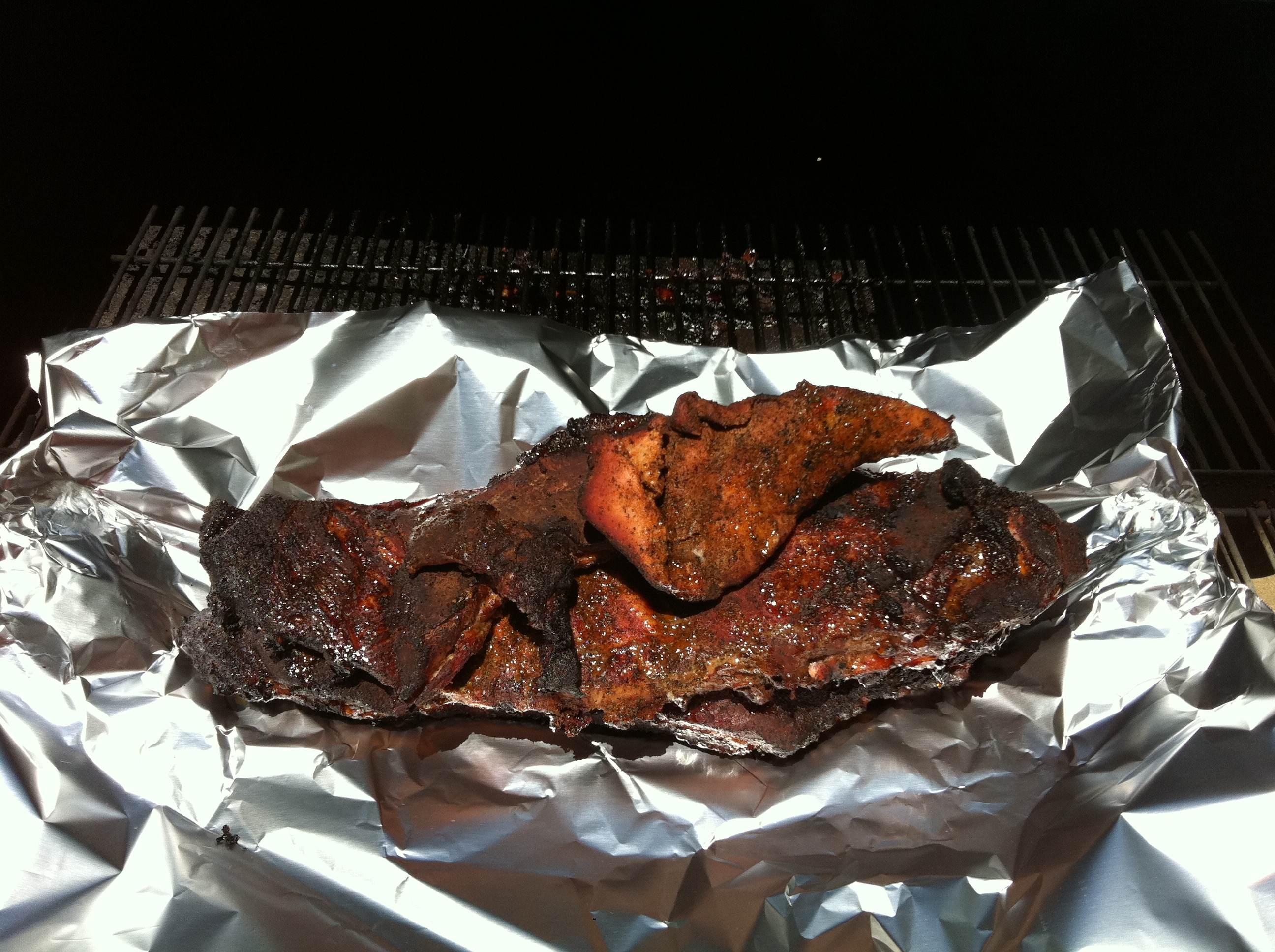
After 3-4 hours, you should have a nice bark around the edges (but not scorched) and a nice red-brown color to the meat.
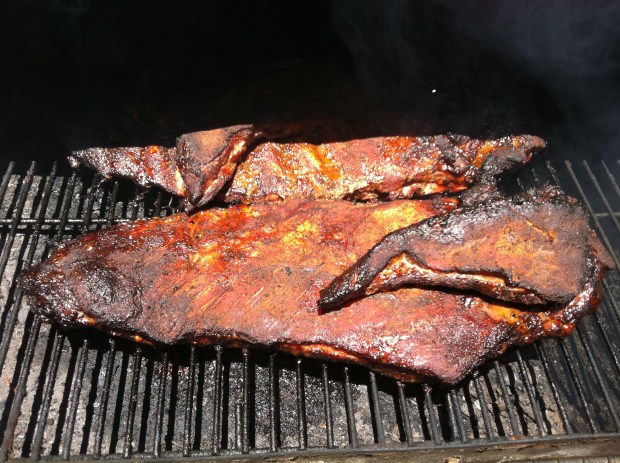
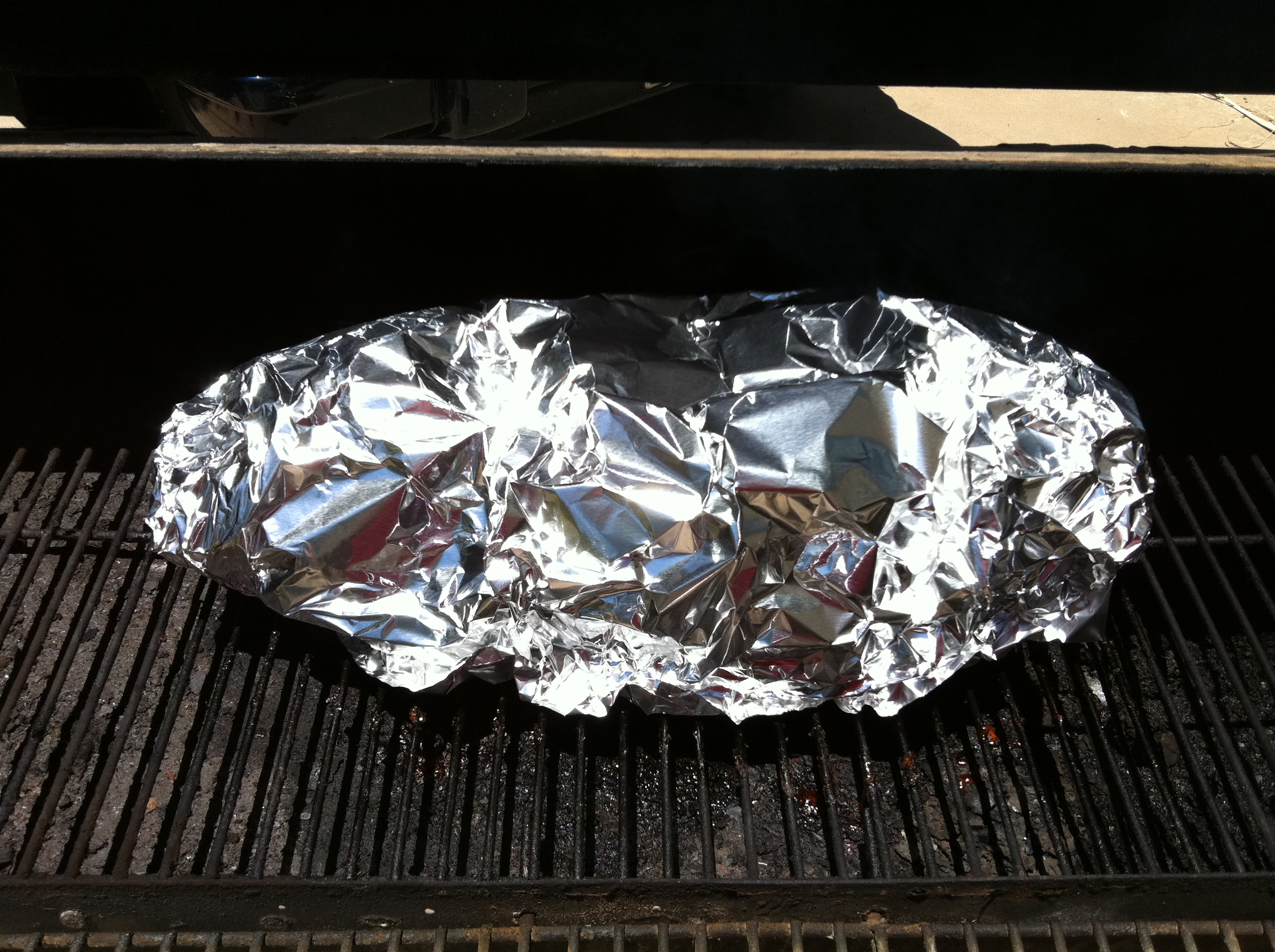
At this point, go ahead and wrap it up with heavy duty foil.  Wrap it twice and make sure the juices can’t drip out.

You’ve got another 2-3 hours at 225-250 to let these cook in their own juices…a rib confit, so to speak.
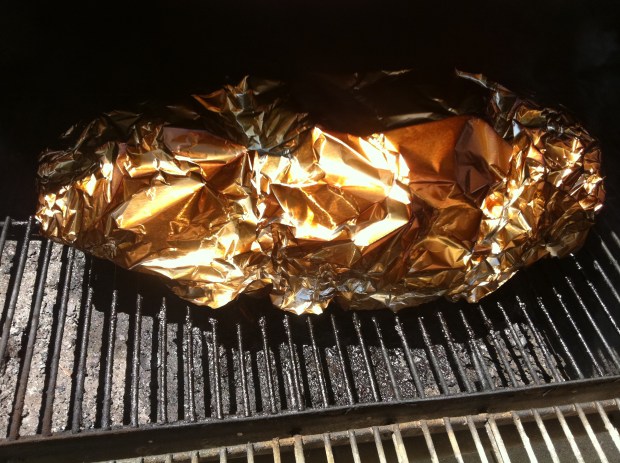
This is one of the most beautiful sights in the world…hours of smoke turn the aluminum gold. I think it may be the work of God.
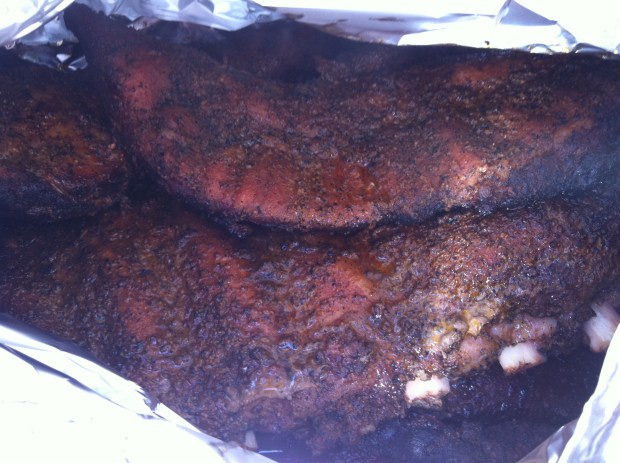
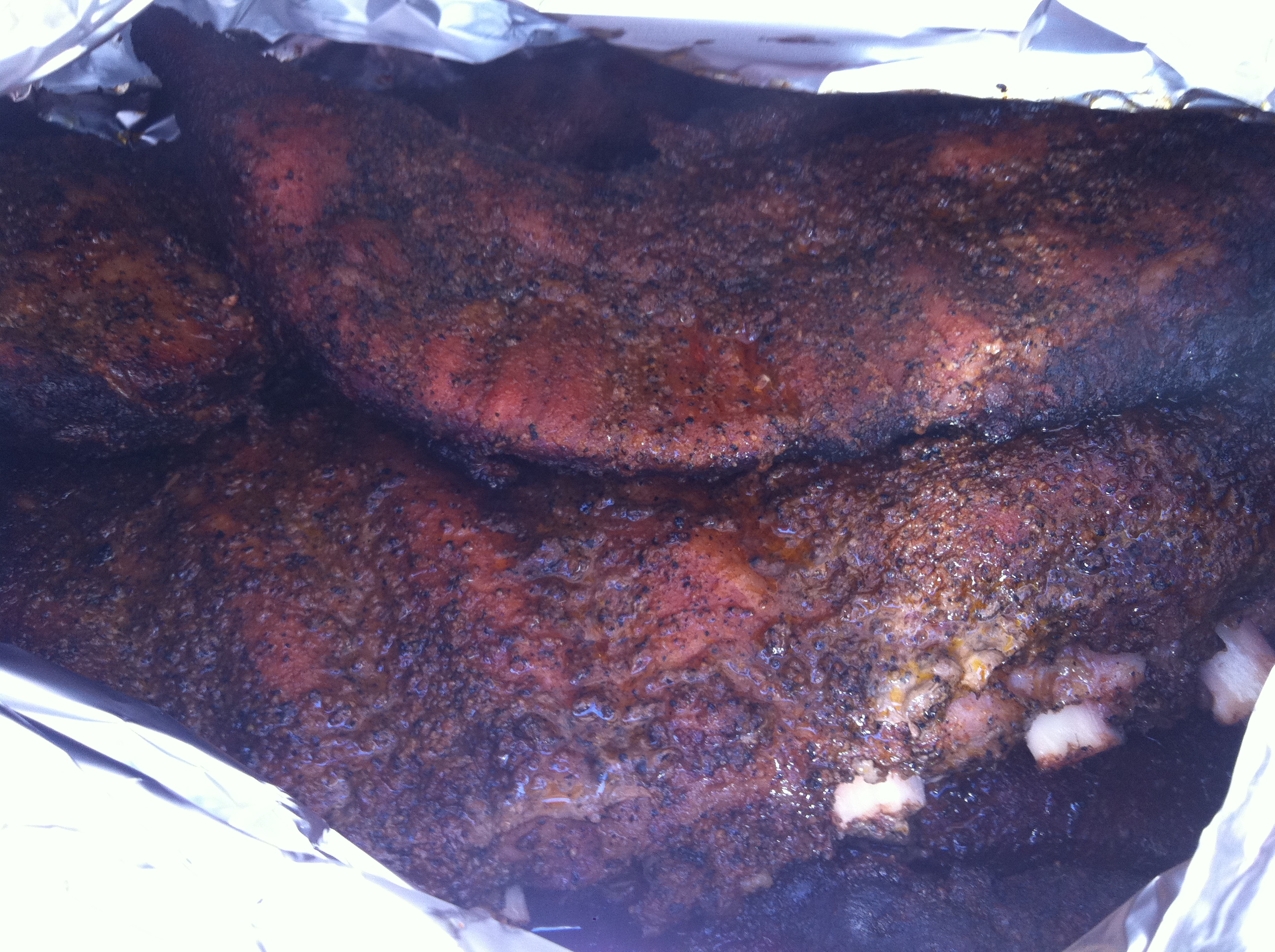
At some point, you’ll need to CAREFULLY unwrap the rack just enough to get access to the bone so you can do your jiggle test.  If you spill any of that juice, I swear to you I’ll come to your house and cut your hair at the scalp with my pocketknife.  DON’T do it.

After the rack passes the jiggle test, then the ribs need a good hour to three hour rest in a cooler.  Take them directly (still wrapped in foil) from the heat and into a cooler.  Don’t open the lid until you are ready to cut/serve.  They will stay hot in the cooler, trust me.  Whatever you do, don’t open the cooler for at least an hour. DON’T do it.

Take the ribs out, cut one of the ends of the foil right next to the rack and pour the juice out into a bowl.  You should be able to squeeze the rack right out of the foil pouch now, so lay it up on a cutting board and cut them right in the middle between each rib (or two, depending on how many people you are serving). They are ready to eat, but if you want you can toss them in the juice.  If you want them extra gooey and kinda sugary like one of those sissy Kentucky fellers, then coat them with your favorite BBQ.  These are good enough without any sort of sauce.  If you go with sauce, try to do one on your own or try one without a whole bunch of sugar, like Stubb’s (which is my favorite bottled bbq sauce).

Tah. Dah. Big Red Ribs.